Chanthaburi: 162 Thai Returnees Cross Pong Nam Ron — 6 Arrested on Warrants
On Saturday, January 3, 2026, a quiet, early-morning operation at the Chanthaburi border checkpoint turned into a small but consequential moment in the simmering saga along the Thai–Cambodian frontier. Cambodian…
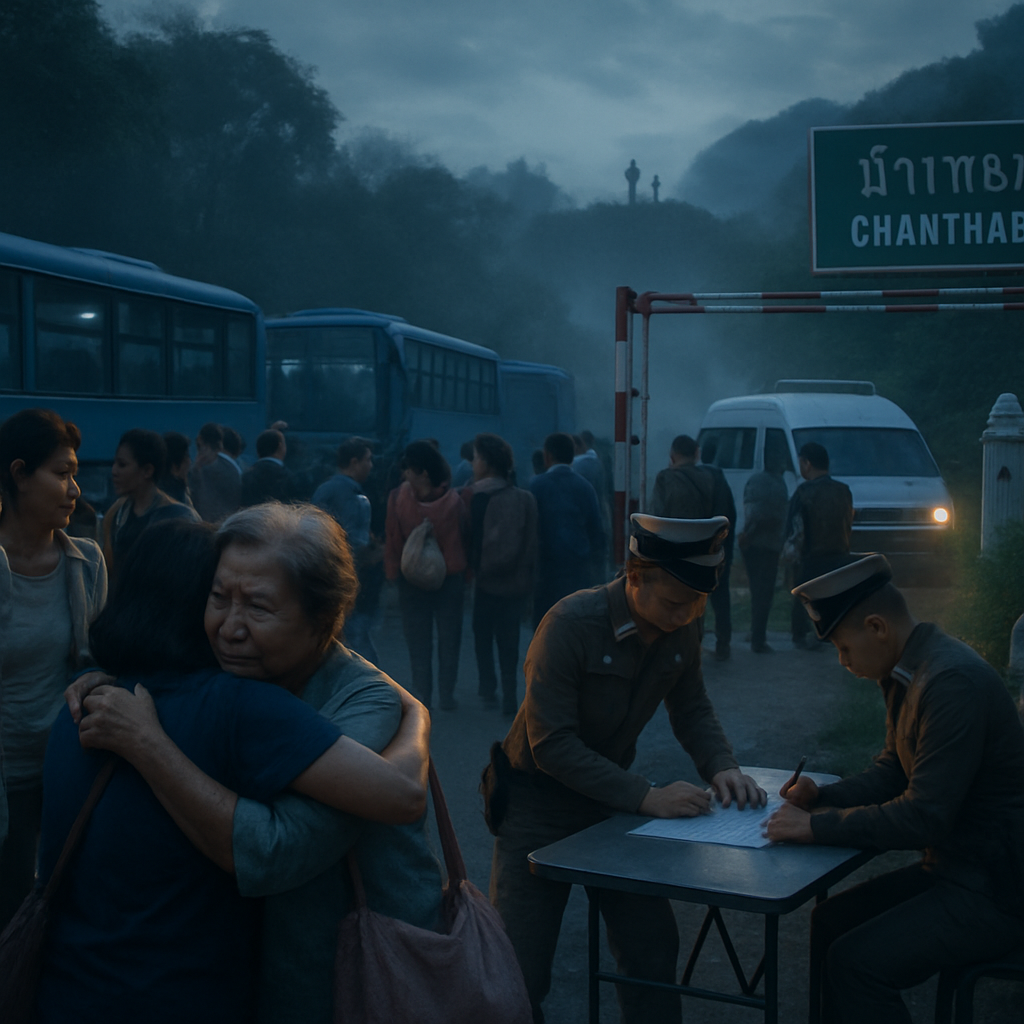
On Saturday, January 3, 2026, a quiet, early-morning operation at the Chanthaburi border checkpoint turned into a small but consequential moment in the simmering saga along the Thai–Cambodian frontier. Cambodian officials escorted four buses of Thai nationals to the crossing opposite Thailand’s Ban Laem Permanent Border Checkpoint in Pong Nam Ron district, Chanthaburi — and 162 people were allowed to cross home. What might have been a routine repatriation quickly took a sharper turn when Thai authorities found six of the returnees were wanted on criminal warrants.
From Battambang to Chanthaburi: the route home
The buses had arrived in Battambang province in the predawn hours, ferrying people who had been stranded in Cambodia. Many were part of the larger flow of Thai workers who had been pushed back after a recent ceasefire between the two countries — a move that saw hundreds sent home amid heightened tensions. Cambodian officials escorted the group to the crossing point at Pong Nam Ron, where Thai authorities carried out screening and background checks before admitting them.
Screenings, suspicions and six suspects
Authorities say the screening was intended to be thorough: officials separated those who might be victims of trafficking from those suspected of crossing into Cambodia to work illegally. During the checks, the Royal Thai Police identified six people with outstanding warrants. The suspects are wanted on serious allegations — joint murder and online gambling offenses — and were taken away in a police van for further questioning and legal processing.
Officials also flagged that the wider probe will look beyond those six individuals. Investigators plan to examine possible related offenses, including the use of mule accounts, a common tool in transnational crime schemes that funnel illicit gains through unwitting or complicit accounts.
Where they’d been and what’s next
Thai authorities reported the group had been staying in several Cambodian locations, including Chong Chom, O Smach and Siem Reap. These towns — some close to bustling border crossings and others more tourist-facing — have long been part of cross-border labor and movement patterns. With the returnees now back in Thai custody, inquiries will expand to trace networks, employment arrangements, and any links to larger criminal operations.
Tensions remain despite no heavy-weapon fights
Military sources from Thailand’s 2nd Army Area noted there have been no major heavy-weapon engagements along the border in recent days. Still, both sides continue to deploy and reinforce forces, signaling that calm is fragile. The diplomatic and security atmosphere remains prickly: Cambodia has accused Thailand of violating its sovereignty, while Thailand has responded with its own accusations, alleging war crimes and breaches of humanitarian law, including attacks on civilian areas.
So while the buses that rolled into Battambang didn’t bring headlines of battle, they occurred against a backdrop of serious mutual recrimination — a reminder that the absence of large-scale clashes is not the same as peace.
Human stories among headlines
Beyond the warrants, patrols and political rhetoric, the episode underscores two human realities. First, thousands of workers cross or attempt to cross borders in search of livelihoods; when tensions flare, they are often the most immediately affected. Second, the return screening highlights the thin line authorities walk between protecting trafficking victims and cracking down on illegal labor and criminal activity.
For the 162 people who made it back to Thai soil on January 3, it was a return to family and country, tempered for some by police detention and investigation. For the six now facing charges, the bus ride ended at a very different destination: legal scrutiny. And for everyone watching the border, the episode is a fresh reminder that the border’s future will be shaped by a mix of security operations, law enforcement cooperation, and — crucially — diplomatic give-and-take.
Looking ahead
Investigations into the suspects and broader networks will continue, authorities say, while both militaries keep an uneasy watch along the frontier. The situation remains fluid: ceasefire or not, deployments and accusations are likely to shape the coming weeks. If there’s one takeaway from the January 3 episode, it’s that borders are where politics, livelihoods and law collide — and every repatriation can carry more than one story.



Comment verification
Step 1 of 3
Verify your email once to publish your comment. Your email is never shown publicly.
Enter the 6-digit code sent to .
Choose the display name shown next to your comments.