Nakhon Pathom Seals Farm Over 3,000 Toxic Waste Bags
Nakhon Pathom Governor Yongyut Suanthong ordered an abandoned Kamphaeng Saen pig farm sealed off after inspectors seized roughly 3,000 jumbo sacks of hazardous aluminum dross and electronic scrap dumped in the open air.
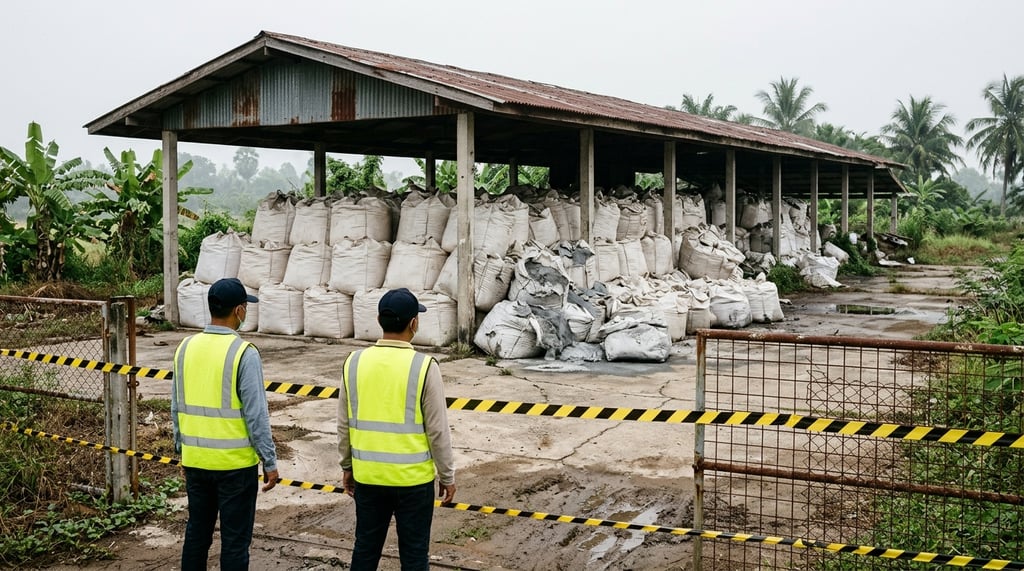
A derelict pig farm in rural central Thailand has become the latest flashpoint in the country's widening war on illegal industrial waste. On November 29, Nakhon Pathom Governor Yongyut Suanthong led a multi-agency raid on an abandoned livestock compound in Moo 4 of Tambon Thung Luk Nok, Kamphaeng Saen district, after local residents and a provincial councilor sounded the alarm over mountains of industrial sacks hidden behind rural farm fences. Inside the unattended compound, inspectors found roughly 3,000 woven jumbo sacks packed with hazardous aluminum dross alongside scattered electronic waste left exposed to the open air, according to field reports published by MGR Online and Matichon.
The discovery exposes an uncomfortable reality for regulators in Bangkok. Even as the national government intensifies inspections across the Eastern Economic Corridor and eastern industrial estates, illicit waste brokers are shifting westward into peri-urban agricultural belts where shuttered livestock sheds and low-rent warehouses offer cheap concealment. Because Nakhon Pathom sits directly along highway corridors linking Bangkok, Samut Sakhon's smelting clusters, and the Tha Chin River basin, open-air dumping of reactive metallurgical slag carries immediate risks for both groundwater and surrounding farmland.
An Unattended Toxic Stockpile Behind Farm Fences
The Kamphaeng Saen inspection followed a public alert posted on social media by Chotikun Chusinlakul, a People's Party member of the Nakhon Pathom Provincial Administrative Organization for Kamphaeng Saen District 1, who visited Tambon Thung Luk Nok with local villagers and documented rows of dark-residue jumbo sacks bearing Chinese-language markings. When Governor Yongyut arrived with Kamphaeng Saen District Chief Kiattisak Thanawan-ophas, officials from Regional Environment and Pollution Control Office 5, the Nakhon Pathom Provincial Industry Office, natural resources officers, and the Thung Luk Nok Subdistrict Administrative Organization mayor, no caretaker or site operator was present.
Governor Yongyut issued three immediate containment orders on the spot. First, the Nakhon Pathom Provincial Industry Office was directed to impound all roughly 3,000 sacks and mixed electronic scrap while compiling forensic and ownership evidence to prosecute those responsible. Second, specialists from Regional Environment and Pollution Control Office 5 were instructed to collect chemical samples for laboratory analysis to determine heavy-metal concentrations and off-gassing hazards. Third, the Thung Luk Nok Subdistrict Administrative Organization was ordered to seal the property immediately and post security patrols to stop operators from hauling additional loads onto the site under cover of darkness.
Why Aluminum Dross Alarms Environmental Regulators
Aluminum dross is not inert rubble. Generated as a skimmed byproduct during secondary aluminum smelting, the greyish-black slag retains metallic aluminum, aluminum nitride, salts, and trace heavy metals. Under Thai law, it is classified as a Category 3 hazardous substance requiring explicit permits for possession, transport, and licensed disposal under the Hazardous Substances Act B.E. 2535, a legal framework repeatedly invoked by the Thai PBS News and documented in earlier enforcement coverage by Krungthep Turakij.
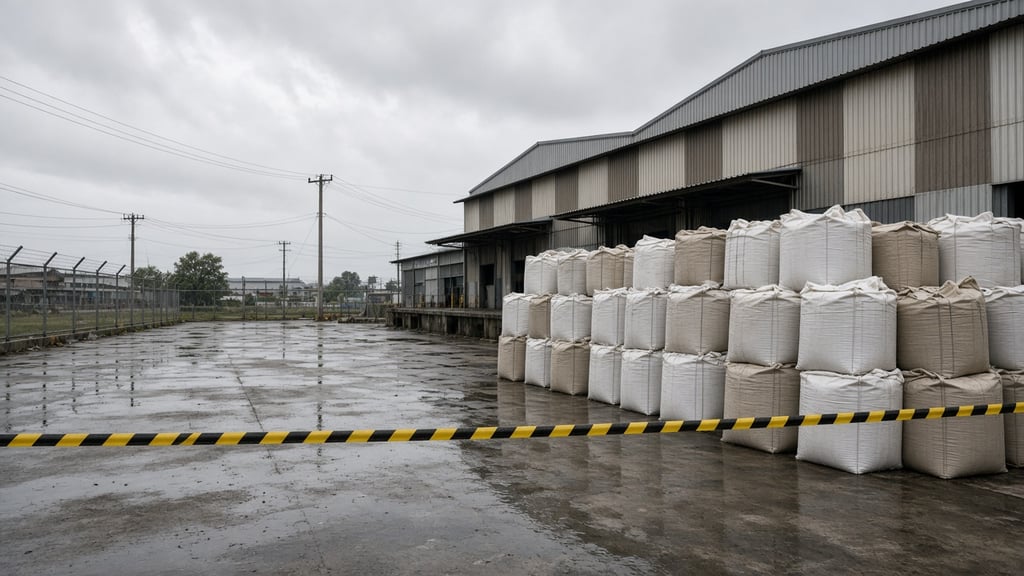
The acute hazard emerges when weathered polypropylene sacks split open in tropical rain or high humidity. Contact with water triggers an exothermic chemical reaction that releases pungent ammonia gas, hydrogen, and methane, exposing nearby households to eye and respiratory irritation while creating a documented risk of spontaneous combustion inside tightly stacked piles. In neighboring Samut Sakhon province in October, Pollution Control Department Director-General Surin Worakijthamrong deployed air-quality monitoring across eight points inside a defunct Na Di warehouse holding roughly 200 tonnes of improperly stored aluminum dross after residents complained of acrid fumes, as reported by Thai PBS World.
Nakhon Pathom's Recurring Industrial Waste Burden
For Nakhon Pathom residents, the Kamphaeng Saen raid feels less like an isolated lapse than a repeat episode. In August 2026, Industry Minister Varawut Silpa-archa personally inspected an abandoned, unlicensed smelting compound operated by AY 2021 Co., Ltd. in Tambon Phrong Maduea, Mueang Nakhon Pathom district, where 8,258 jumbo sacks containing 12,387 tonnes of aluminum dross had been left behind with broken air-pollution controls and no caretaker, according to Bangkok Post and Thansettakij.
That earlier site, prosecuted under Section 12 of the Factory Act B.E. 2535 for unlicensed industrial operation alongside hazardous-substance charges, illustrated the fiscal trap facing provincial governors. Once fly-by-night operators abandon a leased agricultural plot or warehouse, taxpayers are often left absorbing tens of millions of baht in stabilization, transport, and high-temperature kiln disposal costs unless prosecutors can pierce nominee corporate structures and freeze assets. Varawut has accordingly pushed for statutory revisions anchored in the Polluter Pays Principle, shifting cleanup liability squarely onto factory owners, land lessors, and financial backers.
A Nationwide Sweep Meets Adaptive Dumping Networks
The Kamphaeng Saen seizure lands in the middle of Thailand's most aggressive industrial-waste enforcement drive in years. On November 1, the Industry Ministry launched a 76-province inspection blitz focused on Category 105 waste-sorting plants and Category 106 industrial recycling facilities, checking 171 sites in the first two days alone while weighing the use of anti-money-laundering asset seizures against repeat dumping syndicates, according to The Nation Thailand.
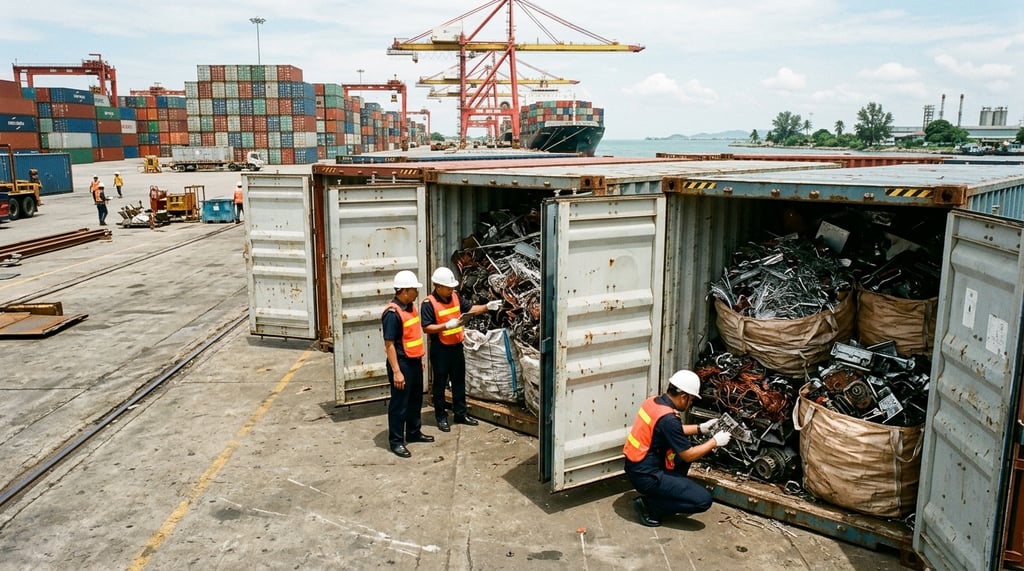
Subsequent disclosures reveal the sheer scale of the shadow recycling economy. By November 12, Deputy Government Spokesperson Lalida Pertwiwatthana announced under Prime Minister Anutin Charnvirakul's administration and the Electronic Waste Problem Solving Committee chaired by Deputy Prime Minister and Commerce Minister Supachai Sutthampan that inspectors had audited 752 factories nationwide, uncovered 375 legal violations, and intercepted 89 shipping containers of illicit waste imports, with tougher scrap-metal controls slated for Cabinet review in December, as reported by Thairath. Days later, the Department of Special Investigation opened a special case into Rayong Industrial Co. over at least 10,000 tonnes of suspected smuggled hazardous waste across 15 warehouse buildings, reported by Bangkok Post, while a separate raid in Chachoengsao's Plaeng Yao district uncovered more than 6,000 tonnes of industrial and electronic scrap laced with lead, mercury, and arsenic, according to The Nation Thailand.
What This Means for Residents, Landowners, and Expats
For provincial households, agribusiness operators, and foreign residents living in Bangkok's western commuter belt, the episode carries three practical takeaways. First, rural land lessors face rising legal exposure: renting out disused farms, orchards, or warehouses without verifying a tenant's industrial permits can leave property owners embroiled in hazardous-substance investigations and costly site-remediation orders. Second, residents near Nakhon Pathom, Samut Sakhon, and eastern industrial corridors should report sudden ammonia-like odors, unexplained night-time dump-truck convoys, or unlabeled bulk-sack stockpiles promptly to the Pollution Control Department hotline (1650) or provincial industry offices before rain accelerates chemical leaching.
Third, the crackdown signals a structural tightening of Thailand's circular-economy compliance regime heading into 2027. Legitimate manufacturers, metal recyclers, and international supply-chain auditors operating in Thailand should expect stricter electronic manifest tracking, customs scrutiny on scrap-metal imports, and heavier penalties for unregistered subcontractors. Sealing one abandoned pig farm in Kamphaeng Saen stops an immediate local hazard, yet lasting deterrence will depend on whether prosecutors trace the 3,000 sacks back to the smelters, brokers, and cross-border financiers who profited from leaving them behind.
Related Coverage
All Thailand →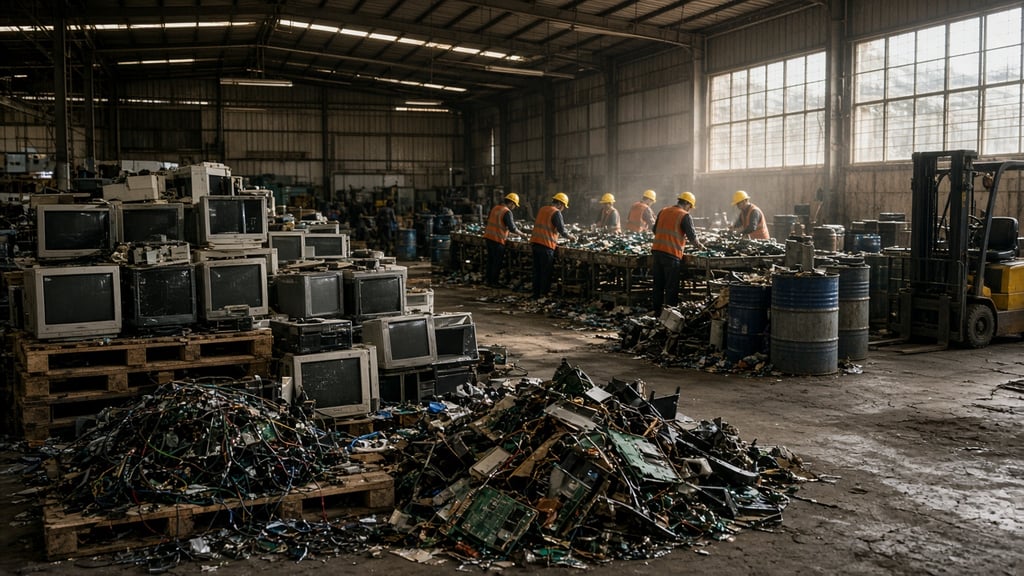
Revision History (2 versions)JSON API
- Rev 2THAI.NEWS Editorial Desk
Replaced redirecting DIW press URL with direct Thai PBS News enforcement report on Nakhon Pathom aluminum dross seizures.
− Aluminum dross is not inert rubble. Generated as a skimmed byproduct during secondary aluminum smelting, the greyish-black slag retains metallic aluminum, aluminum nitride, salts, and trace heavy metals. Under Thai law, it is classified as a Category 3 hazardous substance requiring explicit permits for possession, transport, and licensed disposal under the Hazardous Substances Act B.E. 2535, a legal framework repeatedly invoked by the Department of Industrial Works and documented in earlier enforcement coverage by Krungthep Turakij .+ Aluminum dross is not inert rubble. Generated as a skimmed byproduct during secondary aluminum smelting, the greyish-black slag retains metallic aluminum, aluminum nitride, salts, and trace heavy metals. Under Thai law, it is classified as a Category 3 hazardous substance requiring explicit permits for possession, transport, and licensed disposal under the Hazardous Substances Act B.E. 2535, a legal framework repeatedly invoked by the Thai PBS News and documented in earlier enforcement coverage by Krungthep Turakij . - Rev 1 · OriginalAlexei Morozov
Original publication
Comment verification
Step 1 of 3
Verify your email once to publish your comment. Your email is never shown publicly.
Enter the 6-digit code sent to .
Choose the display name shown next to your comments.