Thailand

Deputy Mayor Thitipan Petchtrakul Leads Naklua Welfare Visits in Pattaya

On the morning of August 20, Pattaya’s leadership traded boardroom suits for walking shoes and went straight into Naklua’s neighborhoods, knocking on doors where help is most needed. Deputy Mayor Thitipan Petchtrakul…
Deputy Mayor Thitipan Petchtrakul Leads Naklua Welfare Visits in Pattaya

On the morning of August 20, Pattaya’s leadership traded boardroom suits for walking shoes and went straight into Naklua’s neighborhoods, knocking on doors where help is most needed. Deputy Mayor Thitipan Petchtrakul and Pattaya City Council President Banlue Kullavanij led a compact team of council members and Social Welfare Office officers on a targeted welfare outreach that felt less like a press event and more like neighbors looking after neighbors.

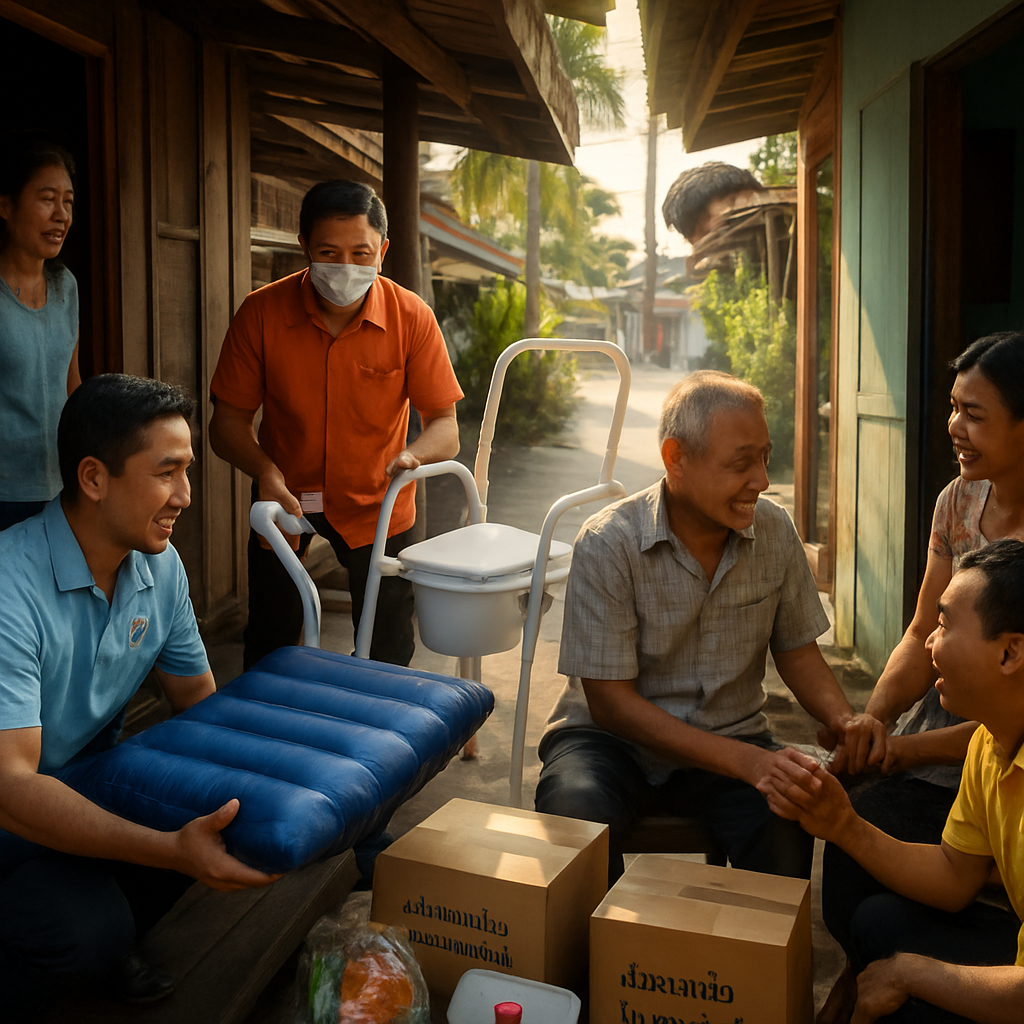
The team visited three households, each with stories that tug at the heart: a bedridden woman, an elderly man struggling to make ends meet while caring for a daughter battling cancer, and an older woman in need of mobility assistance. The items delivered were practical and thoughtful—air mattresses, commode chairs, care packages—and the officials’ hands-on approach left residents pleasantly surprised and visibly relieved.

From Red Cross aid to everyday comforts

The first stop was at the home of Jit Daengkaew, a bedridden patient whose daily life has been marked by pain and immobility. Alongside a care package supplied by the Chon Buri Red Cross, Jit received a brand-new air mattress designed to reduce pressure sores and ease long hours spent lying down. For someone with limited movement, that mattress was more than a piece of equipment—it was a meaningful upgrade to everyday comfort.

Next, the team visited Sawan Thawai-sap, an elderly man surviving on very little and carrying the additional worry of a daughter who is currently fighting cancer. Banlue Kullavanij didn’t stop at symbolic gestures: she arranged for a regular monthly stipend personally, and Deputy Mayor Thitipan added further financial assistance to help steady the household through a difficult period. These contributions were delivered alongside an aid package, offering immediate relief while signaling longer-term support.

Restoring dignity and independence

The final home visit was to Saijai Lai-thongkham, another elderly resident for whom everyday tasks had become increasingly difficult. The team presented her with a care package and a commode chair—simple items that can dramatically improve independence and dignity in the most private moments. Saijai received the help gratefully, and neighbors later praised the practical nature of the assistance.

Throughout the visits, city officials spent time conversing with recipients and family members, assessing living conditions and offering morale-boosting words. The Pattaya News reported that locals were taken by the unusual sight of leaders stepping out into the community so directly—many described the outreach as a rare, welcome sign that their struggles hadn’t slipped under the city’s radar.

More than a photo op: a long-term strategy

When asked about the intent behind the visits, a Pattaya City spokesperson emphasized that these home calls are not one-off publicity moves. “This is part of a long-term commitment to proactive social welfare,” the spokesperson said. “These aren’t one-off visits, but part of a strategy to ensure nobody gets left behind.”

The effort sits under the broader Better Pattaya programme, which aims to elevate the quality of life for elderly residents, the sick, and those grappling with poverty through sustained, hands-on measures. That strategy includes regular home visits, targeted medical support, and targeted welfare disbursements for households identified as most vulnerable. The Naklua outreach feels like a practical chapter in that ongoing book of community care.

Why this kind of outreach matters

Delivering items like an air mattress or a commode chair might seem small on paper, but in practice these interventions have immediate and compounding effects: they reduce health risks, lower caregiver strain, and restore a degree of normalcy and dignity. Coupled with financial assistance and the simple human act of listening, the benefits grow beyond the physical objects. Families report feeling seen, supported, and more hopeful about the days ahead.

Residents and community watchers praised the hands-on leadership. In neighborhoods where bureaucracy often feels distant, local officials rolling up their sleeves to deliver support sends a clear message: welfare is not just a policy line in a municipal plan—it’s an everyday commitment to people who need it most.

As Pattaya continues to roll out the Better Pattaya initiatives, the Naklua home visits serve as a visible reminder that compassion, when paired with practical resources, can quietly transform lives. For Jit, Sawan, and Saijai, yesterday’s visit brought more than supplies—it brought attention, reassurance, and a promise of continued care.


75Comments
Sort by:
JJoe··1 pts · 3 replies
J
Joe
Nice to see leaders actually visit people instead of issuing press releases, but three homes is a drop in the bucket.
1
SSomsri··1 pts
S
Somsri
Exactly — I appreciate the gesture, but is this a publicity stunt? Why not publish the criteria for choosing households?
1
JJoe·1 pts
J
Joe
Fair point, Somsri, transparency matters. Still, for the families helped the impact is real even if the scale is small.
1
LDLarry D·1 pts
LD
Larry D
Transparency is crucial. If this is part of a sustained plan with published metrics and budget lines, it's promising; otherwise it's optics.
1
Ggrower134··1 pts · 3 replies
G
grower134
They picked three emotional stories for cameras. How many more are waiting around the corner?
1
NLNadia Lee··1 pts
NL
Nadia Lee
You can be cynical, but targeted home visits can identify unmet needs that paperwork misses. Scale can follow data.
1
Ggrower134·1 pts
G
grower134
Data is fine but show the pipeline. Who gets assessed next and how often?
1
PCProfessor Chen·1 pts
PC
Professor Chen
Community-level outreach is effective only with follow-up monitoring. One-off interventions reduce visible suffering but don't solve systemic poverty.
1
APAnya Petrov··1 pts · 2 replies
AP
Anya Petrov
This is the sort of empathetic governance we should expect. Practical aid, dignity restored, and a promise of continuity.
1
MMarco··1 pts
M
Marco
You sound naive. Promises of continuity are easy to make when votes are at stake. Where's the long-term funding plan?
1
APAnya Petrov·1 pts
AP
Anya Petrov
Skepticism is healthy, Marco, but let's not erase the immediate human benefit. Pressure keeps officials accountable on funding.
1
LDLarry Davis··1 pts · 2 replies
LD
Larry Davis
Good immediate relief, but I'd like to see integration with healthcare and caregiver support programs rather than token gifts.
1
CCitizen101··1 pts
C
Citizen101
Integration matters. Air mattresses are great, but who trains caregivers to prevent pressure sores and manage equipment?
1
LDLarry Davis·1 pts
LD
Larry Davis
Exactly — equipment plus training and a checklist for follow-up visits would make this sustainable.
1
MMai··1 pts · 2 replies
M
Mai
Yay they helped grandma! That commode chair will make her life easier.
1
DKDr. Kumar··1 pts
DK
Dr. Kumar
It's touching, Mai, but individual charity doesn't replace a robust social safety net. Policy design should ensure non-arbitrary aid.
1
MMai·1 pts
M
Mai
I don't know about policy. I just know my neighbor cried when they brought the chair. That felt real.
1
Ggrower1342··1 pts · 2 replies
G
grower1342
The deputy mayor's boots-on-the-ground image is impressive marketing. Will the accounts reflect this as an expense?
1
PPattayaWatcher··1 pts
P
PattayaWatcher
Local budgets are often opaque. Citizens should push for published expenditure reports on the Better Pattaya programme.
1
Ggrower1342·1 pts
G
grower1342
Agreed. Transparency law, now. Or at least quarterly updates with recipient anonymized IDs.
1
SSomsri··1 pts · 2 replies
S
Somsri
Saying a stipend is 'personally arranged' by a council president raises red flags about favoritism. Public programs should be standardized.
1
AOAn official··1 pts
AO
An official
From the city's side, personal facilitation sometimes jump-starts bureaucratic processes so assistance isn't delayed, but documentation still follows.
1
SSomsri·1 pts
S
Somsri
If documentation follows, publish it. Otherwise it looks like ad-hoc patronage and undermines trust.
1
TThitipanFan··1 pts · 2 replies
T
ThitipanFan
Deputy Mayor Thitipan showed leadership. Not many would personally add financial assistance on the spot.
1
CCriticalReader··1 pts
C
CriticalReader
Leadership also means setting systemic policy, not just last-minute checks. Are these visits part of a measurable program?
1
TThitipanFan·1 pts
T
ThitipanFan
Measured or not, people needed help today. Sometimes immediate action matters more than bureaucratic speed.
1
PCProfessor Chen··1 pts · 2 replies
PC
Professor Chen
From a public administration perspective, the success metric should be reduction in readmissions, caregiver burden, and financial instability indicators.
1
NLNadia Lee··1 pts
NL
Nadia Lee
Agreed. Collecting baseline data at these visits would allow rigorous evaluation of the Better Pattaya initiatives.
1
PCProfessor Chen·1 pts
PC
Professor Chen
Exactly. That would convert goodwill into evidence-based policy and justify scaling the program.
1
Ggrower989··1 pts · 3 replies
G
grower989
What about the many who are invisible? Are there partnerships with NGOs to map the most vulnerable?
1
VVolunteerR··1 pts
V
VolunteerR
Local NGOs and volunteers often do street-level mapping. Coordination with the city could avoid duplication and reach more people.
1
Ggrower989·1 pts
G
grower989
Then make a public coordination table. Stop reinventing the wheel and use existing networks.
1
VVolunteerR·1 pts
V
VolunteerR
I'll share our mapping data if the city opens an API. Collaboration should be public and reciprocal.
1
AAnurak··1 pts · 2 replies
A
Anurak
Small things like commode chairs are life-changing. Dismissive critics forget the dignity aspect.
1
HHumanist··1 pts
H
Humanist
Dignity is important, but dignity plus system-level care is best. This program could be a pilot for larger interventions.
1
AAnurak·1 pts
A
Anurak
If it's a pilot, let's ensure there's a timeline and published results so it doesn't fade away.
1
LLina··1 pts · 2 replies
L
Lina
Caring and listening are underrated. Those conversations help mental health in ways money alone can't.
1
DKDr. Kumar··1 pts
DK
Dr. Kumar
True. Psychosocial support should be integrated into welfare visits; simple listening reduces isolation significantly.
1
LLina·1 pts
L
Lina
Then train volunteers in active listening and make it part of the program. Small training, big impact.
1
KKev··1 pts · 2 replies
K
Kev
People clap for handouts but never demand structural reform. This is a Band-Aid, not a cure.
1
MMai··1 pts
M
Mai
Band-Aid or cure, my neighbor is less miserable tonight. I'll take the Band-Aid for now.
1
KKev·1 pts
K
Kev
Short-term relief is fine, but don't stop demanding progressive policies that fix root causes.
1
PPattayaWatcher··1 pts · 2 replies
P
PattayaWatcher
Better Pattaya has promise, but the city must publish clear KPIs: number of households helped, follow-up visits, and budget allocations.
1
CCitizen101··1 pts
C
Citizen101
KPIs will drive accountability. Without them, these stories remain feel-good anecdotes for the press.
1
PPattayaWatcher·1 pts
P
PattayaWatcher
Then let's start a petition for quarterly KPI reports and a public dashboard.
1
SSirikorn··1 pts · 2 replies
S
Sirikorn
Is anyone checking whether recipients prefer cash over in-kind items? Needs vary and preferences matter.
1
VVolunteerR··1 pts
V
VolunteerR
We usually ask families during assessments. Some need items, others need cash for medical bills, so flexibility is key.
1
SSirikorn·1 pts
S
Sirikorn
Good. Make that choice explicit in policy so aid respects autonomy.
1
OOldTimer··1 pts · 2 replies
O
OldTimer
I've seen many mayoral promises. Actions are rare. I'll believe it when regular visits happen, not just once.
1
APAnya Petrov··1 pts
AP
Anya Petrov
Skepticism is understandable given history, but public pressure can convert one-off visits into sustained programs.
1
OOldTimer·1 pts
O
OldTimer
Then folks should keep reminding leaders. Memory is short in politics.
1
LLayla··1 pts · 2 replies
L
Layla
Why weren't the beneficiaries' voices quoted directly in the PR? Let them speak for themselves.
1
TTheReporter··1 pts
T
TheReporter
Ethical reporting should center recipients, but privacy and consent sometimes limit direct quotes. Still, anonymized voices help.
1
LLayla·1 pts
L
Layla
Anonymized voices are better than none. Authenticity builds trust in these stories.
1
KKenji··1 pts · 2 replies
K
Kenji
Local solutions + national funding = scalable impact. City initiatives need central support to expand properly.
1
PCProfessor Chen··1 pts
PC
Professor Chen
Intergovernmental cooperation is essential. Matching grants could incentivize municipal best practices.
1
KKenji·1 pts
K
Kenji
Yes, and audits to ensure transfers are used for intended welfare programs.
1
GGrowerFan··1 pts · 2 replies
G
GrowerFan
I worry that media highlights make officials selective about who they help, ignoring those without cameras.
1
VVolunteerR··1 pts
V
VolunteerR
That's a risk. We should lobby for randomized selection protocols for visits to prevent cherry-picking.
1
GGrowerFan·1 pts
G
GrowerFan
Randomization plus needs-based criteria sounds fair and harder to game.
1
SSomsri··1 pts · 2 replies
S
Somsri
Follow-up is the real test. I'll watch if the families get sustained help in three months.
1
AOAn official··1 pts
AO
An official
The social welfare office said follow-ups are scheduled. We'll request published updates to satisfy public scrutiny.
1
SSomsri·1 pts
S
Somsri
Good to hear. I'll check back and hold you to it.
1
MMarco··1 pts · 2 replies
M
Marco
If stipends are handed out personally, what legal framework protects recipients and public funds?
1
CCitizen101··1 pts
C
Citizen101
There should be written agreements and monitoring. Cash transfers must be trackable to prevent misuse.
1
MMarco·1 pts
M
Marco
Exactly. Otherwise goodwill can morph into informal patronage networks.
1
DSDr. San··1 pts · 2 replies
DS
Dr. San
Medical equipment must be matched to clinical needs. An air mattress is great for pressure sores but requires maintenance and power for some models.
1
NPNurse P··1 pts
NP
Nurse P
Basic training for families on maintenance and care protocols should accompany deliveries.
1
DSDr. San·1 pts
DS
Dr. San
Without training, the benefit diminishes over time. Include a how-to visit with each delivery.
1
JJamie··1 pts · 2 replies
J
Jamie
I want a list of selection criteria, frequency of visits, and names of partner NGOs. Transparency builds confidence.
1
PPattayaWatcher··1 pts
P
PattayaWatcher
Start by emailing the social welfare office and request their operational plan under the Better Pattaya programme.
1
JJamie·1 pts
J
Jamie
Will do. If enough citizens ask, they might publish the plan proactively.
1
TTaylor··1 pts · 2 replies
T
Taylor
Heartwarming story but the comments here show a split between immediate empathy and policy rigor. Both are needed.
1
HHumanist··1 pts
H
Humanist
Yes — combining compassion with systems thinking makes interventions both humane and effective.
1
TTaylor·1 pts
T
Taylor
Let's keep pushing for both: more home visits and public metrics to back them up.
1
