Enduring Struggle: Cambodian Mothers Beg for Survival in Pattaya's Neon Lights
In the buzzing streets of Pattaya, beneath the neon lights and amidst the throngs of tourists, the soft cries of infants accompany the quiet pleas of desperate mothers. These scenes are not new, but they are strikingly…
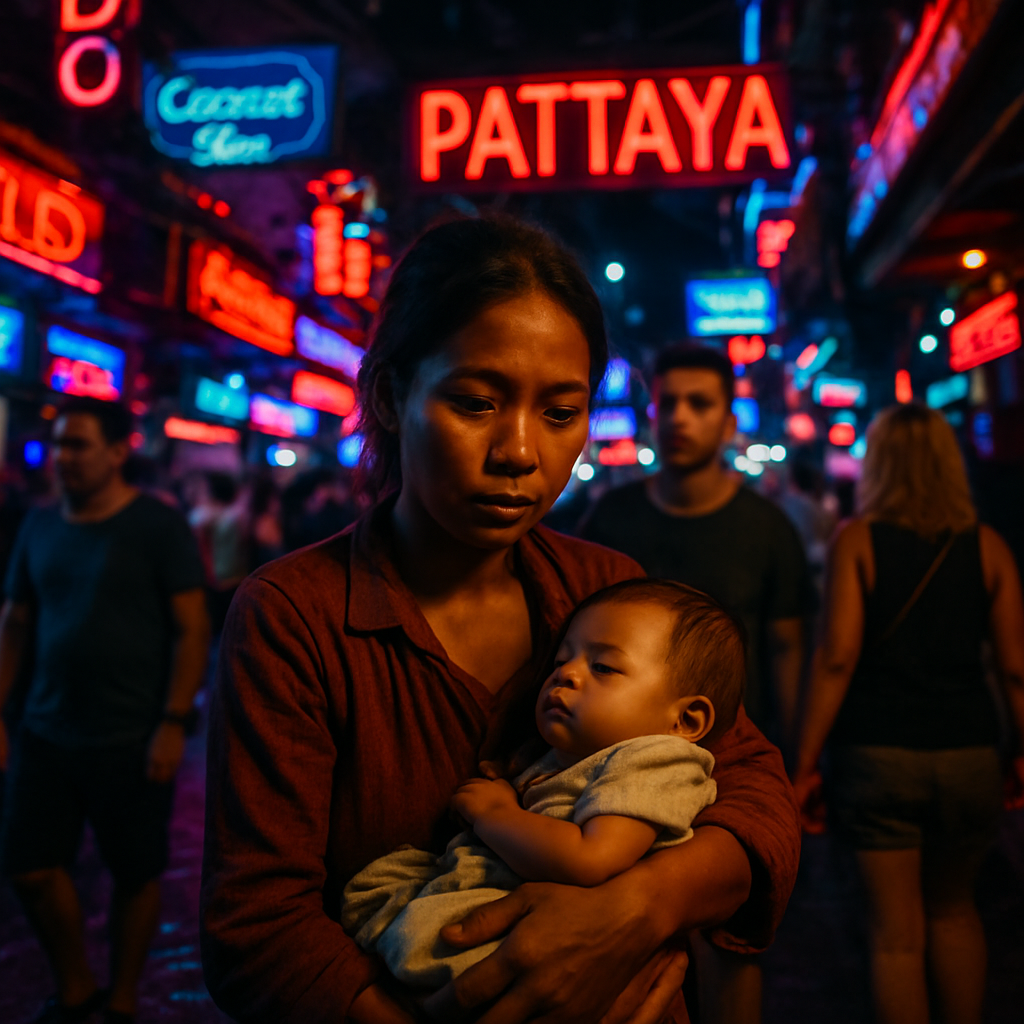
In the buzzing streets of Pattaya, beneath the neon lights and amidst the throngs of tourists, the soft cries of infants accompany the quiet pleas of desperate mothers. These scenes are not new, but they are strikingly persistent. The city's landscape is once again dotted with Cambodian women, clutching their babies in a desperate struggle for survival.
Despite rigorous attempts to address the situation, the cycle seems unbreakable. Recent reports have spotlighted the prevalence of these women in prime tourist zones, particularly outside bustling convenience stores and nightlife hubs. It's a haunting image; one of a 24-year-old mother, tenderly nursing her two-month-old baby outside a 7-Eleven, her eyes shadowed by stories of hardship. She recounts a life near the tumultuous Thai-Cambodian border, where the echoes of conflict render her village a place of despair.
"Even with a meager income of 200 baht a day, it's preferable to the life I left in Cambodia," she explains, highlighting the desperate conditions that drive these women to leave behind everything in search of hope across the border. Another woman with her young son, wary of authorities, shared her experiences. Arrested and deported once before, she returned within a month, driven by necessity — a battle against diabetes, unemployment, and the looming specter of starvation back home.
Locals, such as a resident from Surin province, a stone's throw of about 70 kilometers from the border, have grown accustomed to the presence of these beggars. "They’re a constant," she says, not with irritation but with a somber understanding. Many beggars express fear towards law enforcement yet feel that returning home would only spell worse fates for their families. The strategy is simple and heart-wrenching: women with children, positioning themselves where sympathetic hearts abound, employing lookouts to signal any approaching danger.
Motorbike taxi drivers and shopkeepers in the area narrate a familiar pattern. The women are arrested, disappear for a brief respite, and inevitably return to their habitual spots. One driver shrugs, "It's just part of the scenery now. People barely give it a second glance." The system is illegal but enduring, many earning between 400 and 500 baht daily, with the potential to garner as much as 2,000 baht during peak times. Tourists, often moved by the sight of innocent children, contribute to this unending cycle.
The situation in Pattaya reflects broader challenges — economic instability, ongoing cross-border tensions, and the plight of illegal migrants in search of a livelihood. These issues are complex, tightly interwoven with human stories of survival and resilience, begging for more than just a cursory glance.
So, as Pattaya’s glittery nightscape plays on, the lives of these beggars unfold in shadowy corners and alleyways. They return, not out of choice, but necessity, navigating a world where their presence is both invisible and glaringly obvious. These stories demand more than compassion; they seek understanding and, ultimately, change.



Comment verification
Step 1 of 3
Verify your email once to publish your comment. Your email is never shown publicly.
Enter the 6-digit code sent to .
Choose the display name shown next to your comments.