Giuseppe Taddeo Mocking Thai Taxi Driver at Suvarnabhumi Sparks Backlash
In a story that mixed bad manners with viral outrage, an Italian tourist has found himself at the center of a social media storm after posting a video that insulted a Thai taxi driver eating from a plastic bag at…
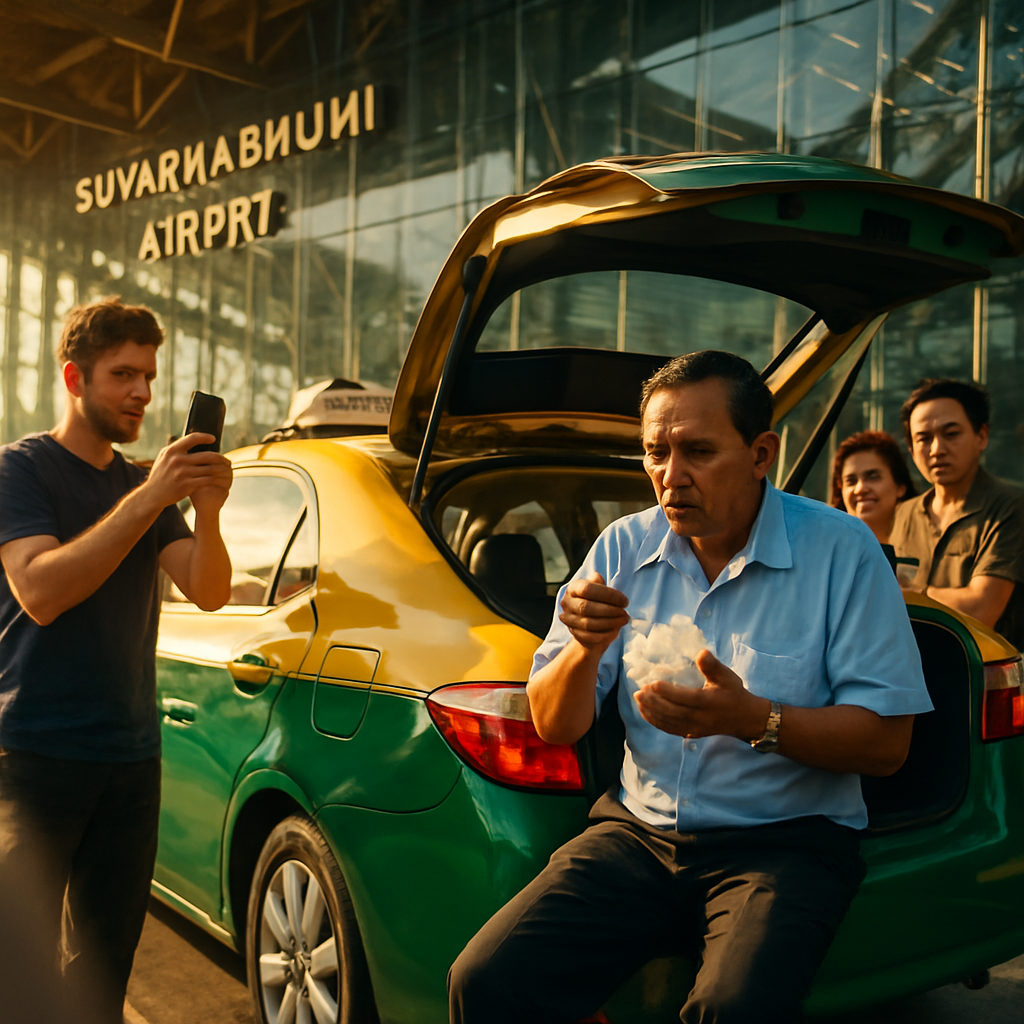
In a story that mixed bad manners with viral outrage, an Italian tourist has found himself at the center of a social media storm after posting a video that insulted a Thai taxi driver eating from a plastic bag at Suvarnabhumi Airport in Bangkok. The clip, shared on Facebook, shows the driver calmly eating with a plastic spoon while seated on the boot of his green-and-yellow taxi — a scene ordinary to many Thais but turned into fodder for ridicule by the foreign filmer.
The man behind the camera, identified on Facebook as Giuseppe Taddeo, provided a running commentary in Italian. Translated captions accompanying the post read: “Enjoy travelling in Thailand. His lunch goes viral. Let’s see why.” In the footage, Taddeo allegedly compares the driver to a dog, saying, “Look at our taxi driver. He is having lunch. He eats from a plastic bag like a dog. He is exactly the same as a dog. I love dogs, but this kind of people is disgusting.”
It didn’t take long for the video to catch fire. Within hours it had racked up hundreds of thousands of views, drawing sharp rebukes from Thai and international netizens who called out the tourist for disrespect, xenophobia, and poor manners. The post’s shock value was amplified not just by the insult itself but by the calm dignity of the taxi driver — who appears unaware that he’s being filmed and demeaned.
Many Thai commenters were quick to defend local customs. Eating food from plastic bags is a commonplace and practical habit across Thailand — a grab-and-go solution embraced by street vendors and drivers alike. To locals, it’s not a sign of filth but of convenience and resourcefulness. Several responses reminded Taddeo that cultural differences do not justify derision, and urged visitors to learn before they mock.
Beyond cultural sensitivity, others pointed to a legal angle: Thailand’s Personal Data Protection Act (PDPA). Recording and broadcasting videos of people without their consent can run afoul of privacy rules, and some viewers suggested reporting the clip to authorities or even to immigration officials. Whether legal action will follow remains unclear, but the warning underscoresthat public shaming via social media isn’t risk-free.
Rather than apologizing, Taddeo dug in. According to reports, he insisted the right to comment came from being a paying tourist who “uses his own money” to travel. He later escalated tensions by posting the location of his Bangkok hotel in the video’s comments, daring critics to confront him in person. Predictably, that move only fueled more backlash and outrage online — a classic example of how provocation can rapidly backfire in the age of virality.
The post also wasn’t an isolated jab. Observers noted that Taddeo had uploaded other videos criticizing Thailand — including one deriding a street food cart as “dirty.” Those clips helped shape the narrative: this wasn’t a lone lapse of judgment but a pattern of dismissive content that fed into national pride and frustration.
By the latest updates circulating online, the original video had drawn more than 670,000 views, nearly 900 reactions, and over 1,100 comments, and it had been republished by multiple Thai news outlets. But the metrics tell only part of the story. What followed was a broader conversation about respect, tourism, and digital responsibility.
There are a few tidy takeaways from the episode:
- Context matters: Practices that look strange through the lens of another culture are not automatically “wrong.” Understanding local customs is basic travel etiquette.
- Consent matters: Filming people without their knowledge and then posting the footage — especially with mocking commentary — can cause real harm and may have legal repercussions under laws like Thailand’s PDPA.
- Words travel fast: Social media amplifies everything. A single ill-considered post can become an international incident and follow you long after you leave a country.
For travelers, the episode is a reminder to put curiosity ahead of condescension. Bangkok is famously full of surprises: street food traders balancing steaming plates, drivers grabbing a quick meal between fares, and neighborhoods where practicality trumps polish. Those scenes are part of the city’s character, not something to be weaponized for clicks.
As for the taxi driver in the viral clip — he remains the unwilling subject of a public spectacle, emblematic of how ordinary people can be drawn into viral controversies through no fault of their own. The wider reaction suggests that, while tourists are welcome, the era of undiscerning criticism is rapidly losing social license. If nothing else, this episode may teach a reluctant visitor that empathy travels as well as a plane ticket — and costs a lot less than a public shaming.



Comment verification
Step 1 of 3
Verify your email once to publish your comment. Your email is never shown publicly.
Enter the 6-digit code sent to .
Choose the display name shown next to your comments.