Historic ASEAN Diplomacy: Anwar Ibrahim's Unprecedented Meeting with Myanmar's Junta in Bangkok
In a surprising twist of diplomatic developments across Southeast Asia, Malaysian Prime Minister Anwar Ibrahim has emerged as the first ASEAN chair to engage face-to-face with Myanmar’s military leader. The rendezvous…
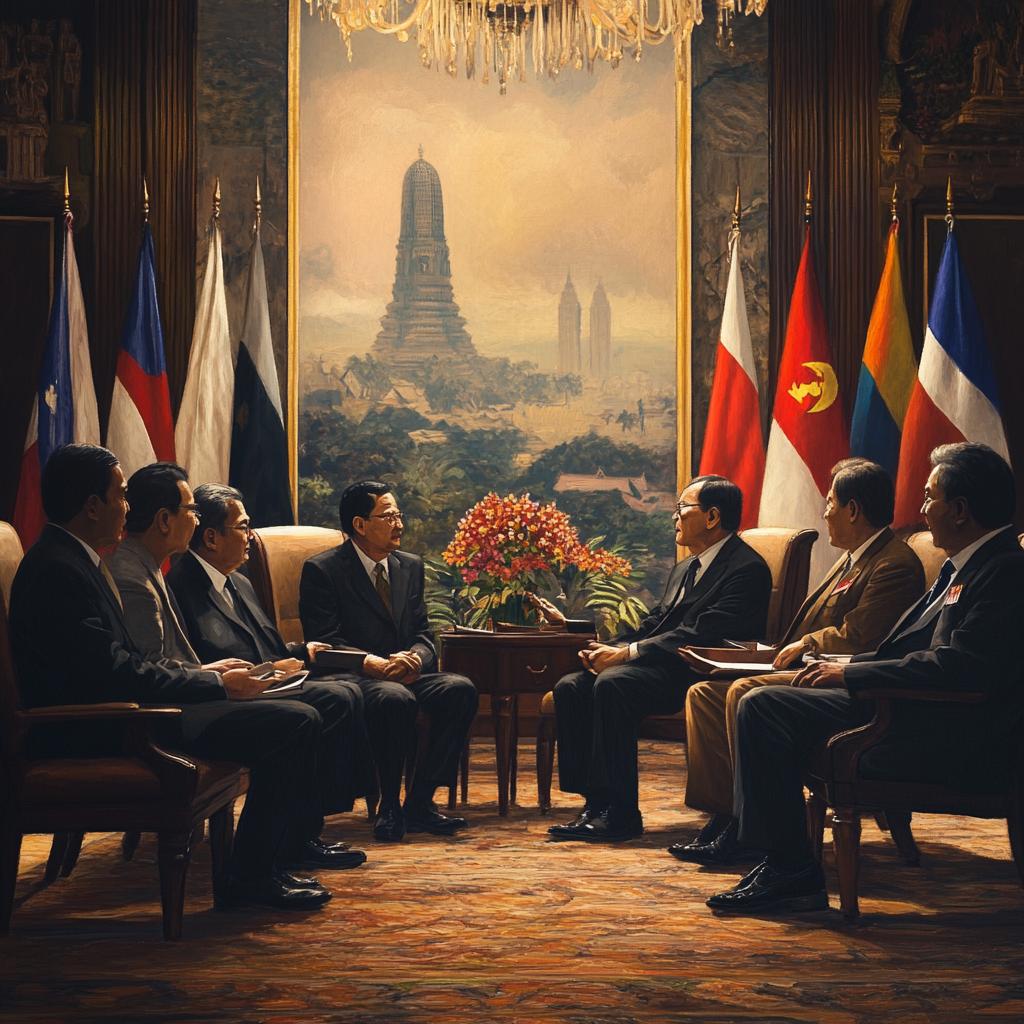
In a surprising twist of diplomatic developments across Southeast Asia, Malaysian Prime Minister Anwar Ibrahim has emerged as the first ASEAN chair to engage face-to-face with Myanmar’s military leader. The rendezvous unfolded in an unexpected setting – a Bangkok hotel room. The discreet meeting lasted about an hour on April 17, held during Anwar’s working visit to Thailand over two days. Adding a layer of intrigue to the clandestine assembly was the appearance of former Thai Prime Minister, Thaksin Shinawatra, a prominent person in Anwar’s advisory team.
Touting the meeting as “frank and constructive,” Anwar revealed that discussions principally revolved around the humanitarian crisis in Myanmar, exacerbated by a devastating earthquake late last month. “In my capacity as ASEAN Chair, it’s imperative to engage all involved parties to foster regional stability and ensure the well-being of the Myanmar populace. Such exchanges are not mere formalities; they bear great significance. We urge all involved to seriously partake in dialogue for Myanmar’s stability,” conveyed Anwar.
The Malaysian state news agency, Bernama, highlighted the urgency discussed about rapidly deploying a field hospital and broader strategies to restore normalcy. In the echo of empathy, Anwar reinforced the indispensable need for prompt, coordinated humanitarian support, reiterating ASEAN’s commitment to its Five-Point Consensus. He underscored the exceptional nature of this encounter, further evoking ASEAN's dedication to making impactful progress.
A noteworthy point brought to light during the meeting was the rare initiative by the junta to release 4,800 detainees, an apparent gesture toward political de-escalation. But Anwar’s diplomatic overture wasn't limited to just the junta. The itinerary marks another significant meeting with representatives from Myanmar’s shadow National Unity Government (NUG) – which spearheads resistance against the military regime. This dual-approach strategy, involving both the junta and opposition, deviates from usual ASEAN practices, indicating a potential shift towards pragmatic solutions for Myanmar’s protracted crisis.
While Anwar stressed that the Bangkok meeting revolved purely around “humanitarian considerations,” eyes remain peeled on the outcomes. Observers grapple with the age-old question: will this diplomatic ballet yield tangible results, or dissipate into courteous photo ops?
Within the rapidly evolving narrative of Southeast Asian relations, Anwar Ibrahim’s unprecedented diplomatic steps could well be the catalyst for notable shifts in resolving Myanmar's enduring crisis. As the saga unfolds, regional stability hangs in the balance, revealing a new chapter in ASEAN’s pursuit of harmony and progress. From surprise guests to surprise agendas, the stakes are higher than they've ever been, and so are the hopes for a better tomorrow for Myanmar.



Comment verification
Step 1 of 3
Verify your email once to publish your comment. Your email is never shown publicly.
Enter the 6-digit code sent to .
Choose the display name shown next to your comments.