Khao Praneat: Thailand’s Premium, Traceable Specialty Rice
Thailand has a new culinary swagger. Meet “Khao Praneat” (Exquisite Rice) — a national branding pivot that aims to recast Thai rice not as a bulk commodity, but as an artisanal, terroir-driven luxury. It’s part…
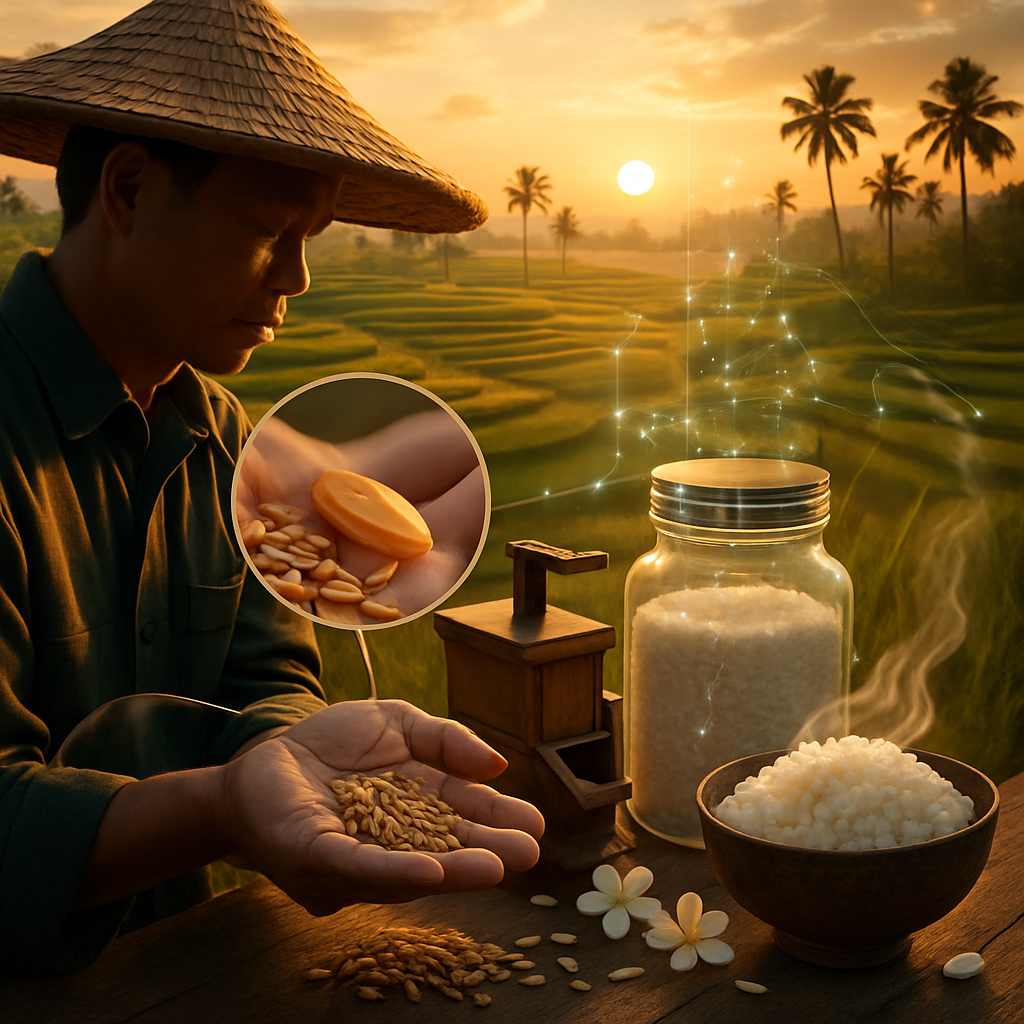
Thailand has a new culinary swagger. Meet “Khao Praneat” (Exquisite Rice) — a national branding pivot that aims to recast Thai rice not as a bulk commodity, but as an artisanal, terroir-driven luxury. It’s part marketing, part cultural reclamation, and entirely a strategic response to a global market that now buys with its heart and its head: taste, provenance and proof.
Why Thailand can’t win on volume anymore
For decades Thailand ruled rice markets by sheer scale, producing over 20 million tonnes a year. But the game has changed. Average yields—roughly 600–700 kg per rai—are simply outpaced by regional rivals like Vietnam, which hits around 1,200 kg per rai. Price wars against more productive producers are a losing proposition. The smart move? Stop racing on quantity and start competing on quality.
A biodiversity secret worth selling
Thailand’s ace in the hole is not acres, but ancestry. With more than 5,000 indigenous rice strains in its genetic library, the country can craft narratives and flavor profiles other producers cannot replicate. Khao Praneat leverages that living heritage — spotlighting varieties from the aromatic classics like pure Khao Hom Mali and Khao Hom Pathum to rarities such as Khao Leum Pua and Khao Rai Dok Kha.
The three pillars of Exquisite Rice
Khao Praneat isn’t a label slapped on a bag; it’s a quality architecture built on three pillars:
- Exceptional varieties: Only strains with proven sensory and cultural value make the cut.
- Meticulous cultivation: Specific geographical indications (GI), full traceability, and adherence to standards like GAP and Organic ensure the rice is both safe and terroir-authentic.
- Artisanal processing: Slow milling to preserve aroma, careful selection to reduce broken grains and precise moisture control to guarantee peak cooking performance.
As Commerce Minister Supajee Suthumpan puts it, buyers today "no longer choose rice simply by habit; they prioritise taste, origin, the producer’s story, and comprehensive consumption information." Nop Dharmavanich of Rice Hub frames the ambition plainly: get global buyers to treat premium Thai rice the way they treat specialty coffee or fine wine.
Storytelling + data = trust (and better prices)
Emotional desire draws the buyer in — a charming origin story, the aroma of Khao Hom Mali Thung Kula Rong-Hai, an image of a sun-drenched paddie. But desire only unlocks premium pricing when paired with verifiable proof. “Data is the heart of the New Rice Economy,” says Atthapon Chaianun, president of the Thai Digital Education Association (TDeD). If a grain tastes divine but can’t be traced, it’s still a commodity.
That’s why the plan includes a central database and QR-code traceability: consumers and importers can scan and know exactly where a bag of rice came from, which farmer grew it, and under what standards it was produced. This prevents the old habit of “general averaging,” where top-tier rice is diluted into bulk pricing, and ensures model farmers actually see the premium they deserve.
From pilot farms to global plates
The initiative starts with 200 model farmer groups, selected from a national database of over 700 producers. These early adopters become living proof that heirloom varieties plus exacting practices translate into superior rice — and superior income. The target is audacious: help farmers earn five to ten times more for their harvests.
And it’s not just theory. At Thailand Rice Fest 2025, Khao Praneat scored an early win: a 16-million-baht export deal for 450 tonnes of specialty rice. That contract is more than a transaction; it’s validation that international buyers will pay for provenance, traceability and a good story.
What this means for the future
Thailand’s pivot from commodity to craft could reshape the country’s rice economy. Instead of being squeezed by yield-focused competitors, Thai farmers can cultivate distinctiveness — aromatic profiles, historical ties to place, meticulous post-harvest care — and be paid accordingly. If the approach scales, it promises a more sustainable livelihood for farming communities and a stronger national culinary brand.
Think of Khao Praneat as Thailand’s declaration that rice can be as celebrated as any fine vintage. It’s an invitation to the world: taste the difference, scan the QR, meet the farmer, and understand why a single grain can carry an entire culture.
For consumers and buyers who demand both soul and transparency, Thai rice is ready for a starring role on the global table — fragrant, traceable and undeniably exquisite.



Comment verification
Step 1 of 3
Verify your email once to publish your comment. Your email is never shown publicly.
Enter the 6-digit code sent to .
Choose the display name shown next to your comments.