Thailand

Lwin Lwin Aye Falls from Ratchayothin Bridge After Motorbike Taxi Driver Dozes

A startling early-morning scene on a Bangkok bridge was captured on TikTok and has since sparked a wave of concern about road safety, driver fatigue and the limits of app-based transport. At roughly 7:00 a.m. on August…
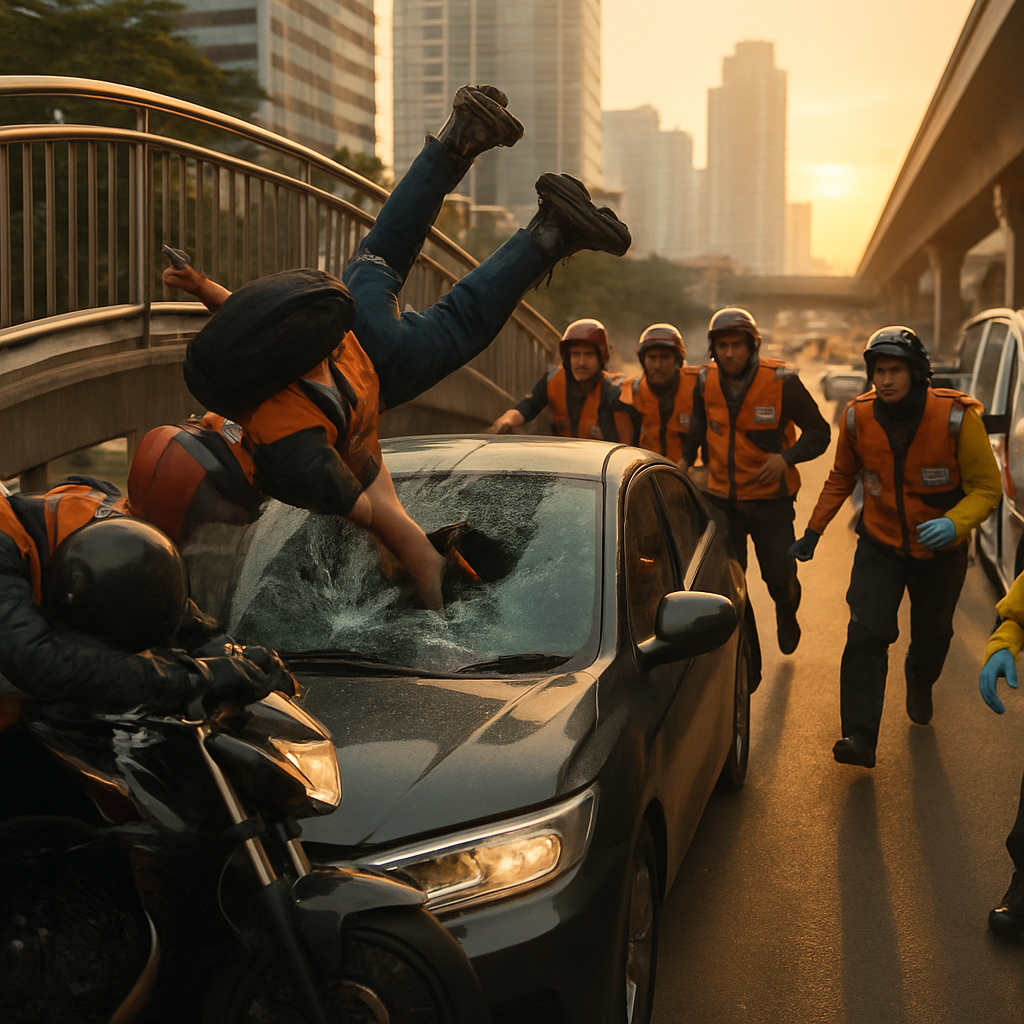
Lwin Lwin Aye Falls from Ratchayothin Bridge After Motorbike Taxi Driver Dozes

A startling early-morning scene on a Bangkok bridge was captured on TikTok and has since sparked a wave of concern about road safety, driver fatigue and the limits of app-based transport. At roughly 7:00 a.m. on August 25, commuters at the Ratchayothin Intersection in Chatuchak watched a motorbike taxi passenger—later identified as 28-year-old Burmese national Lwin Lwin Aye—plummet from a pedestrian bridge after the motorcycle driver fell asleep at the wheel.

The moment that stopped traffic

Video shared by @rnatpakan showed the woman tumbling through the railings and landing on the roof of a passing sedan. The impact was enough to shatter the car’s windscreen, a chilling testament to how quickly a routine ride can turn catastrophic. By all accounts, the motorbike itself struck the bridge railing; the rider, who did not fall off the bridge, admitted later that he had dozed while driving.

On-the-spot rescue and eyewitness accounts

A nearby motorcycle taxi driver named Kai, 46, told Channel 7 that he had been serving passengers when news of the accident reached him. He rushed over to help. Bystanders described a chaotic scene as rescuers attended to the injured woman and secured the area. Lwin Lwin Aye was conscious when transported to Paolo Kaset Hospital and remains under close medical care; hospital sources have not publicly updated her current condition.

Driver named, charged

Police at Phahonyothin Police Station identified the rider as Thanaphat. He told officers he had fallen asleep while en route—a confession that carries legal consequences. Thanaphat has been charged under Section 390 of the Thai Criminal Code for committing a reckless act causing injury to another person. The statute carries a maximum penalty of one month imprisonment, a fine up to 10,000 baht, or both. Authorities warned that if the victim’s condition deteriorates, more serious charges could follow.

Why this matters beyond one shocking clip

The clip went viral not just because it's dramatic, but because it highlights a recurring problem: fatigue and risky behavior among drivers, especially in app-based transport where dense schedules and slim margins can push drivers to cut corners on rest. Bangkok’s streets hum with motorcycles and delivery riders who balance precariously long hours against customer demand. When sleep becomes the currency of convenience, passengers can be the ones to pay the price.

Not an isolated incident

Thailand has seen similar unnerving accidents in recent months. In April, a woman in Pathum Thani province plunged from a five-meter-high bridge onto a road barrier; she later conceded she had attended a party before the fall. Last December, a woman in Samut Prakan fell from a pedestrian bridge after dropping her phone through the railing and leaning over to retrieve it. Those cases—like the Ratchayothin fall—underscore how moments of inattention, impairment or misjudgment can have severe consequences.

Public reaction and what comes next

On social media, reactions ranged from sympathy for the injured passenger to anger at the rider and calls for better regulation of app-based transport providers. Safety advocates are likely to point to the need for stricter hours-of-service rules, mandatory rest periods, or app-driven safeguards that limit consecutive fares. For now, police investigations will determine whether additional charges are warranted and whether systemic steps are taken to prevent repeats.

Takeaways for riders and passengers

  • Passengers: if a driver appears tired, ask to stop and rest or request another driver. Your safety is worth the extra minutes.
  • Drivers: prioritize sleep and obey local traffic laws—no fare is worth risking lives for speed or income.
  • Policy makers and platforms: consider built-in protections—time limits, fatigue-monitoring reminders, or incentives for safe driving behavior.

The Ratchayothin Intersection fall is a sobering reminder of how fragile safety can be when human limits meet the pressure of modern, app-driven mobility. As Lwin Lwin Aye recovers at Paolo Kaset Hospital and authorities continue their inquiry, the incident leaves behind more than shattered glass: it should prompt a national conversation about the balance between convenience, work conditions and, above all, human life on the road.


71Comments
Sort by:
JJoe··1 pts · 4 replies
J
Joe
This is horrifying and predictable when people are forced to work insane hours for app companies.
1
LDLarry Davis··1 pts
LD
Larry Davis
Predictable maybe, but the rider also admitted to dozing; there’s personal responsibility too, not just corporate greed.
1
MMai··1 pts
M
Mai
I feel so bad for the woman who fell. She could have died because someone chose fares over sleep.
1
Ggrower134··1 pts
G
grower134
People keep blaming apps but the driver could be punished and jailed. End of story.
1
JJoe··1 pts
J
Joe
I agree personal responsibility matters, but we can’t ignore the platform incentives that make fatigue common.
1
SSofia··1 pts · 3 replies
S
Sofia
Apps must install hard limits on consecutive rides and force breaks, period.
1
DADr. Anan Prasit··1 pts
DA
Dr. Anan Prasit
From a public health perspective, fatigue is a measurable risk factor and enforceable app policies could reduce accidents.
1
UUser123··1 pts
U
User123
Who enforces it though? The government, the app, or the riders? Regulations tend to lag behind technology.
1
SSofia··1 pts
S
Sofia
Start with the platforms then pressure regulators. If companies refuse, riders should boycott until change happens.
1
KKai··1 pts · 3 replies
K
Kai
I was there and rushed to help. Chaos everywhere, people screaming, then silence when she hit the car.
1
PP'Kai··1 pts
P
P'Kai
Thank you for helping. Eyewitnesses like you matter so much in these moments.
1
NNina··1 pts
N
Nina
Did the driver seem drunk or just sleepy? That matters for charges and public reaction.
1
KKai··1 pts
K
Kai
He said he dozed, not drunk. Still, adrenaline makes it hard to tell at the scene.
1
DNDr. Narin··1 pts · 3 replies
DN
Dr. Narin
Section 390 seems light if the victim's condition worsens; legal reform should reflect real harm caused by negligence.
1
TThanaporn··1 pts
T
Thanaporn
Be careful not to criminalize poverty. Many riders lack options and punishments alone won’t fix systemic problems.
1
DADr. Anan Prasit··1 pts
DA
Dr. Anan Prasit
A balanced approach: stricter penalties for gross negligence plus social supports for drivers could deter risky behavior without undue harm.
1
DNDr. Narin··1 pts
DN
Dr. Narin
Agreed, penalties and protections must go together. Right now the law reads like a slap on the wrist for life-threatening acts.
1
Ggrower134··1 pts · 3 replies
G
grower134
Why is everyone defending the driver? He fell asleep while driving someone. That’s reckless and selfish.
1
SSofia··1 pts
S
Sofia
Nobody defended him fully, but understanding economic drivers explains why it happens and helps solve it.
1
JJoe··1 pts
J
Joe
Calling for accountability doesn’t preclude asking how to prevent these situations through better work conditions.
1
Ggrower134··1 pts
G
grower134
Fine, give them better rules. Still think individuals should be held criminally responsible when people get hurt.
1
MMaria··1 pts
M
Maria
My heart goes out to Lwin Lwin Aye and her family. This could happen to anyone.
1
TThanaporn··1 pts · 3 replies
T
Thanaporn
As a Burmese-Thai community member, I worry about added xenophobia since the victim is a migrant.
1
NNina··1 pts
N
Nina
Good point. Social media can quickly turn sympathy into blame and target minorities.
1
SSomchai··1 pts
S
Somchai
But the news names the driver too; accountability is about acts, not ethnicity.
1
TThanaporn··1 pts
T
Thanaporn
Exactly, hold the driver accountable but don’t let comments degrade into attacks on migrants or victims.
1
UUser42··1 pts · 2 replies
U
User42
This smells like apps pushing drivers with incentives to accept rides. It’s a trap.
1
PP'Kai··1 pts
P
P'Kai
I’ve seen those incentive spikes. Drivers take orders back-to-back to hit targets even when exhausted.
1
UUser42··1 pts
U
User42
So platforms are selling convenience at the cost of safety. That needs exposure.
1
KNK. Narin··1 pts · 3 replies
KN
K. Narin
Practical fixes: mandatory rest windows, fatigue-detection devices, temperature checks, and better rider education.
1
Ggrower134··1 pts
G
grower134
Fatigue detectors sound expensive. Who pays? Drivers already earn little.
1
DADr. Anan Prasit··1 pts
DA
Dr. Anan Prasit
Costs could be subsidized through licensing fees or a small passenger surcharge earmarked for safety.
1
KNK. Narin··1 pts
KN
K. Narin
Exactly, shared responsibility is the only way to implement practical tech solutions without bankrupting drivers.
1
SSomchai··1 pts · 2 replies
S
Somchai
We keep spinning in circles. Laws, apps, sympathy, solutions—what actually changes when politicians answer cameras?
1
JJoe··1 pts
J
Joe
Grassroots pressure, sustained media attention, and targeted regulation can force changes, but it takes time.
1
MMaria··1 pts
M
Maria
And voter pressure. If people demand safer streets, politicians might react.
1
LLwinFan··1 pts
L
LwinFan
Hope she recovers fully. Videos are easy to share but we should avoid turning this into voyeurism.
1
AAnya··1 pts · 1 reply
A
Anya
What about mandatory insurance that covers passengers in these app services? That would at least help victims.
1
UUser123··1 pts
U
User123
Insurance exists but payouts can be slow and contested. Better regulation of claims processing is needed.
1
PPetch··1 pts · 2 replies
P
Petch
People complaining online won’t fix the root cause: the gig economy treats humans like replaceable robots.
1
SSofia··1 pts
S
Sofia
Exactly, the gig model externalizes costs and risks. Platforms must internalize safety costs.
1
PPetch··1 pts
P
Petch
Until there’s a shift in business models, expect more tragedies like this.
1
DSDr. Suriya··1 pts · 2 replies
DS
Dr. Suriya
We need data-driven policies. Collect accident, shift-length and payment data to design evidence-based rules.
1
KNK. Narin··1 pts
KN
K. Narin
Yes, transparent data sharing between apps and regulators is crucial for effective interventions.
1
DSDr. Suriya··1 pts
DS
Dr. Suriya
And anonymized datasets can protect drivers while informing public health solutions.
1
Ggrower_bob··1 pts · 2 replies
G
grower_bob
Why are people still riding motorcycles in traffic like that? It’s dangerous by design.
1
JJoe··1 pts
J
Joe
Because for many it’s the fastest, cheapest option and livelihoods depend on it.
1
Ggrower_bob··1 pts
G
grower_bob
I get that, but safety infrastructure also needs to evolve so people aren’t forced into risky choices.
1
LLeela··1 pts · 2 replies
L
Leela
Bystanders did the right thing by helping. Community response matters in those first minutes.
1
KKai··1 pts
K
Kai
Thanks. We just did what we could. Hope the hospitals have resources to treat her well.
1
LLeela··1 pts
L
Leela
Sending prayers and practical aid to her family if possible.
1
Ttech_fan··1 pts · 1 reply
T
tech_fan
Fatigue monitoring apps using phone sensors could detect micro-sleeps. Tech can help if implemented responsibly.
1
DADr. Anan Prasit··1 pts
DA
Dr. Anan Prasit
Promising, but privacy, false positives, and driver consent must be addressed before deployment.
1
OOldSam··1 pts · 1 reply
O
OldSam
Back in my day drivers respected the road more. Now profit comes before people.
1
NNina··1 pts
N
Nina
Nostalgia aside, working conditions have changed dramatically and regulation needs updating.
1
RRina··1 pts · 1 reply
R
Rina
If the victim’s condition worsens prosecutors should upgrade charges. The law should reflect the harm done.
1
SSomchai··1 pts
S
Somchai
Agreed, but legal change must be paired with preventive measures so this isn’t just reactive justice.
1
KKaiFan··1 pts · 1 reply
K
KaiFan
Can someone explain Section 390? One month max seems insufficient for life-altering injuries.
1
DNDr. Narin··1 pts
DN
Dr. Narin
Section 390 covers reckless acts causing injury. If harm escalates, other statutes could apply with harsher penalties.
1
LLea··1 pts · 2 replies
L
Lea
People are quick to share, slow to act. Use the outrage to push for policy, not performative posts.
1
UUser42··1 pts
U
User42
How do we translate outrage into policy though? Petitions, protests, class-action suits?
1
LLea··1 pts
L
Lea
Start local: file complaints, contact representatives, organize rider unions or cooperatives.
1
MMigrantAid··1 pts · 1 reply
M
MigrantAid
We should also ensure migrants get proper medical care and translation when hospitalized.
1
TThanaporn··1 pts
T
Thanaporn
Yes, cultural mediators at hospitals would help communication and legal processes for non-Thai patients.
1
Qquiet_reader··1 pts
Q
quiet_reader
I watched the clip and felt sick. Hard to unsee those images but necessary to spur change.
1
AAvani··1 pts · 1 reply
A
Avani
Rider training programs with mandatory certification might reduce these incidents long-term.
1
PPetch··1 pts
P
Petch
Training helps but only if enforcement and incentives align with safe practices.
1
OOpsAdmin··1 pts · 1 reply
O
OpsAdmin
Platforms should publish safety audits quarterly. Transparency could pressure them to improve.
1
Ttech_fan··1 pts
T
tech_fan
Agreed. Independent audits would be more credible than self-reports.
1
RRachel··1 pts · 1 reply
R
Rachel
This will fade from feeds in a week unless families and advocates keep the story alive.
1
MMaria··1 pts
M
Maria
Then we must keep talking, donating, and supporting systemic fixes so it doesn’t fade without change.
1
