Marines Find Starving Lions and Bears at Thamoda Casino Compound, Trat
In a raid that read more like a grim wildlife thriller than a routine military sweep, Royal Thai Marine forces uncovered a heartbreaking scene on December 22 in Ban Tha Sen, Trat province. Inside a compound linked to…
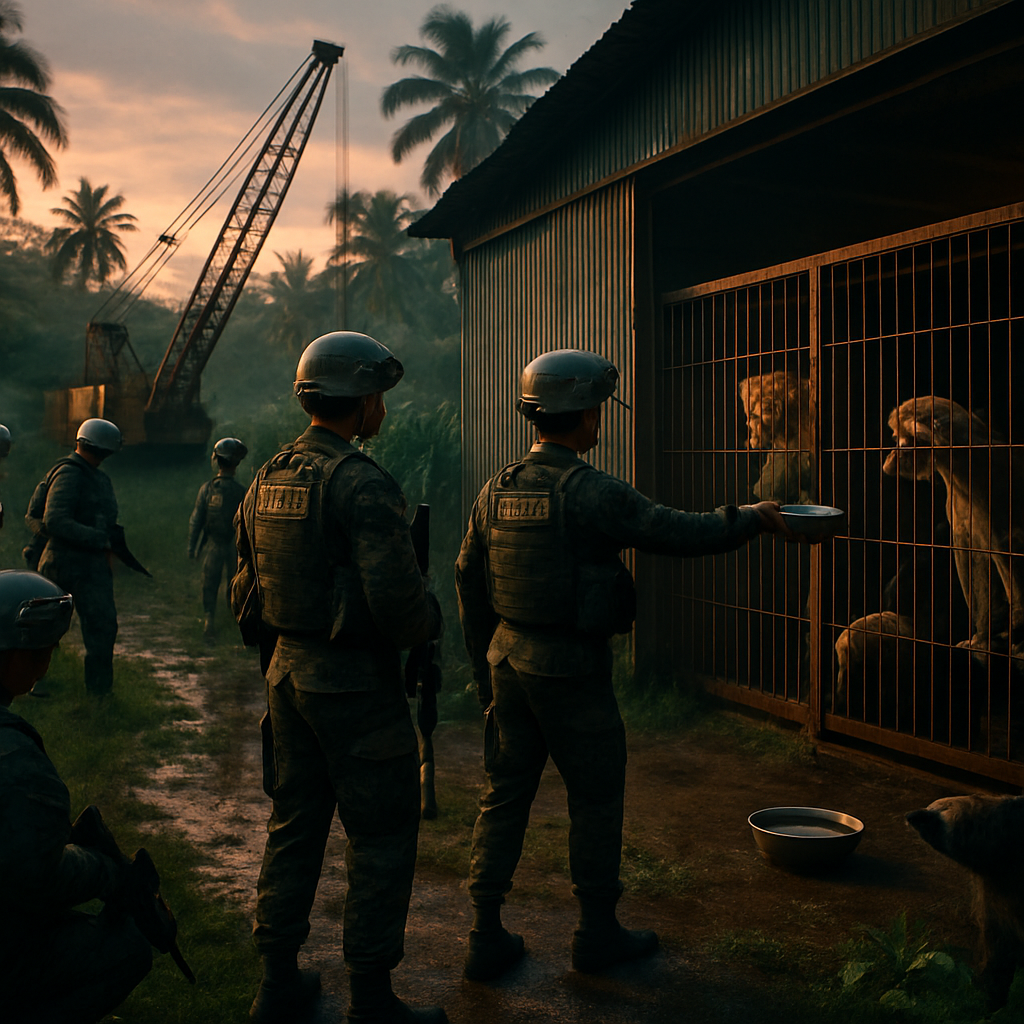
In a raid that read more like a grim wildlife thriller than a routine military sweep, Royal Thai Marine forces uncovered a heartbreaking scene on December 22 in Ban Tha Sen, Trat province. Inside a compound linked to the Thamoda casino near the Thai–Cambodian border, troops found two lions and three bears locked in metal cages — gaunt, aggressive and reportedly without food or water for several days.
The raid: what troops found
The operation began after reports of foreign operations and unusual activity in the area. As marines cleared the Thamoda casino grounds and surrounding properties, they entered a building where the animals were being kept. According to military sources, the compound had reportedly been used by Cambodian military personnel as a command post and was also tied to a casino network operating near the border.
Because the big cats and bears were agitated and potentially dangerous, troops could not safely open the cages. Instead, they improvised — tossing food and water into the enclosures to ease the animals’ immediate hunger while awaiting specialist help. Initial assessments suggested the animals had gone without proper care for three to four days and appeared severely malnourished.
Ownership, cross-border complications and safety risks
Investigators say the owner is believed to be a Chinese national connected to a casino network in the region, although authorities are treating ownership claims as part of an ongoing inquiry. The area’s recent violent clashes may have contributed to the apparent abandonment and lack of care for the animals; instability and sudden departures are often the reasons exotic animals end up neglected in conflict zones.
Complicating the rescue, military officers warned that landmines and other unexploded ordnance might be present around the compound. Officials contacted the Department of National Parks, Wildlife and Plant Conservation to coordinate an urgent rescue and relocation, but clearance and safe access were necessary before any heavy machinery could be brought in to free the animals from their robust cages.
What comes next
Authorities said the extraction operation was expected to proceed on December 23 once explosives experts certified the site safe. Because the cages are large and rigid, cranes or other heavy equipment will likely be required to remove panels and lift animals out without further distress or injury. The Department of National Parks will oversee medical assessments and temporary housing, and animal welfare groups are expected to be involved in the longer-term relocation and rehabilitation plans.
A sombre reminder: a separate bear mauling and a medical triumph
The discovery in Ban Tha Sen comes against the backdrop of another recent bear-related story in Thailand that captured both horror and hope. A 60-year-old Thai fisherman, reportedly mauled by an Asiatic black bear, survived a brutal attack that tore much of his face away. He underwent multiple, innovative surgeries using donor cartilage and skin grafts to reconstruct facial features and restore basic functions.
Remarkably, within two months the fisherman could breathe and eat on his own and had regained essential facial movements — a recovery hailed as a medical triumph and recently documented in a surgical journal. That case underscores both the danger wild animals can pose when human-wildlife boundaries are blurred and the extraordinary lengths modern medicine can go to repair catastrophic injury.
Why this matters
Beyond the immediate drama, the Ban Tha Sen discovery raises broader questions about exotic animal ownership, cross-border criminal networks, and wildlife protection in conflict-prone zones. When casinos, private compounds, and armed operations intersect near international borders, animals often become collateral victims — kept illegally, moved abruptly, and neglected when their human keepers flee or are detained.
For wildlife officials and conservationists, the priority is clear: secure the animals, provide urgent veterinary care, and trace the supply chain that brought them there. For local authorities, the challenge is equally stark — balancing a criminal probe, a mine-clearing operation and a delicate animal rescue without endangering personnel or the animals themselves.
A cautious ending — and a call for better safeguards
As rescue teams prepare to extract the lions and bears and investigations continue into the casino links and ownership, the situation serves as a call to strengthen cross-border cooperation on wildlife crimes and to ensure that exotic species are not treated as trophies or bargaining chips in illicit enterprises. The coming days will show whether the animals recover and whether authorities can unravel the network that left them to suffer.
Whatever the outcome, both stories — the starving big cats and bears in Ban Tha Sen and the fisherman’s remarkable surgical recovery — remind us of the fragile line that divides human drama, animal welfare and medical possibility. In the aftermath, the hope is that compassion, expertise and justice will move faster than the neglect that put these creatures at risk.



Comment verification
Step 1 of 3
Verify your email once to publish your comment. Your email is never shown publicly.
Enter the 6-digit code sent to .
Choose the display name shown next to your comments.