Mut Saveun Killed in Cambodia–Thailand Border Clash
On December 11, Cambodia paused to mourn one of its own. Mut Saveun, a 43-year-old soldier assigned to the 67th Tank Battalion and four months pregnant, was publicly honoured by officials after she was reportedly killed…
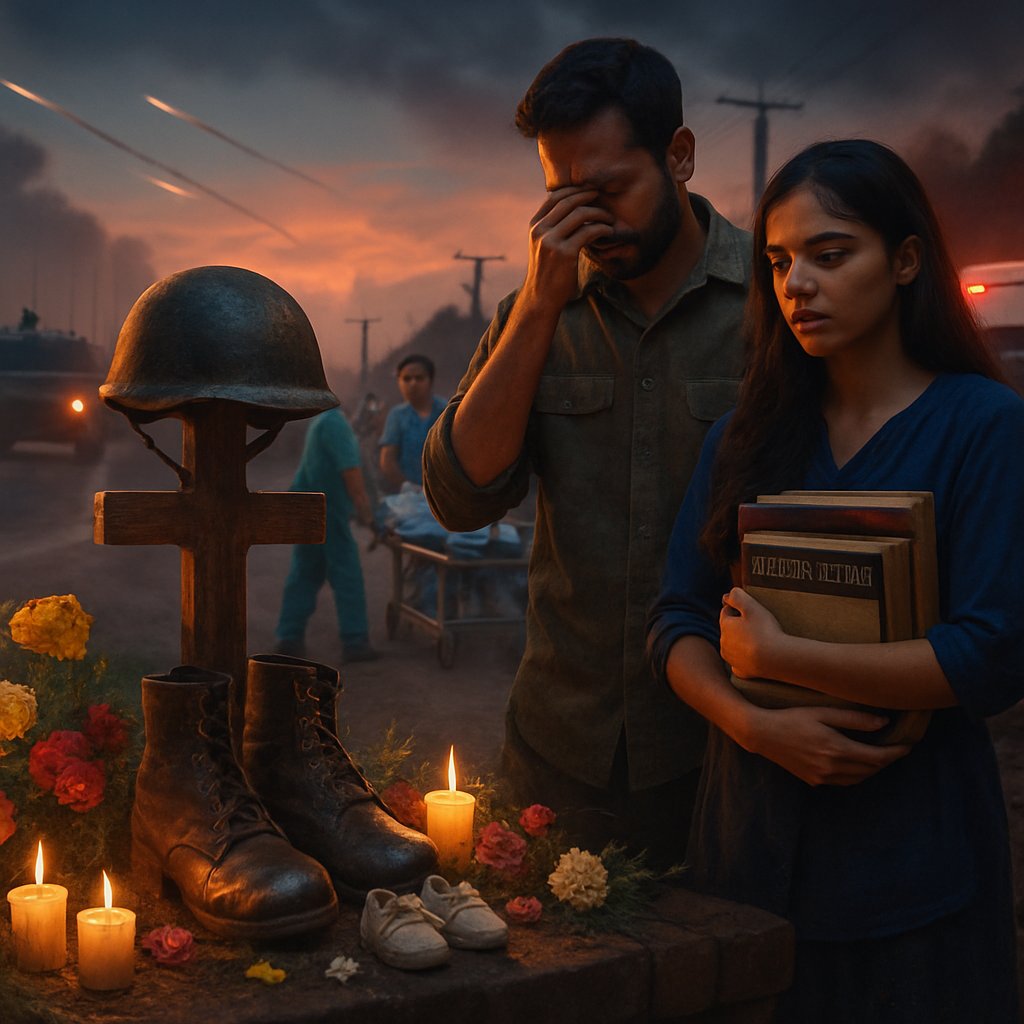
On December 11, Cambodia paused to mourn one of its own. Mut Saveun, a 43-year-old soldier assigned to the 67th Tank Battalion and four months pregnant, was publicly honoured by officials after she was reportedly killed during a frontline clash with Thai forces the day before in the Boeung Trakoun area. The Minister of Women’s Affairs posted a message of sorrow, praising Saveun’s bravery and promising that her sacrifice would live on in the hearts of the Cambodian people.
The details emerging from the border skirmish paint a picture that is equal parts tragic and puzzling. Saveun—described by officials as coming from a military family—left behind a husband and a daughter who is currently in her second year studying English literature at university. The image of a pregnant woman serving on a tense frontline understandably raises questions about how and why she came to be stationed there. Cambodian authorities emphasised that Saveun died defending the line, and that her courage, sacrifice and love of country will be remembered long after the headlines fade.
The loss of Saveun is part of a broader flare-up between Cambodia and Thailand that has turned deadly. Cambodian officials say the confrontation in Boeung Trakoun on December 10 was one episode in a series of clashes that day. Two more Thai soldiers, stationed in Si Saket and Sa Kaeo, were also reported killed, bringing the total number of Thai casualties to seven. Cambodian forces, according to accounts from the border region, allegedly launched BM-21 rockets toward Phanom Dong Rak Hospital in Surin that morning, forcing medical staff and patients to evacuate—a chilling reminder of how quickly civilian infrastructure can be dragged into military exchange.
Beyond the immediate human cost on both sides, the incident underlines how fragile border stability can be between neighbours with a long, complicated history. Tanks, rockets and frontline posturing are grim realities, but so are the familial and everyday stories that are suddenly interrupted. Saveun’s daughter, studying literature and likely dreaming of essays and academic life, now confronts a loss that rewrites her family story.
The escalation even drew attention from the United States: at a Pennsylvania rally, former President Donald Trump said he intended to intervene by phone. “I hate to say this one, named Cambodia-Thailand, and it started up today, and tomorrow I am going to have to make a phone call,” he told the crowd. “Who else could say I’m going to make a phone call and stop a war [between] two very powerful countries, Thailand and Cambodia?” Whether that call would have any practical effect or was a rhetorical flourish remains a matter for diplomats; the remark, however, illustrates how quickly local conflicts can attract global attention in an age of instant media.
For people on the ground in border provinces such as Surin, Si Saket and Sa Kaeo, the headlines are not abstractions. Rockets near hospitals, military exchanges that spill over into civilian zones and the movement of troops and armoured vehicles up and down dusty roads all feed into a climate of fear and uncertainty. Hospitals evacuating patients is particularly stark: medical facilities are meant to be safe havens, not collateral victims. When they become targets, intentionally or accidentally, the humanitarian stakes rise sharply.
As national leaders trade statements and, in some cases, make grandiose promises of intervention, the focus returns inevitably to the people directly affected. Saveun’s case is a poignant reminder of the human faces behind military statistics. Her family—her husband and daughter—now have to navigate a future none of them expected. Her colleagues in the 67th Tank Battalion will carry the memory of a comrade who, according to official statements, stood her ground and paid the ultimate price.
There are still unanswered questions. Why was a pregnant woman deployed to a frontline position? Who will investigate the clash and determine what happened in Boeung Trakoun? What protections are in place to shield civilians and medical staff from the spillover of military confrontations? Accountability and transparency will be essential if the two nations are to de-escalate and restore some measure of safety along their shared border.
For now, the country mourns, and the region watches. Tributes to Mut Saveun call for remembrance and respect for her sacrifice, while diplomats and leaders juggle public pressures and strategic considerations. In the end, the smallest personal stories—families, students, nurses, hospital patients—are what most urgently demand care and attention. If anything positive can be sought from this tragedy, it is the hope that Saveun’s death will prompt a hard look at how frontline decisions are made and how civilians can be better protected when tensions flare between neighbours.
The border remains a fragile line on a map and, to those who live near it, lines of livelihood and life. In the wake of December’s violence, many will be waiting to see whether mourning turns into momentum for restraint—or whether the flames of conflict will spread further.



Comment verification
Step 1 of 3
Verify your email once to publish your comment. Your email is never shown publicly.
Enter the 6-digit code sent to .
Choose the display name shown next to your comments.