Nakhon Si Thammarat Claw Machine Crackdown: Gambling Concerns Spur Police Raid on May 17
In a bustling corner of Nakhon Si Thammarat, an unprecedented spectacle unfolded this past Saturday, May 17. Amidst a backdrop of eager schoolchildren and illuminated tutoring centers, the familiar jingles and…
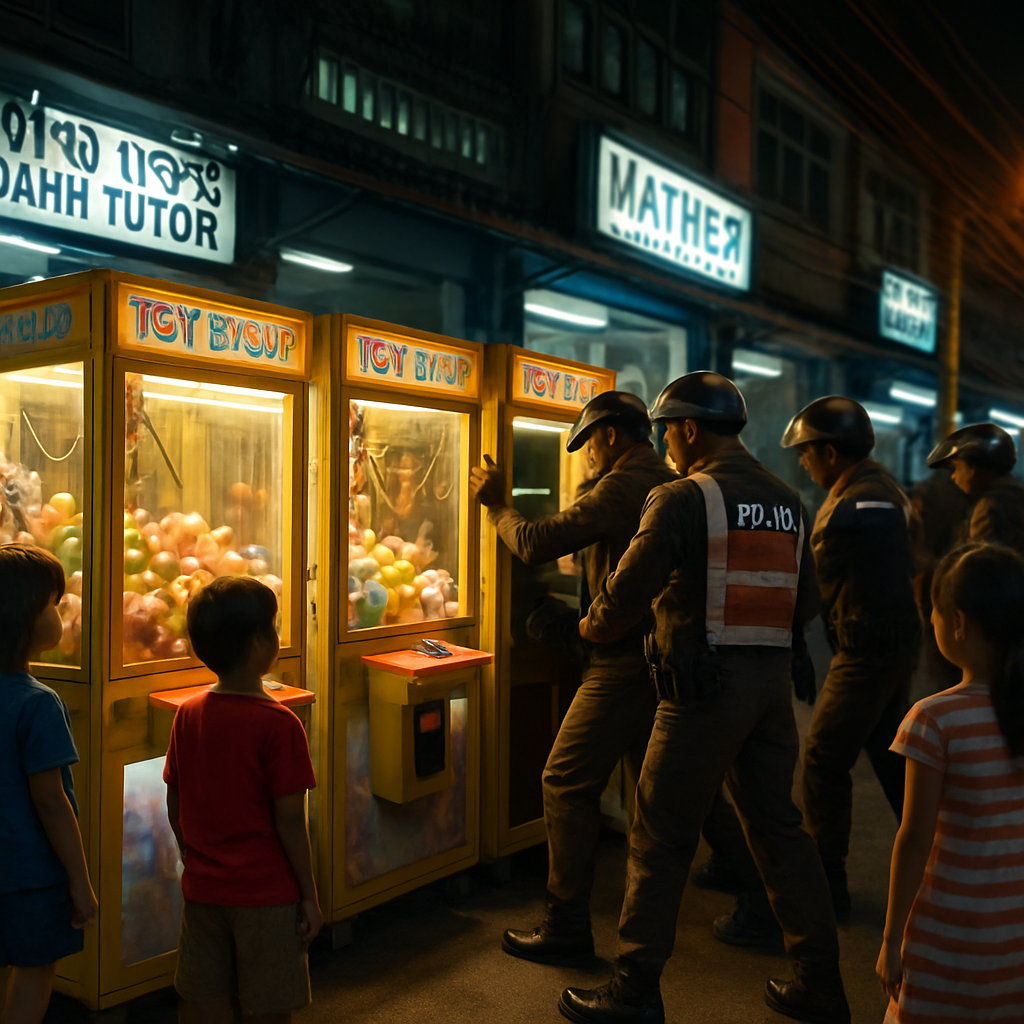
In a bustling corner of Nakhon Si Thammarat, an unprecedented spectacle unfolded this past Saturday, May 17. Amidst a backdrop of eager schoolchildren and illuminated tutoring centers, the familiar jingles and mechanical whirring of claw machines came to an abrupt halt, as steadfast officers swooped in on what has become an unexpected nexus of controversy.
At the helm of this operation was the formidable Police Lieutenant Colonel Narakorn Ladchuay, the acting Deputy Superintendent of Nakhon Si Thammarat City Police Station. With a battalion of district administrative officers in tow, the law enforcement ensemble seized armies of claw machines stationed strategically along student pathways—those corridors of youthful hustle and bustle, with contented faces headed towards their evening classes.
In whisper-filled piazzas and virtual forums, concern had been gaining traction. It seems these seemingly innocuous machines had gained notoriety by doing more than supplying plush toys or trinkets. Parents bemoaned how lunch money was vanishing into the clutches of metallic pincers, insinuating that the thrill of victory masked an insidious pull toward addictive behavior.
The afternoon raid disclosed unsettling truths—rows of these enticing machines were erected in somewhat clandestine rows behind schools and suburban outposts. Ghost installations, they lacked visible ownership or any registration. Into custody they went, impounded and lined up at the police station, awaiting a fate decreed by the Gambling Act B.E. 2478 (1935). A not-so-fine line had been crossed; claw machines are flagged under gambling devices by law, heralding penalties that range from two years behind bars to fines summing up to 2,000 baht.
The empty clanking machines were not the sole cause of concern. There was an undercurrent at play—authorities grew wary over the very prizes these machines dispensed, questioning safety standards and potential copyright infringements. These worries turned the focus towards broader regulatory enforcement.
Meanwhile, in the more serene precincts far from the cacophony of robotic grabs, another drama brewed. The revered abbot of Wat Rai Khing, Phra Dhammavachiranuvat (Yaem Kittintharo), found himself in the vortex of an unsought limelight. Allegations emerged, casting shadows of embezzlement of an astronomical 300 million baht, purportedly funneled into the garish world of online gambling. Accompanied by a phalanx of devout monks and a vigilant lawyer, he walked into the Central Investigation Bureau. It was an exercise in transparency, an effort to reaffirm innocence against the whispers of corruption that echoed through temple halls for the past eight months.
The Crime Suppression Division initiated a relentless operation based on the crescendo of complaints, unearthing enough corroborative evidence to substantiate these claims. As allegations of embezzlement entwined with online gambling narratives, society brimmed with anticipation for justice's tempered edge.
Elsewhere within the kingdom, news outlets buzzed with varied chronicles. The roads bore witness to numerous fateful incidents—a tragic collision on Rama 2 Road, disconcerting accidents, and the surprisingly touching tale of a missing car spotted on the open road, recovered through serendipity.
In this mosaic of tales, Nakhon Si Thammarat's claw machine raids underscore a perennial theme—the thin veil dividing innocence from hazard, ludic thrill from vice. As the dust settles, communities wait with bated breath for clarity and closure, nestled amidst the ever-churning news mill that is the colorful tableau of Thailand's current affairs on May 19, 2025.



Comment verification
Step 1 of 3
Verify your email once to publish your comment. Your email is never shown publicly.
Enter the 6-digit code sent to .
Choose the display name shown next to your comments.