Narathiwat Twin Attacks: Seventeen Injured in Explosive Assaults Amid Southern Tensions
In the tranquil southern provinces of Thailand, an ordinary evening turned calamitous as twin shocks reverberated through Narathiwat on April 20. This seemingly quiet locale was instantly thrust into chaos as two…
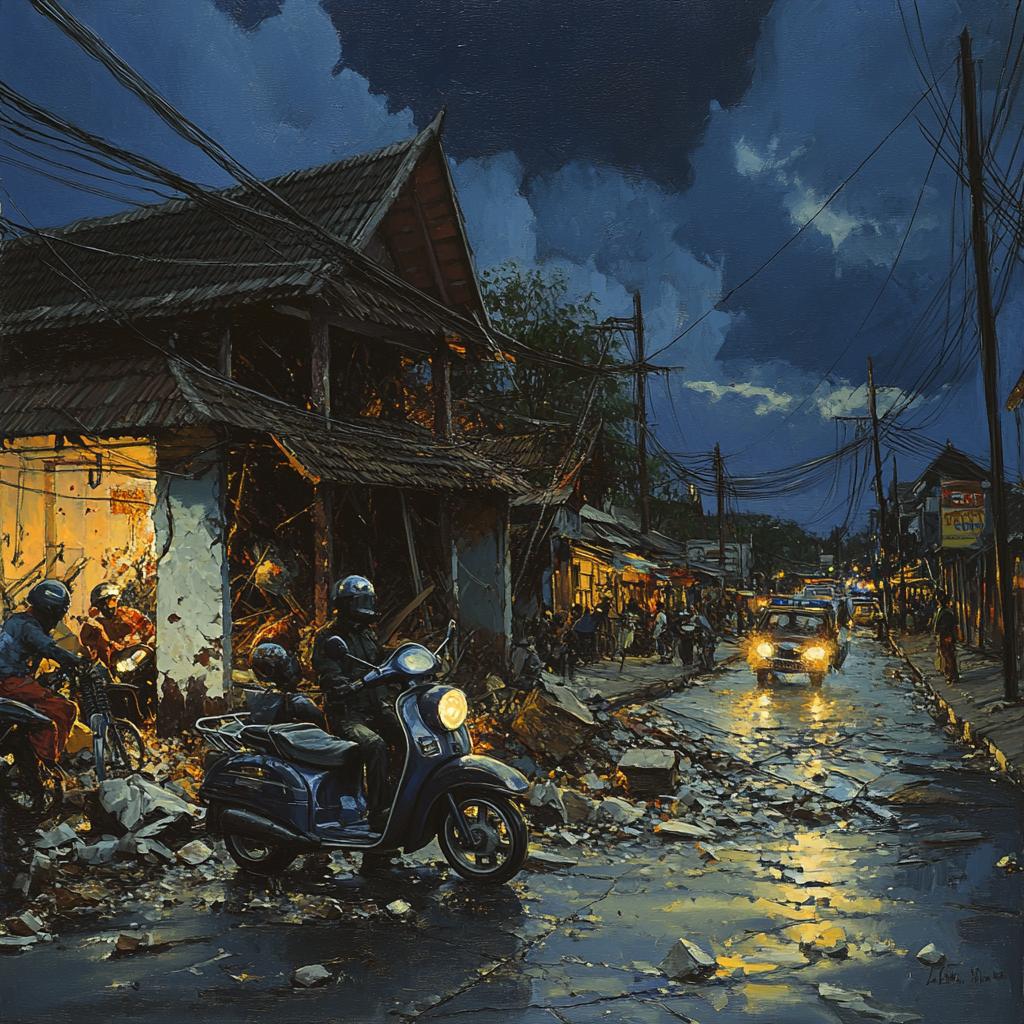
In the tranquil southern provinces of Thailand, an ordinary evening turned calamitous as twin shocks reverberated through Narathiwat on April 20. This seemingly quiet locale was instantly thrust into chaos as two well-coordinated assaults left seventeen individuals grappling with injuries. As the sun sank below the horizon, the first of these alarming events unfolded with an ominous roar that shattered the calm.
The evening hues were yet to dissolve when Police Colonel Weerayut Taseepan, stationed at Koke Kian Police, was alerted by an explosive blast that tore through the stillness. At approximately 6:45 PM, the serenity of the police flat precinct was blasted by an unforeseen detonation. The wall beside the police quarters lay ravaged, windows shattered like fragile dreams, and personal belongings laid ruin. Among the victims was a young child, a police officer's kin, who was ensnared by the merciless shrapnel while innocently playing nearby.
In the wake of the explosion, the Koke Kian subdistrict's guardians of emergency swooped in, whisking the injured to the safety of Narathiwat Rajanagarindra Hospital. The environs were quickly sealed off to make way for explosive ordnance disposal teams and forensic experts to weave their investigative skills. Witnesses of this macabre scene recounted sighting a terse figure on a motorcycle fitted with a nondescript sidecar. It was this contraption, they feared, that cloaked the explosive device, its malevolent intent realized as young souls journeying to their Quran classes became unintentional victims.
As the aftermath settled, reports confirmed that nine were hurt, a harrowing tally, with injuries primarily inflicted by the cruel scatter of debris. Meanwhile, the picturesque village backdrop of Ban Khor Ler Thu Wor in Waeng district was marking its own tragedy. Only half an hour later, time enough for dusk to grow deeper, and already the village air was pierced with cries. Armed individuals, hidden in the dark, unleashed a hailstorm of grenades and bullets upon a defenseless group of Thai Buddhists gathered for a communal meal, shattering the evening with panic and pain. Seven more souls, their fervent prayers for peace interrupted, fell prey to this brutal ambush, rushed away with urgency to Sungai Kolok Hospital.
This spree of violence isn't isolated but underscores the simmering tension that lies beneath Thailand's southern borders. Of particular note, the assaults precede a critical dialogue. In a matter of days, Defence Minister Phumtham Wechayachai is scheduled to conduct talks in the neighboring provinces—Pattani, Yala, and Narathiwat—hoping to cement a strategy for peace alongside Malaysian Prime Minister Anwar Ibrahim. This meeting, poised on the precipice of an ethereal finalization, holds the promise of potentially unraveling the tangled threads of discord.
This tragic narrative calls attention not just to the immediate horror but also serves as a clarion for hope—a hope that resolutions sought in high halls will temper the violent tremors that ripple across these lands. As Narathiwat's residents count on the countdown to potential peace, the wounds—both seen and unseen—serve as potent reminders of the urgency of these looming discussions.



Comment verification
Step 1 of 3
Verify your email once to publish your comment. Your email is never shown publicly.
Enter the 6-digit code sent to .
Choose the display name shown next to your comments.