Nonthaburi Rice Farmers Unite: Demanding Fair Prices Amid Declining Exports 2025
In the heart of Nonthaburi province, where verdant fields stretch as far as the eye can see, hardworking rice farmers bustle with activity. It was in this picturesque setting that a group of dedicated farmers gathered…
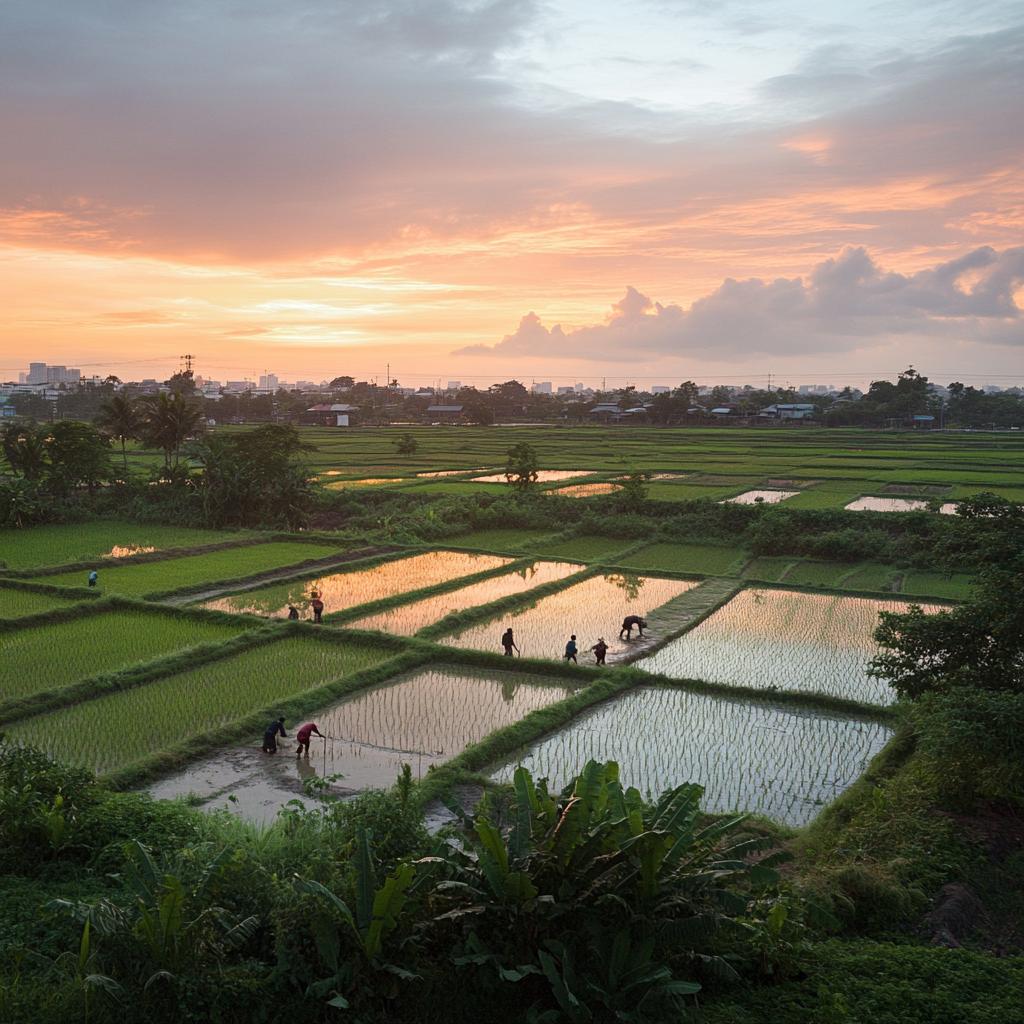
In the heart of Nonthaburi province, where verdant fields stretch as far as the eye can see, hardworking rice farmers bustle with activity. It was in this picturesque setting that a group of dedicated farmers gathered to harvest their staple crop on a brisk February morning. Their ambition, however, extends beyond the fields and into the corridors of power in Bangkok, as they prepare for a peaceful but determined protest at the Government House.
Tuesday's demonstration is far from a lone cry of desperation; it represents a collaborative effort uniting farmers across 12 provinces. These men and women of the soil are driven not just by personal necessity but by the compelling need for systemic change. In the bustling town of Phichit, Chakrapruet Banjerdkit, a resonant voice within the rice farmers' network, has rallied his peers. His message is clear: the time has come to demand better pricing for their labor—a call that has been all too often sidestepped in the halls of power.
This formidable group, expected to be 400-strong, brings together farmers not just from Phichit, but from the lower north and upper central regions of Thailand. Together, they form a formidable assembly with a singular mission—to persuade the government to raise the price of rice to a sustainable level. Specifically, by pushing the price of dry-season rice to an aspirational 11,000 baht per tonne, they hope to shift away from the current, insufficient range of 6,000 to 7,000 baht.
As Mr. Chakrapruet passionately elaborates, the farmers' resolve has been galvanized by a recent cabinet meeting that perplexingly lacked any discussion on this matter crucial to their livelihoods. Their frustration is compounded by a proposal from a former Phichit senator—a proposal that, bafflingly, included no insights from those who know the struggle firsthand.
The impasse is not new. Just last month, on February 19, these custodians of Thailand's staple crop gathered at the very gates of Government House. Their plea was heartfelt and straightforward: An increase in rice prices is needed. Without it, many farmers face the grim reality that their production costs eclipse market returns—a predicament unsustainable over the long haul.
Adding gravity to the situation is a concerning projection from the Thai Rice Exporters Association. They forecast a startling 33% drop in rice exports year-on-year for the first quarter. This is attributed to the heated competition in global marketplaces, further inflicting pressure on domestic farmers already fighting to stay afloat.
As dawn breaks over the fields, painting the sky with hues of amber and rose, the farmers ready themselves. They embark on their journey to Bangkok, emboldened by the camaraderie of their fellows and the righteousness of their cause. The grain they sow and reap is more than just a crop; it is their life, their heritage, and their future. This gathering is not merely an assembly of voices demanding change; it is a winnowing of truth about rice prices, separating the chaff of neglect from the grains of justice they seek.



Comment verification
Step 1 of 3
Verify your email once to publish your comment. Your email is never shown publicly.
Enter the 6-digit code sent to .
Choose the display name shown next to your comments.