Paetongtarn Shinawatra Addresses Thai-U.S. Visa Ban Concerns Amid Uyghur Deportation Controversy
Picture this: Prime Minister Paetongtarn Shinawatra gracefully receives a garland from exuberant youngsters, who are brimming with excitement as they put on a delightful performance for her. This heartwarming scene…
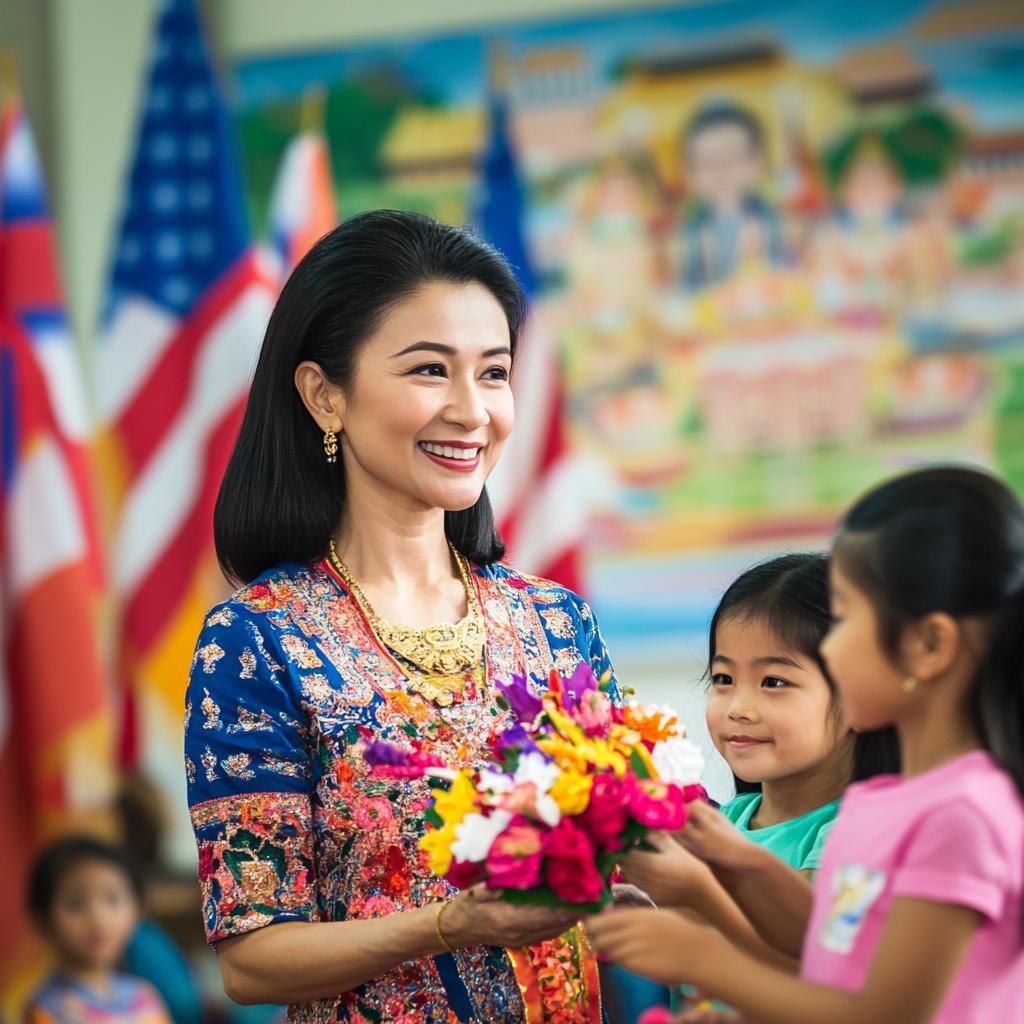
Picture this: Prime Minister Paetongtarn Shinawatra gracefully receives a garland from exuberant youngsters, who are brimming with excitement as they put on a delightful performance for her. This heartwarming scene unfolds during a reception held at a vibrant Thai community in Los Angeles, not too long ago, in November of last year. The air is filled with cheer and the distinctive aura of camaraderie, a hallmark of such cultural gatherings. (Photo courtesy of Government House)
Amidst this effervescent atmosphere, an unexpected whirlwind of questions spins into Prime Minister Paetongtarn's orbit. A furrowed brow accompanies her response as she's quizzed about being potentially listed among Thai officials recently barred by Washington from obtaining visas. The ban is a reaction to the controversial deportation of 40 Uyghur detainees from Thailand back to China, a diplomatic maneuver that has stirred quite the pot. With a candid protest and a diplomatic shrug, she states, "There's no confirmation yet. I still don't know."
Sensing the media's intrigue, she assures that further clarity will come from the Ministry of Foreign Affairs. With a touch of reassurance, she emphasizes that Thailand harbors no adverse sentiments towards the United States. Rather, the kingdom is simply honoring its obligations, dutifully acting in the matter of repatriating the detainees, whose prolonged stay extended over a hefty decade.
In the face of this controversy, Paetongtarn maintains an aura of calmness, dismissing potential ramifications as minimal. "We will discuss the matter, but it's not serious," she muses, instilling a sense of placidity in an otherwise churning sea of diplomatic tension.
Justice Minister Pol Col Tawee Sodsong, with a robust sense of conviction, steps onto the scene to defend the deportation decision. He articulates that the action arose from a chorus of complaints from the Immigration Bureau, raising red flags about violation of anti-torture and enforced disappearance laws. His voice is unwavering as he explicates Thailand's meticulously plotted course through the labyrinth of legal constraints, ensuring the deportees are protected from any form of torture or execution upon their return to their native soil.
A pivotal cog in the diplomatic wheel, Pol Col Tawee articulates that assurances have been garnered from China, vowing humane treatment of the deportees. The promise extends further: Thai officials will later have the privilege to visit them in China, a gesture to seal their safety and progress under watchful eyes.
Demonstrating their commitment to a code of human rights, he emphasizes Thailand's adherence to domestic regulations as well as its international commitments. It's a synchrony of law and compassion, a balance delicately maintained on the geopolitical tightrope.
Not just words, these convictions are backed by action. Pol Col Tawee, along with a cadre of Thai officials—including Deputy Prime Minister and Defence Minister Phumtham Wechayachai, and other dignitaries—will embark on a journey to Kashgar in China's Xinjiang region. Their mission? To witness firsthand the situation of the deported Uyghurs, ensuring their wellbeing remains intact.
Potential implications on the US visa stand? Pol Col Tawee categorically divides the two issues with clarity, stating the visit and the visa ban are not intertwined. As per the US Embassy, an outright visa ban was never on the cards, further placating the swirling specter of uncertainty looming over the proceedings.



Comment verification
Step 1 of 3
Verify your email once to publish your comment. Your email is never shown publicly.
Enter the 6-digit code sent to .
Choose the display name shown next to your comments.