Thailand

Paetongtarn Shinawatra Awaits Friday Constitutional Court Verdict

The suspense gripping Bangkok’s political corridors could end in a matter of days. Suspended Prime Minister Paetongtarn Shinawatra signaled yesterday that she expects to be back at the helm by Friday — just in time for…
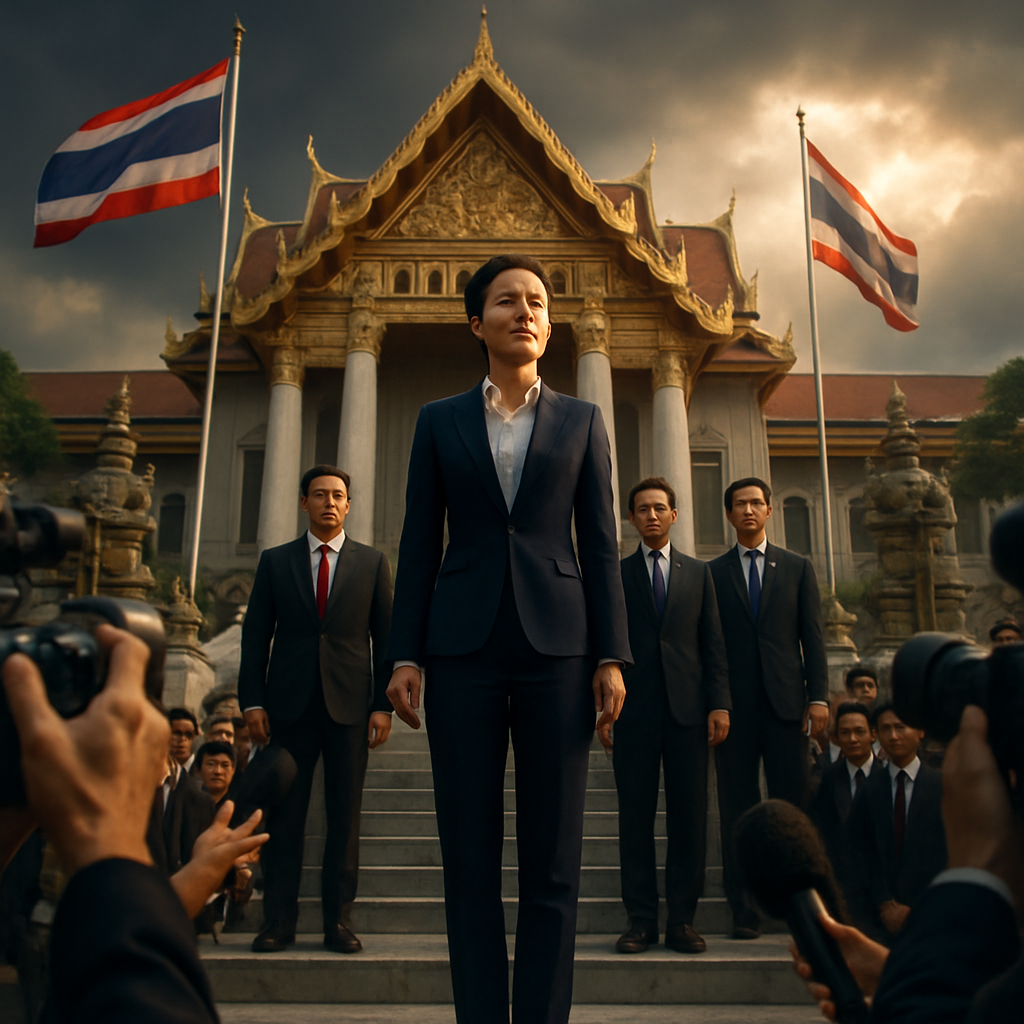
Paetongtarn Shinawatra Awaits Friday Constitutional Court Verdict

The suspense gripping Bangkok’s political corridors could end in a matter of days. Suspended Prime Minister Paetongtarn Shinawatra signaled yesterday that she expects to be back at the helm by Friday — just in time for a long-awaited Constitutional Court ruling on her premiership.

In a video call with her Cabinet on August 26, the 39-year-old Pheu Thai leader sounded upbeat and eager to dive back into government work. “I miss being in the thick of operations,” she told ministers, according to participants. That same sense of optimism echoed through the Cabinet, where colleagues publicly rallied around her as the court countdown ticks closer.

“Everyone is encouraging the prime minister,” said Deputy Education Minister Rinthipond Varinvatchararoj, relaying the mood in the virtual meeting. Tourism and Sports Minister Sorawong Thienthong — who also serves as secretary-general of the ruling Pheu Thai Party — reinforced that show of support, stressing that the party remains united and denying rumors of any clandestine “war room” to monitor the court’s decision. “The unity among members is clear,” he insisted.

What has brought the Pheu Thai government and the nation to this pivot point is a complaint filed by a group of senators. The allegation centers on comments Paetongtarn made during a private phone call with former Cambodian Prime Minister Hun Sen. According to the complaint, Paetongtarn’s handling of that discussion — reportedly involving border tensions — breached ministerial ethics.

The case advanced to the Constitutional Court, which held witness hearings last Thursday, August 21. In an unexpectedly brief session, the court heard only two witnesses: Paetongtarn herself and National Security Council chief Chatchai Bangchuad. Court officials cautioned the public against distorting the proceedings — a reminder that legal process, not rumor, will determine the outcome.

With the court slated to deliver its verdict on Friday, attention in Thailand has shifted sharply to that single decision. If the court clears her, Paetongtarn could reclaim her role and lead the Cabinet into what many within Pheu Thai describe as the next phase of her premiership. If not, political ripples — and perhaps a scramble for leadership adjustments — would follow.

Inside the party, insiders are playing down panic and dialing up composure. Sorawong went so far as to quash speculation that former premier Thaksin Shinawatra — Paetongtarn’s father and a towering figure in Thai politics — would attend a meeting with Pheu Thai MPs this week. The message from party ranks is simple: steady hands, no theatrics.

This case is shorthand for a larger narrative that has followed Paetongtarn since she rose quickly through the party ranks: a mix of familial political legacy, youthful leadership, and the ever-present tug-of-war between legal scrutiny and public mandate. At 39, she represents a generational turnover in Thai politics, but those youthful energies are being tested by institutional checks and adversaries eager to capitalize on any misstep.

For everyday Thais watching, the outcome matters for governance as much as symbolism. A cleared premiership would stabilize the Cabinet and allow Pheu Thai to move forward with its policy agenda. A different verdict could trigger reshuffles, legal questions and renewed political maneuvering at a delicate time for the nation.

Beyond the courtroom drama, the country continues to grapple with headlines that reflect everyday governance challenges — from weather warnings for heavy rains across dozens of provinces to labor and crime stories that fill local papers. Yet nothing in recent days has dominated news cycles like the potential return of Paetongtarn.

Whatever Friday brings, the Constitutional Court’s ruling will be a turning point: either a political comeback scripted by the court’s green light, or a longer, more uncertain road ahead for a leader who has already shown she can command loyalty and make bold political moves. Until then, ministers will keep their fingers crossed, party members will maintain a public calm, and Thailand will watch a courtroom decision that could rewrite the immediate political playbook.

Photo credit: Bangkok Post

38Comments
Sort by:
SCSam Carter··1 pts
SC
Sam Carter
Great roundup — the article neatly captures the tense wait in Bangkok and how much hinges on Friday's ruling. The court's brief hearing feels like it could be a signal, but we shouldn't jump to conclusions until the verdict is read. I'll be watching how the cabinet's public calm contrasts with any private contingency plans.
1
NNathalie··1 pts · 2 replies
N
Nathalie
This smells like a political hit rather than a pure ethics inquiry. Senators filing the complaint look conveniently timed to derail Pheu Thai's agenda, and that's worrying for democratic norms.
1
DADr. Arun··1 pts
DA
Dr. Arun
Careful — labeling it a 'hit' assumes intent without evidence. The Constitutional Court is designed to adjudicate ministerial conduct; the real question is whether private foreign calls cross a defined ethical red line.
1
SCSam Carter··1 pts
SC
Sam Carter
Good point, Dr. Arun. The article noted the court heard only two witnesses which is unusual and could reflect either a narrow legal question or a desire to expedite a politically sensitive case.
1
AAnna··1 pts
A
Anna
If she gets cleared, it'll prove the system is rigged in favor of dynasties. Paetongtarn rides her father's name and now expects a fast-track back in like nothing happened. That's not leadership, it's inheritance.
1
LDLarry D··1 pts · 2 replies
LD
Larry D
Calling it 'inheritance' simplifies a more complex picture. Yes, Thaksin's shadow is huge, but Paetongtarn has built her own network and policies. Blaming her simply because of her surname ignores the electorate's agency and the party's platform.
1
Ggrower134··1 pts
G
grower134
Electorate's agency? Rural voters depend on tangible programs like subsidies and jobs, not dynasty narratives. If her policies help, many won't care about the name.
1
AAnna··1 pts
A
Anna
You can like policies but still oppose political monopolies. Democracies need checks, not one-family rule.
1
DADr. Arun··1 pts · 3 replies
DA
Dr. Arun
Legally speaking, the crux will be ministerial ethics rules versus normal diplomatic communications. If the statute is vague, the court's interpretation could set a precedent for what counts as private versus official conduct.
1
KK.··1 pts
K
K.
So the law is unclear and judges will decide? That sounds like too much power in a few hands.
1
PPolicyWonk··1 pts
P
PolicyWonk
Exactly. Ambiguity enables judicial discretion. The court's narrow witness list suggests they may be focused on whether any directive or official stance was expressed during the call, not merely the existence of a conversation. That subtlety matters for legal outcome and political fallout.
1
DADr. Arun··1 pts
DA
Dr. Arun
And remember, precedent will influence future ministers' private communications, which has chilling effects on diplomacy if interpreted too broadly.
1
NNate··1 pts
N
Nate
I don't really follow Thai politics that well, is this about her talking to another country's leader?
1
SSita··1 pts · 1 reply
S
Sita
Yes, Nate — the complaint centers on a private phone call with former Cambodian PM Hun Sen and whether her comments breached ministerial ethics. It's surprisingly technical but the politics make it explosive.
1
NNate··1 pts
N
Nate
Thanks, that helps. Seems like an odd reason to risk toppling a government though.
1
Ggrower134··1 pts · 2 replies
G
grower134
From an economic lens, stability matters more than the drama. Investors and farmers care about policy continuity, rain warnings, and infrastructure, not courtroom theatrics. A chaotic transition would hurt livelihoods fast.
1
PPim··1 pts
P
Pim
Exactly! Paetongtarn was moving on social spending and rural development. If she is blocked for something so flimsy, people's projects stall and lives suffer. Let voters decide, not judges.
1
Ggrower134··1 pts
G
grower134
I agree, Pim — political stability has direct economic consequences. Hope the court considers that broader harm.
1
PPim··1 pts · 2 replies
P
Pim
I'm tired of the opposition weaponizing small things to take down leaders they can't beat at the ballot box. Paetongtarn is young, yes, but she has vision and she's earned loyalty. This case feels like old-guard resistance to generational change.
1
AAnna··1 pts
A
Anna
You say 'earned' but many of her positions align with a political machine. Youth doesn't excuse lack of accountability.
1
PPim··1 pts
P
Pim
Accountability is important, but so is letting a government implement its mandate. Multiple checks exist — this feels targeted.
1
LDLarry Davis··1 pts
LD
Larry Davis
I'm not sure the court can be separated from politics here, nor should it be. Law is part of politics; pretending it's neutral erases the power dynamics at play. If the judges remove her, expect a long legal and political fight.
1
MMaria··1 pts · 2 replies
M
Maria
Meanwhile, ordinary people are dealing with floods and job insecurity. All this high-stakes theater doesn't help with daily governance. The media should remind readers of that human angle instead of nonstop speculation.
1
JJoe··1 pts
J
Joe
Totally — policy outcomes matter more than personalities, though personalities shape policy too.
1
LDLarry D··1 pts
LD
Larry D
Agreed. Constructive reporting on how verdict outcomes affect services is sorely needed.
1
PPolicyWonk··1 pts · 2 replies
P
PolicyWonk
Two procedural observations: the court's brevity could indicate either a narrow evidentiary record or institutional expedience to prevent prolonged instability. Second, if the court rules against her, the grounds they use will matter more than the result — will it be a technical ethics breach or a broader interpretation of loyalty and national interest?
1
SSombat··1 pts
S
Sombat
Technical grounds would at least keep the removal limited, but if they broaden it, that sets a dangerous precedent for politicized removals in future.
1
PPolicyWonk··1 pts
P
PolicyWonk
Exactly — legal reasoning will be scrutinized domestically and internationally. The court's written opinion will be the key document for future governance norms.
1
KK.··1 pts · 1 reply
K
K.
I feel like courts making political decisions undermines democracy, but also that parties using courts for political gain is bad. It's a messy situation with no clean answer.
1
AAnna··1 pts
A
Anna
That's the gist — everyone accuses the other of abusing institutions. The real fix is stronger, clearer rules and transparency.
1
MMaria··1 pts · 2 replies
M
Maria
If she returns, will Pheu Thai push through controversial bills quickly while they can? I worry about rushed legislation in the wake of a narrow victory.
1
JJoe··1 pts
J
Joe
They might. Political capital is finite and parties act when they sense momentum.
1
MMaria··1 pts
M
Maria
Exactly my fear — momentum can lead to mistakes if it's not balanced by scrutiny.
1
SSita··1 pts · 1 reply
S
Sita
The article's mention of no 'war room' seems like spin from party spokespeople. Quietly, everyone is probably planning contingencies even if they publicly project calm.
1
Ggrower134··1 pts
G
grower134
Politicians always deny crisis plans publicly. It's standard PR — better to be prepared than caught off-guard.
1
PPong··1 pts · 1 reply
P
Pong
Hun Sen's involvement is curious; Cambodia-Thailand ties are delicate. A PM's private call touching on borders is inherently risky, but it's not always a crime to talk.
1
NNaw··1 pts
N
Naw
Risky yes, but diplomacy sometimes requires informal channels. Criminalizing that could deter backchannel solutions.
1
CChai··1 pts
C
Chai
This is a test of Thai institutions more than just one person. The verdict will reveal how robust their separation of powers and rule-of-law practices are when politics is intense.
1

