Paetongtarn Shinawatra Defends Thames Valley Khao Yai Land Legacy Amid Censure Debate 2025
Perched amid the lush greenery and tranquil surroundings of Nakhon Ratchasima stands the opulent getaway known as Thames Valley Khao Yai. This lavish resort, with its breathtaking vistas and luxurious amenities, is a…
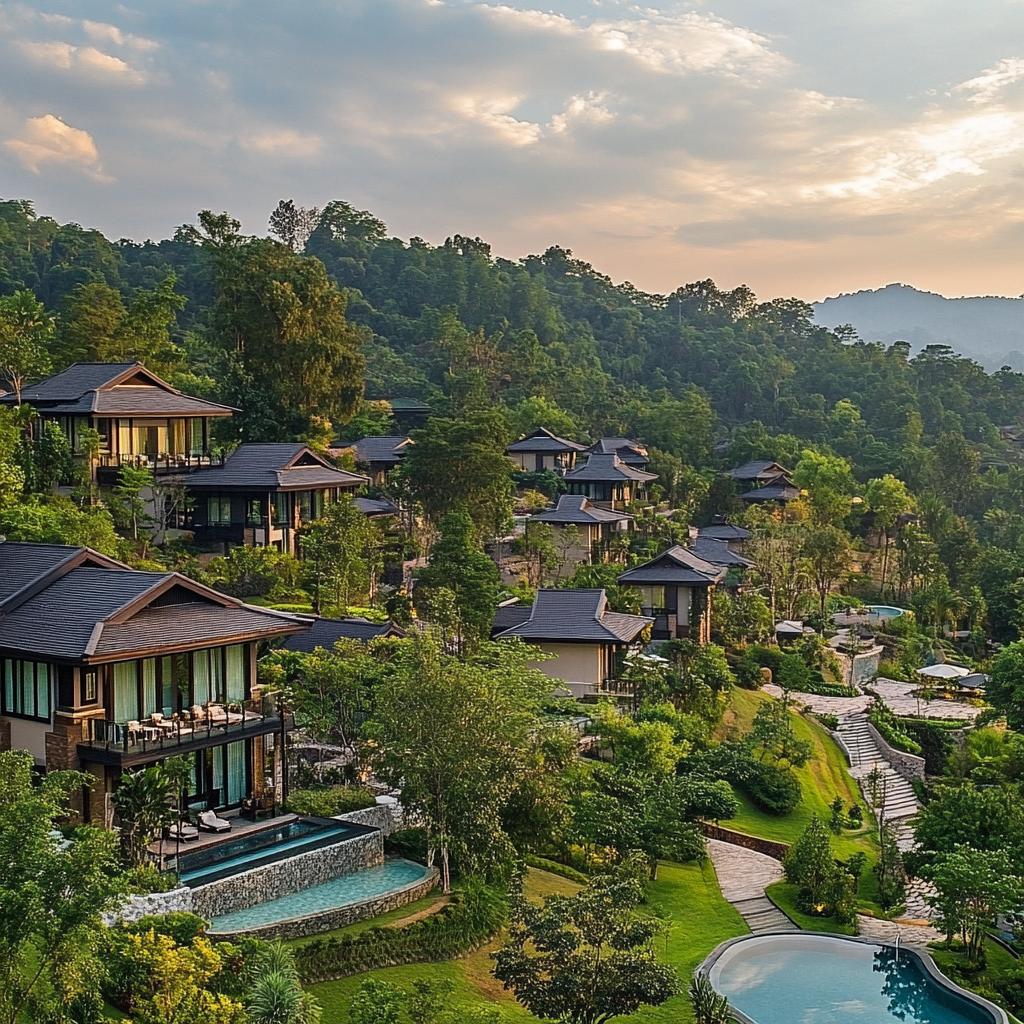
Perched amid the lush greenery and tranquil surroundings of Nakhon Ratchasima stands the opulent getaway known as Thames Valley Khao Yai. This lavish resort, with its breathtaking vistas and luxurious amenities, is a gem of the Shinawatra family's prestigious portfolio. However, its glistening charm found itself under the spotlight during an intense censure debate, with Prime Minister Paetongtarn Shinawatra firmly defending the family's impeccable business ethics and transparent land dealings.
In a spirited exchange on Tuesday, Ms. Shinawatra addressed pressing inquiries from the opposition concerning the legitimacy of the land holding Thames Valley Khao Yai. With a poised demeanor, she assured all in attendance that her family's ventures are conducted with the utmost legality and integrity. "Every step of our business operations adheres to the stringent laws governing our land," she pronounced, emphasizing that meticulous clarifications had been made by governing agencies, effectively untangling the accusations woven by her critics.
The debate saw daggers drawn as Thirajchai Phantumas, a People’s Party MP renowned for his incisiveness, delved into the murky origins of the resort's land. His probing gaze was set on unearthing the methods by which the premier’s family came to own a piece of the Lam Takhong self-help settlement—a sanctuary founded in 1970 as a refuge for those displaced by the Lam Takhong dam’s construction. With a rich allocation history promising up to 50 rai per resident, the land's conversion to prime real estate raised eyebrows.
In weaving his case, Mr. Thirajchai unfurled a tapestry of maps and land documents, masterfully crafted by the Geo-Informatics and Space Technology Development Agency, painting a picture of what he described as an impossibility—the issuance of land documents in a watershed area deemed untouchable by current regulations. He recounted that the Shinawatra family had received their parcel in 1996, during a time when a family member occupied the deputy prime minister's office. Fate, it seemed, aligned the stars as another family member steered the helm as prime minister when the land transformed into subdivided plots in 2012.
Thirajchai’s narrative grew more intricate as he pointed to the self-help settlement’s protected status, asserting that it remained intact and theoretically immune to commercial exploitation—unless, of course, unique authorization was granted. In a tale infused with political drama, history's pages laid bare the intertwining fates of the Shinawatra dynasty, with Ms. Paetongtarn’s father, the storied Thaksin, and her similarly trailblazing aunt, Yingluck, both having shaped Thailand's political landscape as prime ministers.
As the debate simmered down, Ms. Shinawatra's eloquence and resolve shone through, as she reassured the nation that the cornerstones of the Shinawatra business empire remain unshaken. Despite the tempest of conjecture swirling around their land ownership, she maintained that the pursuit of prosperity followed the rule of law with unwavering precision.
With the dust of conjecture scarcely settled, the Shinawatra family continues to be a canvas for public discourse—larger-than-life figures on a chessboard where every move reverberates through the halls of history. In the tapestry of Thailand’s vibrant landscapes and rich political narrative, one thing remains unequivocal: the view from a villa at Thames Valley Khao Yai remains as spectacular as ever, a testament to the Shinawatra legacy envisioned for generations to relish.



Comment verification
Step 1 of 3
Verify your email once to publish your comment. Your email is never shown publicly.
Enter the 6-digit code sent to .
Choose the display name shown next to your comments.