Paetongtarn Shinawatra Faces Economic Strategy Challenges Amid Global Trade Tensions
The hallway of the Thai parliament was buzzing with a unique energy this Tuesday, as Prime Minister Paetongtarn Shinawatra stood firmly at the helm of discussions concerning the next chapter of the country's flagship…
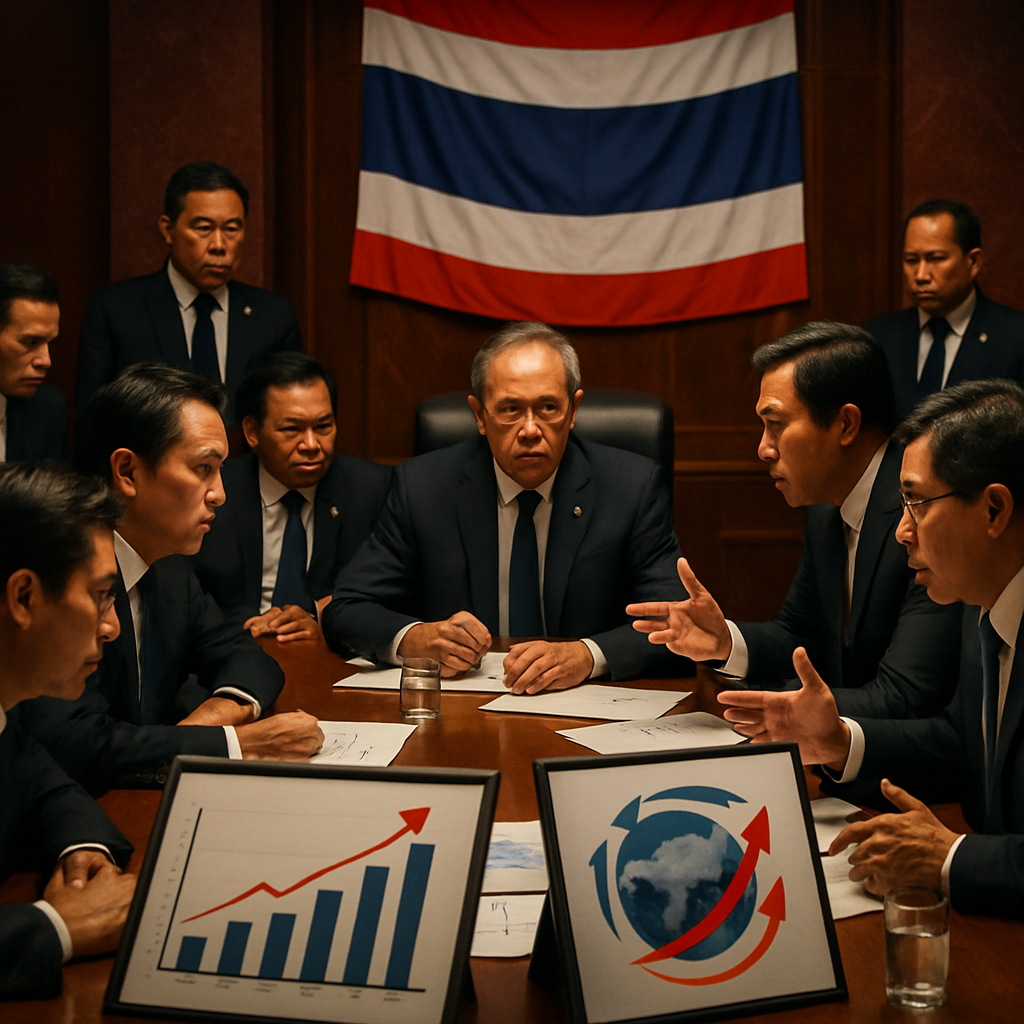
The hallway of the Thai parliament was buzzing with a unique energy this Tuesday, as Prime Minister Paetongtarn Shinawatra stood firmly at the helm of discussions concerning the next chapter of the country's flagship economic initiative. Amidst whispers of tariff policies echoing from across the Pacific in America, where President Donald Trump continues to stir the global economic pot, the urgency to recalibrate economic strategies has become paramount.
The Prime Minister expressed the necessity for adept revisions to the second phase of the 10,000-baht handout programme. The changing winds of the global economy, heavily influenced by international tariffs, have cast a significant shadow over the project's future. "Decisions are still bouncing among stakeholders; we must tread cautiously in these trying times," she remarked after a bustling cabinet meeting that Tuesday. Indeed, with inputs from the National Economic and Social Development Council and the Bank of Thailand, the government has embarked on a path of careful reconsideration.
The once straightforward aims of economic stimulation now require a meticulous balancing act. With intervening factors rising into prominence, the government has opted for a strategic pause to reassess the precise impacts such a stimulus could yield. "At this juncture, whether the initiative gets delayed hinges not only on executive orders but also on the insights from pertinent agencies," Paetongtarn elucidated with measured optimism.
Despite these contemplations, no definitive alterations have been made to the plan. A broader consensus is sought before any further steps are implemented. Paetongtarn underlined that drawing valuable feedback on the need for more stimulus efforts is essential — especially when it comes to utilizing the remaining 150 billion baht to serve the nation's broader benefit. This includes evaluating alternative avenues for stimulating economic growth in light of dwindling global trade conditions brought about by the tariff turmoil.
Framing a clear answer to whether the government intends to move forward with the project seemed elusive. The premier restated the importance of gathering diverse opinions before advancing to the next phase. The discussion slated for that Tuesday's cabinet, regarding the progression of the third phase, was preemptively postponed, as the deliberation is yet ongoing.
Said to be a grassroots economic vehicle, the third phase harbors intentions of introducing 2.7 million young Thais between the ages of 16 and 20 to a 10,000 baht digital experience, with the goal of revitalizing spending through the youthful vigor of digital currency. Yet, speculations linger whether the unused funds should be better off fueling other economic undertakings with a more apparent efficacy against the Trump-induced economic pressures. According to a Government House insider, while 27 billion baht from the remaining funds is earmarked for direct distribution to these digital aspirations, the strategic reallocation could sway the final decision.
Despite a prior commitment by Deputy Finance Minister Julapun Amornvivat, the cabinet's latest position exhibits a nuanced caution, swayed by the underwhelming triumphs of the initiative's first two renditions. Resources remaining — specifically around 150 billion baht — are potential seeds for cultivating diverse projects better aligned with circumventing the repercussions of trade tariffs. It is foresaid that a hefty chunk close to 100 billion baht might be funneled into upgrading the country's water infrastructure, alongside aiding citizens who may find themselves wandering unfamiliar terrains of unemployment due to volatile trade tides.
Having already funneled 185 billion baht into this ambitious financial adventure — directly engaging 14.5 million citizens with cash distributions — the Pheu Thai Party-led coalition ushers into unfamiliar territory as they explore reallocations to combat policy-induced challenges. Treading this line requires deft precision, as finance permanent secretary Lavaron Sangsnit emphasized on the necessity of vigilant monitoring over governmental spending during these indeterminate times.
In essence, as tariff ripples extend across oceans, Thailand's decision-makers navigate an intricate dance of balancing immediate economic needs with long-term sustainability, mapping out strategies that promise resilience amid uncertainties.



Comment verification
Step 1 of 3
Verify your email once to publish your comment. Your email is never shown publicly.
Enter the 6-digit code sent to .
Choose the display name shown next to your comments.