Patong Beach Crackdown: Phuket Immigration Targets Illegal Vendors
Sun, sea, and… sunglasses? Patong Beach, one of Phuket’s most famous stretches of sand, saw more than the usual surf-and-sand drama as immigration officers launched a high-profile sweep aimed at illegal beach vendors.…
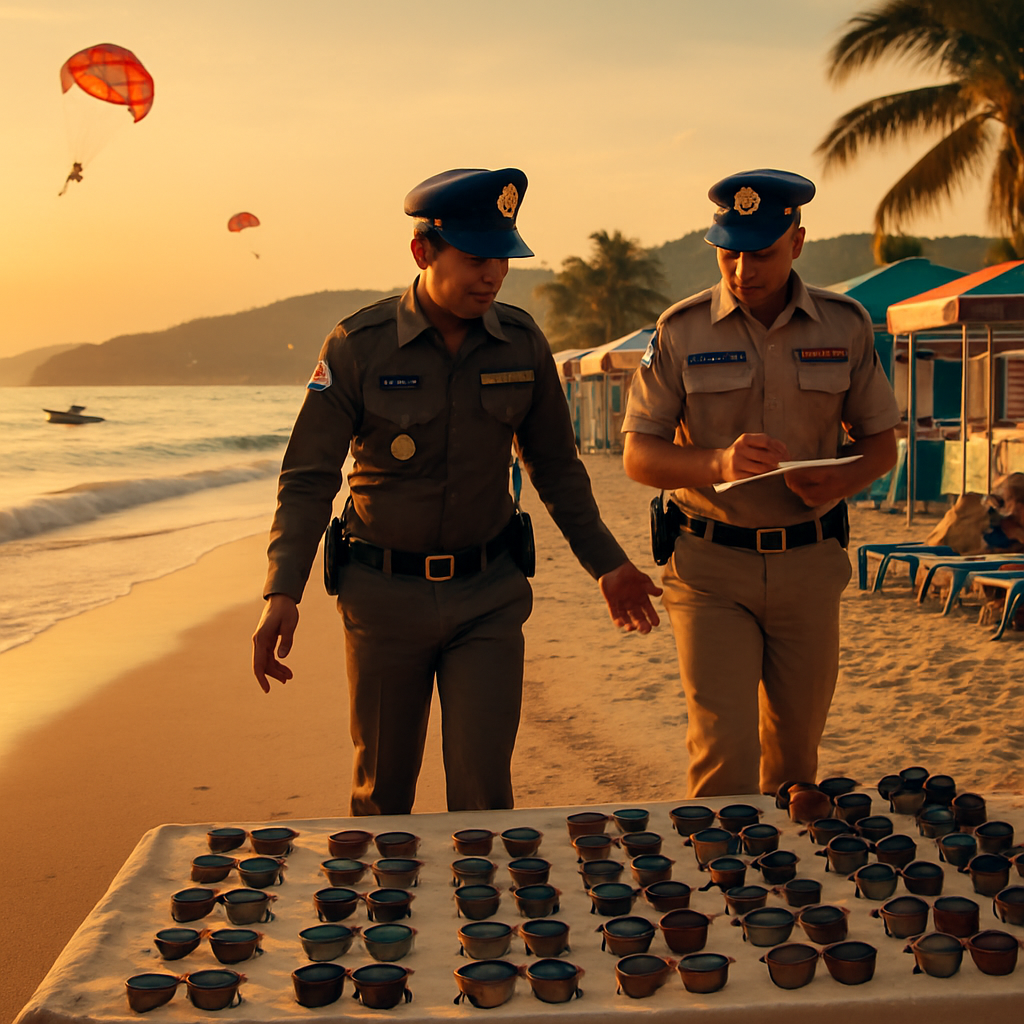
Sun, sea, and… sunglasses? Patong Beach, one of Phuket’s most famous stretches of sand, saw more than the usual surf-and-sand drama as immigration officers launched a high-profile sweep aimed at illegal beach vendors. The move followed weeks of complaints from residents and legal business owners who said unlicensed sellers were openly hawking goods and undercutting Thai vendors playing by the rules. Their message was clear: keep the beach beautiful, the competition fair, and the island’s image spotless.
Leading the operation was Phuket Immigration Police Superintendent Colonel Kriangkrai Ariyaying, who assigned Deputy Superintendent Police Lieutenant Colonel Wisarut La-iat-ong, Superintendent Pol. Lt. Col. Wirot Srisapha, and the Phuket Immigration Investigation Unit to team up with the Phuket Tourist Police for a targeted sweep of the shoreline. If you picture a meticulous, methodical stroll along the sands at golden hour, you’re not far off—only this time the target wasn’t a sunset selfie, but unlicensed trade.
The day’s most notable arrest was that of a 43-year-old Cambodian national, identified as Samnang. Officers said he was caught selling a medley of branded sunglasses to tourists without proper authorization. More than 20 pairs were seized on the spot—proof that the portable boutique had been in brisk business. Police charged him under Thailand’s Act on the Management of Alien Employment 2017, Section 8 in conjunction with Section 101, which prohibits foreign nationals from working outside the scope of their permits. During questioning, Samnang reportedly admitted he held permission to work in Thailand in a different capacity—as a laborer—but had been moonlighting as a beach vendor until the crackdown caught up with him. He was taken into custody and handed to investigators at Patong Police Station for further legal proceedings, as reported by The Phuket News.
Authorities emphasized that this wasn’t a one-off sting but part of a broader effort to protect Phuket’s tourism brand and public order. In line with the policies of the Royal Thai Police, the Immigration Bureau, and the Phuket Provincial Immigration Office, officials said they’re focused on curbing illegal work, unlawful business activity, and the kind of transnational crimes that sometimes lurk behind seemingly harmless street trade. They underscored that unlicensed operations can spark unfair competition with regulated local vendors, disturb the peace for beachgoers, and—at worst—connect to wider criminal networks. The long-term mission: cleaner beaches, safer tourism, and stronger confidence among visitors and residents alike.
It’s easy to see why this matters. Patong Beach is a postcard in motion: parasails skimming the horizon, jet skis carving white ribbons in cerulean water, and vendors—licensed ones—serving fresh fruit, drinks, and souvenirs from designated spots. Allow that order to unravel and the beach experience slides from breezy to chaotic. Phuket’s lifeblood is hospitality, and the island prides itself on balancing free-spirited fun with clear rules that keep visitors comfortable and businesses on even footing.
That balance depends on permits. Thailand’s employment laws aren’t just red tape; they’re the referee’s whistle in a bustling marketplace that welcomes millions each year. The vast majority of migrant workers contribute to the local economy legally, and many are integral to Phuket’s thriving service sector. But working outside the bounds of a visa or permit—no matter how small the side hustle—can trigger legal consequences and, collectively, erode trust in the system. For vendors who follow the rules, it’s about fairness. For tourists, it’s about safety, quality, and clarity on who’s accountable if something goes wrong.
Beachgoers strolling Patong’s promenade may notice more uniformed patrols in the days ahead. Immigration chiefs have signaled that inspections will continue, zeroing in on unlicensed vending and reinforcing that Phuket’s beaches are not the place for illicit enterprise. Consider it a quality-control pass on paradise. If you’re planning to pick up a pair of shades to match that island glow, officials would nudge you to buy from licensed sellers—typically easy to spot, and often operating within designated areas or storefronts just off the sand.
For local businesses, the message is equally straightforward: compliance isn’t just a legal box to tick; it’s a competitive advantage. Vendors with proper documentation can advertise their legitimacy, reassure customers, and avoid the whiplash of sudden seizures or fines. And for migrant workers aspiring to trade independently, the wise route is to consult the current regulations, secure the correct permits, and make sure the scope of work is squarely covered—before stepping onto the beach with a product line in tow.
As for the Operation Sunglasses moment? It’s a snapshot of a wider campaign playing out across Phuket, where authorities have been taking a closer look at activities that might compromise safety, fairness, or the island’s international appeal. It’s not about dimming the fun—if anything, the goal is to protect it. Keep the beaches clean, keep the commerce clear, and let the sunsets do the dazzling.
So, the next time you wander down Patong Beach with sand between your toes and the Andaman Sea fanning your ankles, you may find fewer unsolicited sales pitches and more room to breathe between the waves and the promenade. That’s the vision: a sunlit stage where everyone—tourists, locals, and lawful workers—knows their role, the rules are transparent, and Phuket’s star continues to rise without the glare of illegal street trade. Sunglasses still welcome—just make sure they’re from a vendor who’s playing by the book.



Comment verification
Step 1 of 3
Verify your email once to publish your comment. Your email is never shown publicly.
Enter the 6-digit code sent to .
Choose the display name shown next to your comments.