Patong's 224M-Baht Plan to Bury Power and Telecom Lines
Patong’s Power Move: Burying the Tangle for a Cleaner, Safer Streetscape Patong is staging a low-key revolution — one that’s literally going underground. In a bold effort to tidy up its skyline and make streets safer…
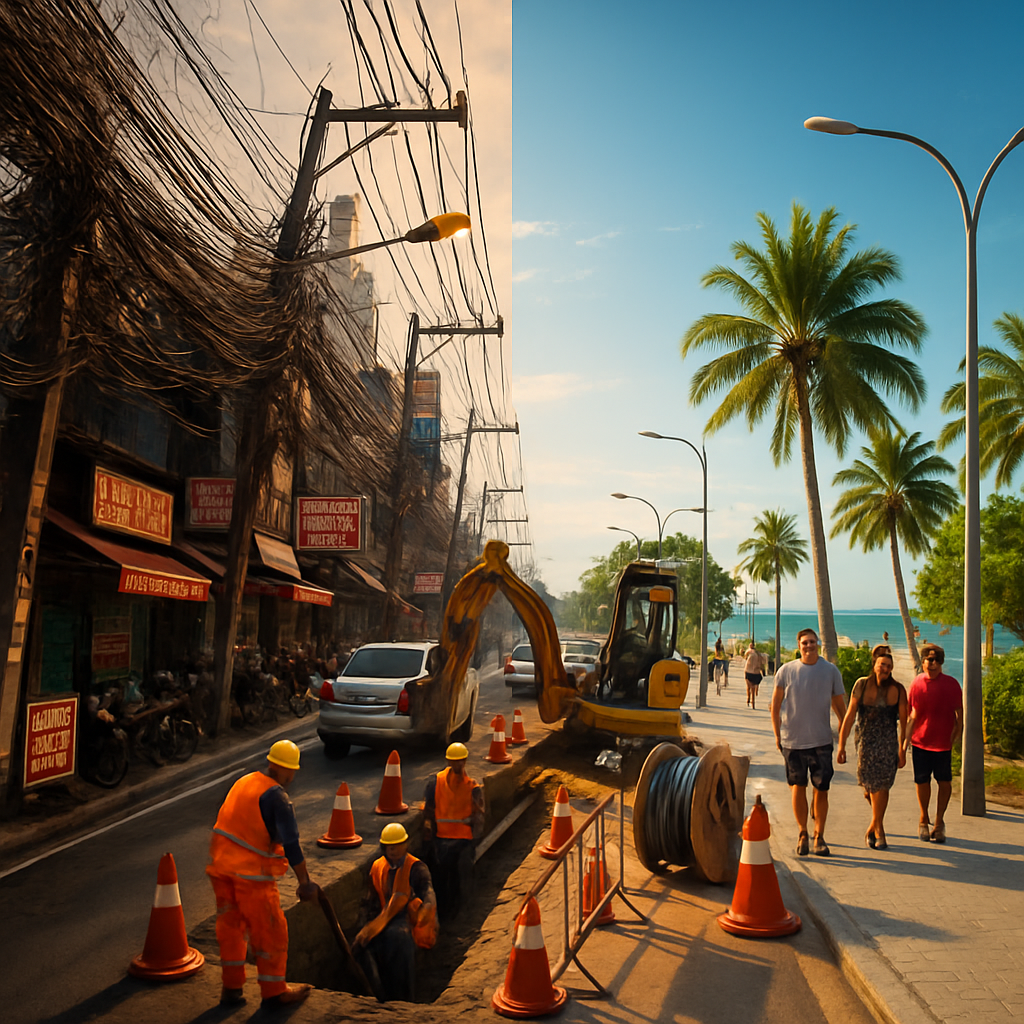
Patong’s Power Move: Burying the Tangle for a Cleaner, Safer Streetscape
Patong is staging a low-key revolution — one that’s literally going underground. In a bold effort to tidy up its skyline and make streets safer for tourists and residents alike, the resort town has kicked off a 224 million baht project to bury power and telecom lines along five key thoroughfares.
The plan covers nearly 1.8 kilometres of urban arteries, routing cables out of sight along Bangla Road, Thaweewong Road, Sawatdirak Road, Ruam Jai Road, and Prachanukroh Road. It’s part of a long-running push by the Provincial Electricity Authority (PEA), with Patong Municipality chipping in substantial funding to get the job done.
Money where the meters are
The budget breakdown is straightforward: Patong will contribute 84.45 million baht to cover engineering and municipal works, while the PEA will pour in 137.53 million baht to overhaul the electrical system. The construction contract went to ASEFA Public Co. Ltd., which won the e-bid at 205.9 million baht — the lowest qualifying bid according to the official PEA announcement.
Where the first shovels hit
Work has already started on the town’s most famous (and busiest) stretch, Bangla Road, with crews aiming to wrap up that phase by early January. The next stage — along Rat-U-Thit 200 Pi Road — is slated to begin in April. Officials have been clear: this isn’t a sprint but a carefully phased program designed to minimize disruption while delivering long-term benefits.
Why it matters
Mayor Lalita Maneesri emphasizes the practical stakes: “The work aims to improve public safety, protect infrastructure from weather-related damage, and support future growth in electricity and telecommunications.” In short: fewer live wires dangling in storms, fewer outages after heavy rains, and more capacity for the digital needs of a booming tourist hub.
- Safety: Buried cables reduce the risk of electrocution and accidents during storms or vehicle collisions.
- Reliability: Underground systems are less prone to weather-related damage, lowering the chance of blackouts.
- Appearance: Removing the web of overhead cables cleans up the streetscape — a simple, visible boost to Patong’s curb appeal.
Ceremony, cameras and community
A ribbon-cutting-style ceremony at the Patong Beach entrance to Bangla Road marked the project’s commencement, with key local figures on hand: Council President Weerawit Krueasombat, NBTC Region 42 Director Mahama Kaje, PEA Region 2 officer Somsak Samranrat, local police and telecom representatives. The event signaled unified support — municipal, regulatory and private — for a project designed as much for residents as for the millions of visitors who flock to Patong each year.
Who does what
While the PEA handles the power system overhaul, the National Broadcasting and Telecommunications Commission (NBTC) is focused on telecom cables. NBTC’s role is crucial: telecom lines have become a chaotic fixture in Patong’s skyline, posing both safety concerns and a visual blight in tourism-heavy zones.
Thammarong Chuayaksorn, Chief Administrative Officer at Kathu District Office, summed it up: “Placing telecom lines underground will reduce service disruptions, prevent accidents, and improve the city’s appearance in areas with high tourist traffic.” The message is clear — it’s about function and form.
Expect temporary inconvenience for a lasting upgrade
Officials warn that motorists and businesses should expect temporary lane closures and restricted access in active work zones. “Updates on route closures will be announced in advance,” they say, asking for patience as crews work methodically to minimize chaos. For business owners along affected streets, advance notice aims to mitigate the impact on deliveries, customers, and daily operations.
Big-picture payoff
Beyond the immediate improvements, city leaders frame the project as a cornerstone in Patong’s long-term vision: a modern, safer, more visually appealing destination. For a town whose economy is tightly linked to its image, clearing the skies of cluttered cables is both a practical upgrade and a branding win.
So next time you stroll down Bangla Road and notice a cleaner skyline and fewer utility poles in your selfies, you’ll know why: Patong chose to bury the old tangle in favor of a future that looks — and feels — brighter, safer and more streamlined.



Comment verification
Step 1 of 3
Verify your email once to publish your comment. Your email is never shown publicly.
Enter the 6-digit code sent to .
Choose the display name shown next to your comments.