Pattaya Dermal Filler Complication: Patient Warns After 2‑Year Ordeal
She went in for a simple melasma treatment and left with nearly two years of misery. A 37-year-old woman in Pattaya is warning others after a filler injection at a popular local clinic allegedly left her face swollen,…
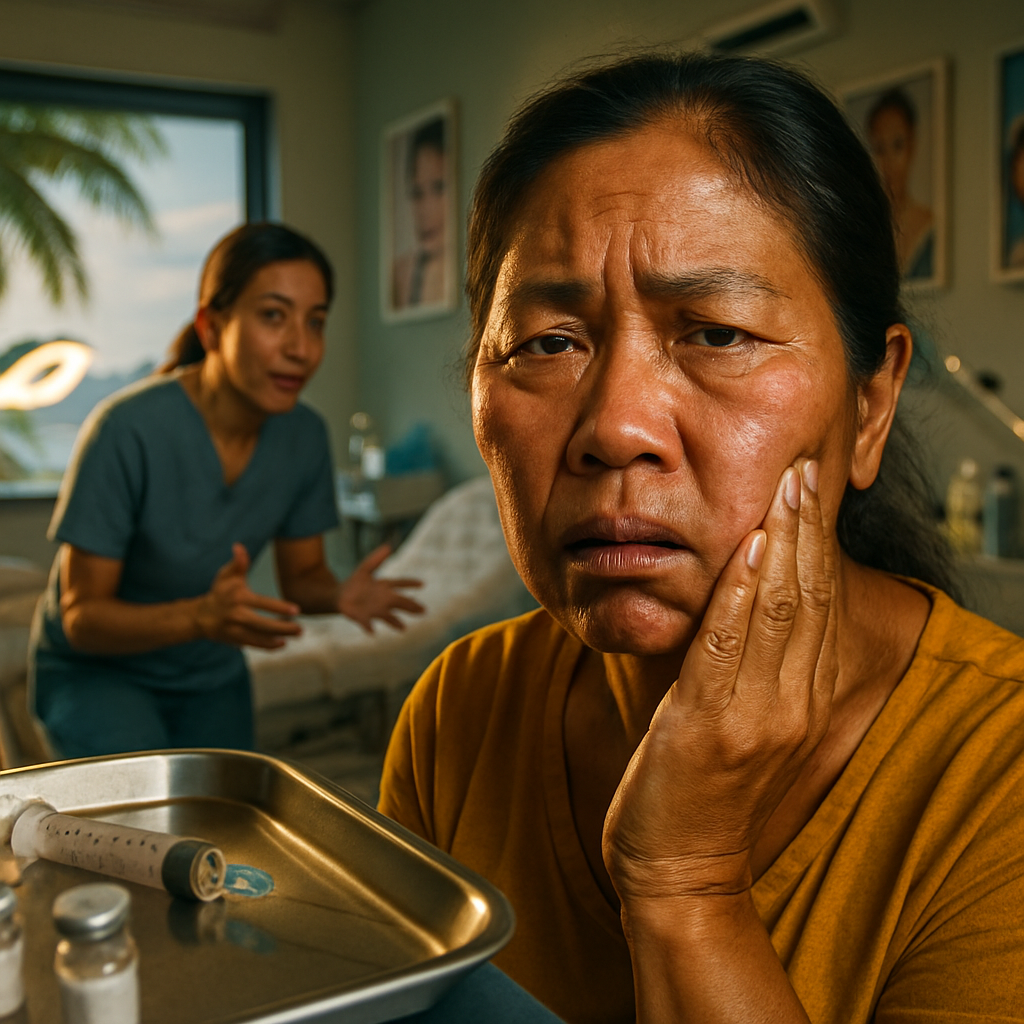
She went in for a simple melasma treatment and left with nearly two years of misery. A 37-year-old woman in Pattaya is warning others after a filler injection at a popular local clinic allegedly left her face swollen, distorted and painful—an ordeal that began in August 2023 and only started improving after further treatment in Bangkok late in 2025.
According to her account, the trouble started on August 17, 2023. Searching on Facebook for help with facial melasma, she booked an appointment at a clinic that has a branch in Sattahip, near her home. Once there, staff persuaded her to try facial fillers instead of the planned pigment treatment. A clinic worker — who identified themself as a doctor and offered to perform the procedure personally — touted a promotion: a “one-session” filler package advertised at 33,999 baht.
Trusting the clinic’s apparent legitimacy, she agreed. The visit cost her 40,000 baht in total and she received roughly 29cc of filler injected across her face. Within about a week, swelling, pain and noticeable facial distortion set in. She returned to the clinic and was given medication to reduce swelling, but nothing improved. In the second week, staff reassured her and, alarmingly, administered another filler injection — roughly 10cc more.
So began a string of follow-up visits over more than a year. The clinic continued to prescribe medication, but her symptoms persisted. Unsure what was going wrong, she sought a second opinion and on July 24, 2025, sought further testing at Queen Sirikit Naval Hospital. Physicians there reportedly found no evidence of an allergic reaction, which prompted her to suspect that the fillers themselves were the root cause. She continued to pursue treatment with the original clinic until November 2025, when she was referred to a Bangkok hospital. After receiving treatment there, the swelling gradually subsided and her face finally began to return toward normal.
Despite the clinic offering some financial compensation, the woman says she didn’t pursue the matter for money. Her priorities are accountability and public safety. She filed a police report with Sattahip Police Station and lodged a complaint with the Medical Council of Thailand. Her complaint raises an additional, troubling question: was the person who administered the injections actually a licensed physician? She noted that the name displayed outside the treatment room didn’t appear to match the individual who performed the procedure.
This case is not an isolated scare in Thailand’s cosmetic industry. The story comes amid other high-profile incidents: one report cited a doctor facing up to six months in prison after a cosmetic surgery six years ago left a patient in a coma, while another clinic owner linked to the case faces three months behind bars. Those outcomes highlight how cosmetic procedures, while often marketed as quick fixes, carry real medical risk and legal consequences when things go wrong.
There are several clear takeaways from the Pattaya woman’s experience. First, cosmetic clinics and injectors should be thoroughly vetted. Don’t rely solely on glossy social media posts or promotional pricing. Ask to see a practitioner’s actual medical license, verify their name against clinic signage, and seek records of their training and experience with specific procedures. If a staff member claims to be a doctor, request to speak with the named physician and confirm the credentials directly with the Medical Council.
Second, beware of pressure tactics and upsells. The woman arrived for melasma treatment and left having received a large volume of dermal filler she hadn’t originally sought. Always insist on time to consider alternative treatments, and don’t let discounts or persuasive staff rush you into invasive procedures.
Third, if symptoms emerge after any cosmetic treatment — unusual swelling, distortion, persistent pain, fever, or open wounds — request immediate evaluation from a qualified medical facility and keep detailed records of all clinic visits, prescriptions and communications. In this case, the absence of an allergic reaction guided clinicians toward suspecting the filler as the problem. That kind of diagnostic clarity can be essential when pursuing official complaints.
Finally, public safety depends on transparency and accountability. Financial offers do not replace responsibility. That’s why the woman chose to file a police report and report the clinic to Thailand’s Medical Council: not for a payout, but to ensure others don’t suffer the same fate.
Her message to anyone considering cosmetic work is simple but urgent: research thoroughly, verify credentials, and never let a promotional pitch outweigh your right to safe, informed care. Aesthetic enhancements can boost confidence — but only when performed by qualified, accountable professionals. When they aren’t, the consequences can ripple far beyond a bad Instagram photo.



Comment verification
Step 1 of 3
Verify your email once to publish your comment. Your email is never shown publicly.
Enter the 6-digit code sent to .
Choose the display name shown next to your comments.