Pattaya Police Escort Mother and Child Home After Begging Near 7-Eleven
Pattaya Police Escort Mother and Child Home After Begging Incident Near 7-Eleven On a busy stretch of Pattaya Third Road, just outside the familiar glow of a 7-Eleven near Soi Chalermprakiat 2/1, residents spotted a…
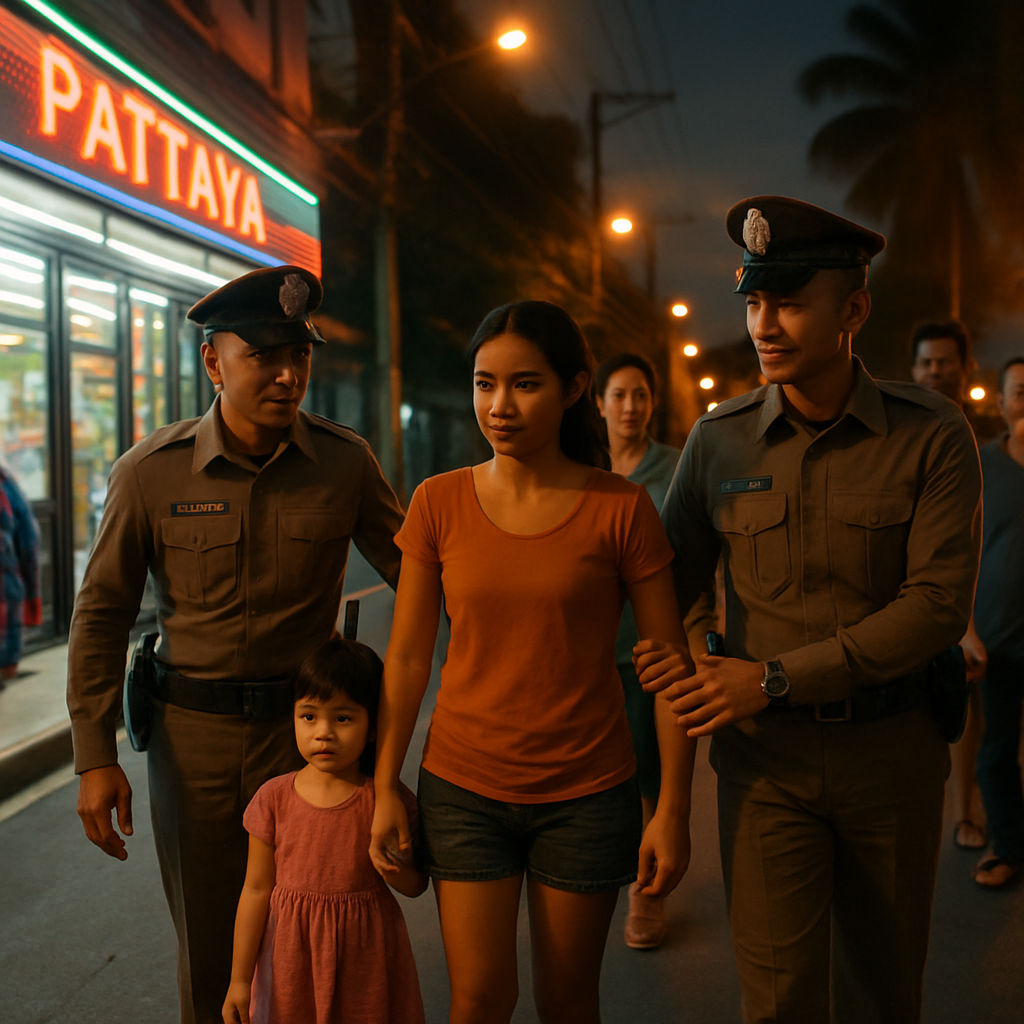
Pattaya Police Escort Mother and Child Home After Begging Incident Near 7-Eleven
On a busy stretch of Pattaya Third Road, just outside the familiar glow of a 7-Eleven near Soi Chalermprakiat 2/1, residents spotted a mother and her young child asking tourists for money. The scene — equal parts unsettling and heartbreaking — prompted quick action from Pattaya police and city enforcement officers after several locals filed complaints.
The officers approached the pair with calm professionalism. After a brief, constructive conversation, the mother agreed to leave the area, and officials escorted both her and the child safely back home. No arrests were made; instead, the priority was clear: protect the child and restore comfort to the public.
“The safety of the child and the comfort of the public are paramount,” a city official said. “While our enforcement actions ensure public safety, we must also recognise the importance of social support and education in preventing children from falling into vulnerable circumstances.”
Mixed Reactions from the Community
The incident sparked a wave of reactions online. Some Pattaya residents expressed compassion and concern for the child’s welfare — wondering whether the boy was receiving an education or access to basic services. Others took a sterner stance, urging city authorities to adopt firmer enforcement to prevent repeat incidents in busy tourist zones.
Comments ranged from calls for immediate outreach services to demands for long-term solutions. Many pointed out that sending people away solves only the surface problem; without access to schooling, social welfare, or employment support, families can fall back into the same situation.
- Concern: Will the child get an education?
- Practicality: How do authorities support vulnerable families long-term?
- Public comfort: How should tourist areas be protected without criminalising poverty?
“Locals are frustrated because this feels like one small story in a much larger problem,” commented a reader on the local Pattaya Mail report. “We need solutions that break the cycle, not only short-term fixes.”
Officials Stress a Two-Pronged Approach
City leaders reminded residents that law enforcement can respond quickly to immediate public-safety concerns, but sustainable change needs a broader, coordinated effort — one that brings together education, social services, and community outreach.
Programs that identify children at risk, enroll them in school, and support parents with job opportunities or financial aid are the kind of long-term investments residents say will reduce the need for public begging and protect vulnerable kids.
Another Face of Vulnerability: A Familiar Figure on Pattaya Beach
In a related story that highlights how visible poverty can become a local concern, residents also reported seeing an Iranian man living rough along Pattaya Beach. Often barefoot and pushing a supermarket trolley full of his belongings, he has become a recognizable — and contentious — figure on the beachfront.
Locals say the trolley, believed to have come from Big C, and his regular approach to beachgoers for money has made some tourists and residents uncomfortable. As with the mother and child on Third Road, reactions range from sympathy to calls for intervention. The man’s situation underscores how homelessness and transient livelihoods can cluster around tourist hotspots.
What Residents Want: Compassion + Practical Solutions
Pattaya’s recent incidents highlight a community grappling with empathy and practicality. The consensus among many locals seems to be:
- Protect children first — immediate welfare checks and safe returns home when appropriate.
- Invest in prevention — education, job training, and family support to stop children and adults from resorting to begging.
- Coordinate responses — law enforcement, social workers, NGOs, and local businesses working together.
For a city that relies heavily on tourism, maintaining a welcoming atmosphere is important — but so is treating vulnerable people with dignity. As one resident put it: “We need to be firm where necessary, but kind where possible.”
Looking Ahead
Pattaya’s leadership says they’ll continue patrolling busy corridors, responding to complaints, and, when necessary, escorting vulnerable individuals to safer places. But they also acknowledge the limits of short-term enforcement. The real challenge — and opportunity — lies in creating pathways that lead away from begging and toward education, housing stability, and employment.
Until then, locals and tourists alike will keep a watchful eye along Pattaya Third Road and the city’s beaches, hoping the next sighting leads not just to an escort home, but to a lasting solution for families and individuals in need.



Comment verification
Step 1 of 3
Verify your email once to publish your comment. Your email is never shown publicly.
Enter the 6-digit code sent to .
Choose the display name shown next to your comments.