Pattaya Scam Alert: Chinese Tourist Targeted by Fake Police Officers in Bold Theatrics
In a surprising twist of events that mirrors a scene straight out of a crime drama, the idyllic beaches of Pattaya were the backdrop to a dramatic showdown involving fake police officers and a baffled Chinese tourist.…
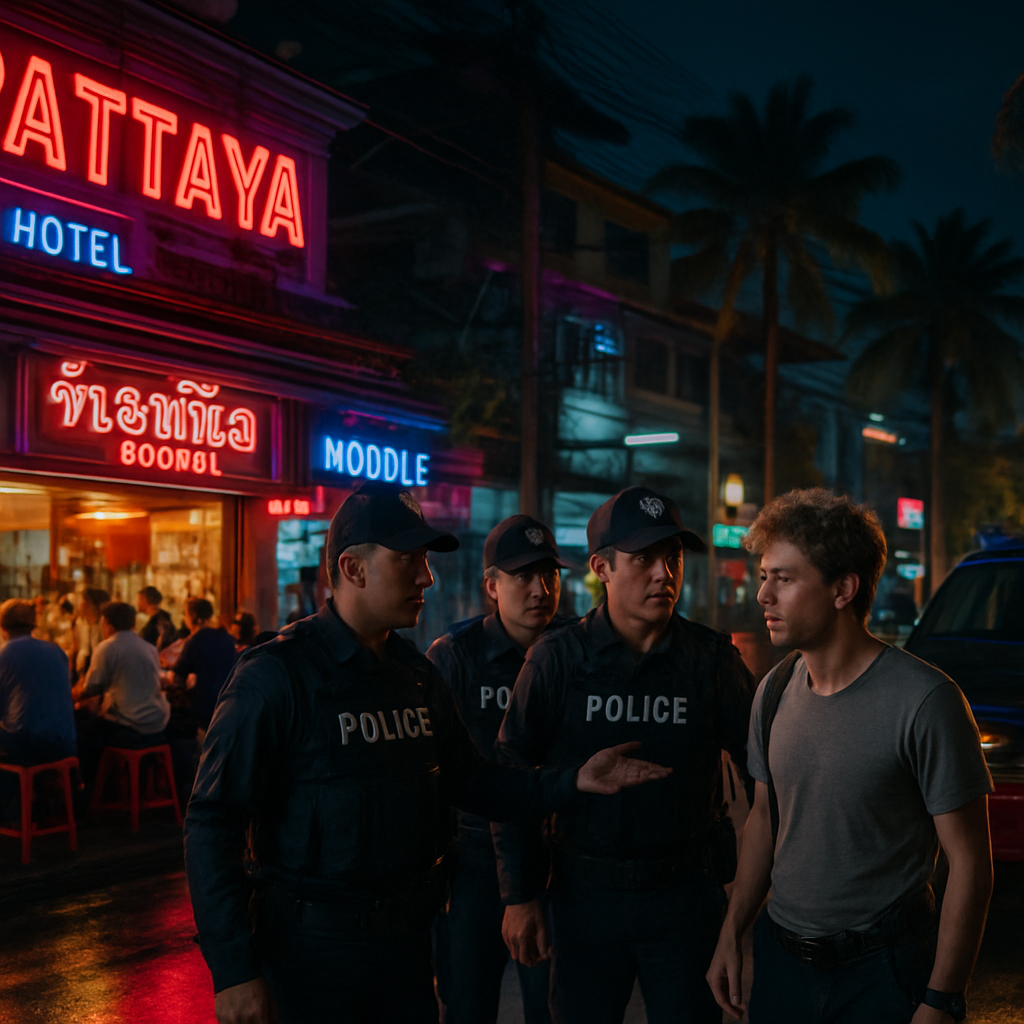
In a surprising twist of events that mirrors a scene straight out of a crime drama, the idyllic beaches of Pattaya were the backdrop to a dramatic showdown involving fake police officers and a baffled Chinese tourist. It all unfolded on a rather uneventful evening when Lin, a 52-year-old Chinese national, found himself the target of a brazen scam that left him considerably lighter in the wallet. The perpetrators? Four Thai men with a knack for theatrics and an illegal taste for extortion.
Lin, who had been enjoying the vibrant nightlife near an entertainment venue on Pattaya Sai Sam Road, couldn’t have imagined that his evening would take such an unexpected turn. As if on cue, the imposter quartet swooped in, accusing Lin outlandishly of being involved in a nefarious call centre scam—a claim as unfounded as it was absurd. Lin was coerced into an SUV, the vehicle itself almost as foreboding as the gang’s stern threats of legal doom. Riding down the bumpy roads of deceit, Lin parted with two valuable mobile devices and a hefty sum of 115,000 baht, adding to his tally of losses that night.
The scriptwriters of this crime-driven saga were far from done, ending their performance by depositing Lin near a sleepy shooting range, a good 8 kilometres from where his evening of revelry had started. A bizarre venue for a drop-off, wouldn’t you agree? But that's part and parcel of the sprawling stage that defines Pattaya's criminal landscape.
Perhaps what’s most surprising is that this took place right before witnesses at a bustling noodle shop. Kaew, the establishment's 24-year-old owner, recounted how Lin and his friend became unwitting stars in this real-life thriller. The pair had been relishing her culinary offerings mere moments before the drama unfolded. Now, imagine their surprise when a grey SUV rolled up, snatching Lin with a swiftness reminiscent of a Hollywood car chase scene. Kaew, alongside the noodle-slurping onlookers, could do nothing but watch—thwarted by their belief in the imposters' ruse of authority.
This incident is not without precedent. Just last month, the town of Sing Buri was abuzz with news of two men similarly posing as officers to wring 5,000 baht from an unsuspecting Indian national. And while the modus operandi was similar, forcing victims into cars and painting false narratives of criminal activities, each case seems to add its own twist to the tale of extortion under the guise of authority.
The Pattaya affair, however, remains shrouded in mystery as the true identities of these deceitful "officers" keep eluding law enforcement. The grainy footage from security cameras show only shadows of these villains, cloaked in black and masked by audacity more than fabric. Perhaps it’s their fear of discovery—and a poorly executed improvisation of power—that keeps them concealed in the shadows of Pattaya’s streets. But they’re not the only ones weaving such capers.
Similar stories echo across Thailand, adding fuel to what seems like a rising trend. From Sing Buri to Bangkok, and even the entertainment mecca of Asiatique, where opportunistic con-artists posed as enforcement while threatening legal repercussions on unwary migrants. This rash of imitation authority leaves genuine officers facing a public relations nightmare and raises questions about trust in those meant to uphold law and order.
In a strange twist, some might call it the epitome of "faux-cop noir," these imposters highlight a chilling tale in the otherwise sunlit lands of Pattaya. As the investigation trudges on, residents and tourists alike are reminded to remain vigilant and question the legitimacy behind any badge brandished in haste. After all, in a land where night markets collide with neon lights, where truth sometimes masks reality, it’s always wise to trust—yet verify.



Comment verification
Step 1 of 3
Verify your email once to publish your comment. Your email is never shown publicly.
Enter the 6-digit code sent to .
Choose the display name shown next to your comments.