Paul Chambers at the Center of U.S.-Thailand Tariff Talks and Legal Drama
The spotlight has swung towards a situation simmering beneath the surface of international diplomacy, where commerce and controversy meet in an unexpected stand-off. At the heart of this development lies American…
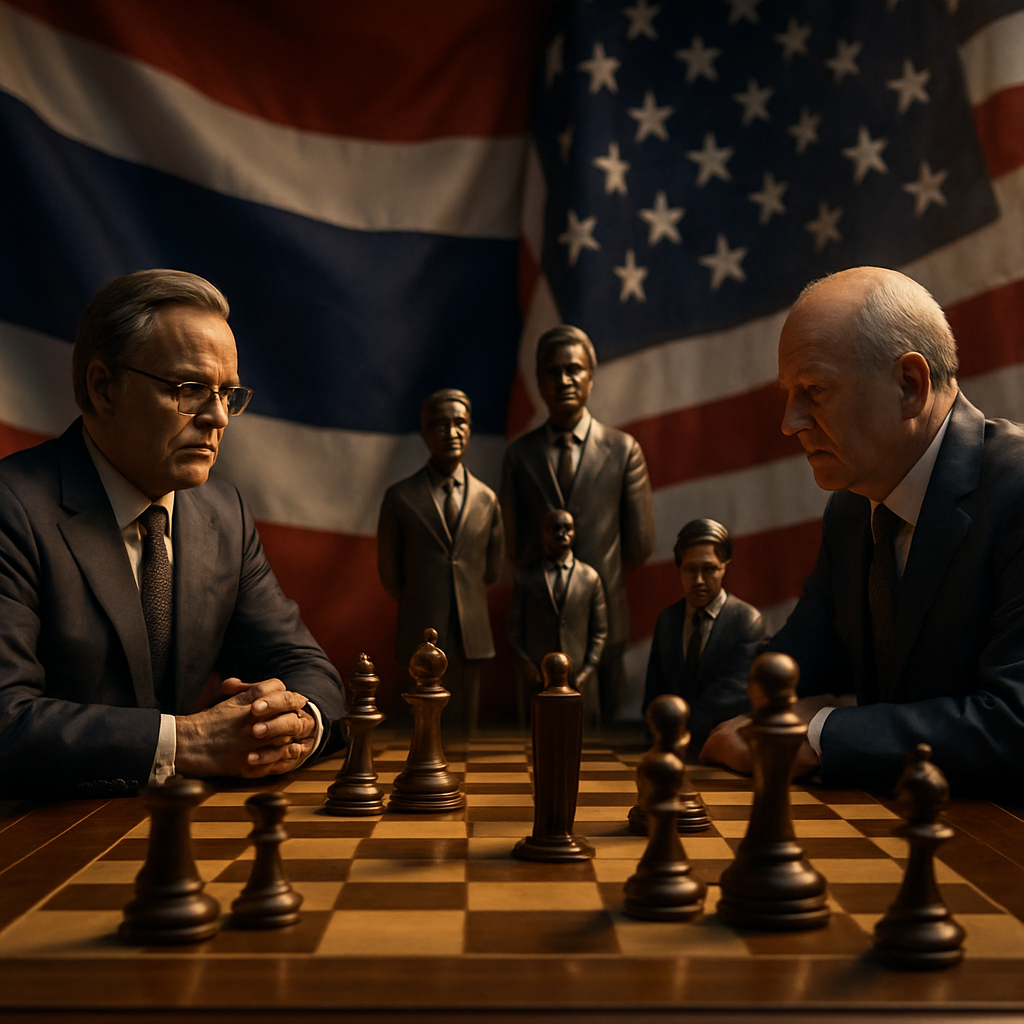
The spotlight has swung towards a situation simmering beneath the surface of international diplomacy, where commerce and controversy meet in an unexpected stand-off. At the heart of this development lies American academic Paul Chambers, a luminary figure with a distinguished career at Naresuan University in Phitsanulok. His recent run-in with the law has propelled him into an unwelcome limelight, as the opposition People's Party (PP) and other political forces urge the Thai government to reconsider the charges against him.
This unfolding drama gains complexity in the context of postponed tariff talks between Thailand and the United States, negotiations that hold substantial implications for both economies. Former Prime Minister Thaksin Shinawatra has waded into the discussion, suggesting that unresolved legal disputes involving American nationals, possibly including Mr. Chambers, are creating ripples of concern across the Pacific, potentially stalling critical trade negotiations. Thaksin's perspective adds an intriguing layer to the narrative, demonstrating the nuances of diplomacy intertwined with legal proceedings.
In an unexpected twist, Sirikanya Tansakun, a formidable voice within the PP and deputy leader, threw her weight behind the notion of resolving the charges to rejuvenate the tariff discussions. Despite acknowledging Thaksin's insightful comments, she voiced concern over his absence from the decision-making corridors, wondering aloud how his perspective might translate into concrete action. Yet, Sirikanya was quick to point out that the government's response to this situation has been less than satisfactory, urging for transparency and verification of Thaksin's claims as a public service.
The stakes in this high-wire act are significant. Charges against Mr. Chambers encompass alleged breaches of lese-majeste and computer crime laws, matters that could complicate the delicate balance of international relations. The suggestion that dismissing these charges might oil the wheels of trade negotiations strikes a chord that resonates deeply within diplomatic circles.
However, not everything about this situation is clear cut. The mention of potential connections between Thaksin and figures within Trump's administration adds an element of political intrigue. Sirikanya advocated for utilizing every available channel to push the talks forward, underscoring the irreplaceable role of formal government-to-government negotiations as the most pragmatic path forward.
But the plot thickens. Another geopolitical factor looms over the tariff discussions—the sensitive issue of Uyghur deportations. This matter presents a potential hurdle, with implications that extend beyond bilateral trade and veer into the intricacies of Thailand's delicate relationship with China. Sirikanya was forthright in acknowledging the sensitivity of this issue, hinting at the complexity involved in juggling such multifaceted diplomatic relations.
As we watch these events unfold, one can't help but be drawn into the drama akin to a geopolitical thriller. The stakes are high, the players seasoned and strategic. Whether or not Paul Chambers finds himself a pawn or a kingpin in this game, the reverberations of these negotiations will undeniably be felt far beyond Thailand's borders.
The world watches as Thailand navigates this challenging terrain, perched at a crossroads where the decisions of today will script the landscape of tomorrow's international dealings. Like pieces on a chessboard, each move must be calculated, each consequence anticipated. In the end, only time will reveal if justice—and diplomacy—prevail.



Comment verification
Step 1 of 3
Verify your email once to publish your comment. Your email is never shown publicly.
Enter the 6-digit code sent to .
Choose the display name shown next to your comments.