Phattarapong Leelaphat Leads Call to Tackle Arsenic Contamination in Chiang Rai
In a unified outcry over an alarming environmental issue, residents in Myanmar severely impacted by unregulated mining have raised their voices, right at the symbolic landmark of the Kok River Bridge in Chiang Rai. This…
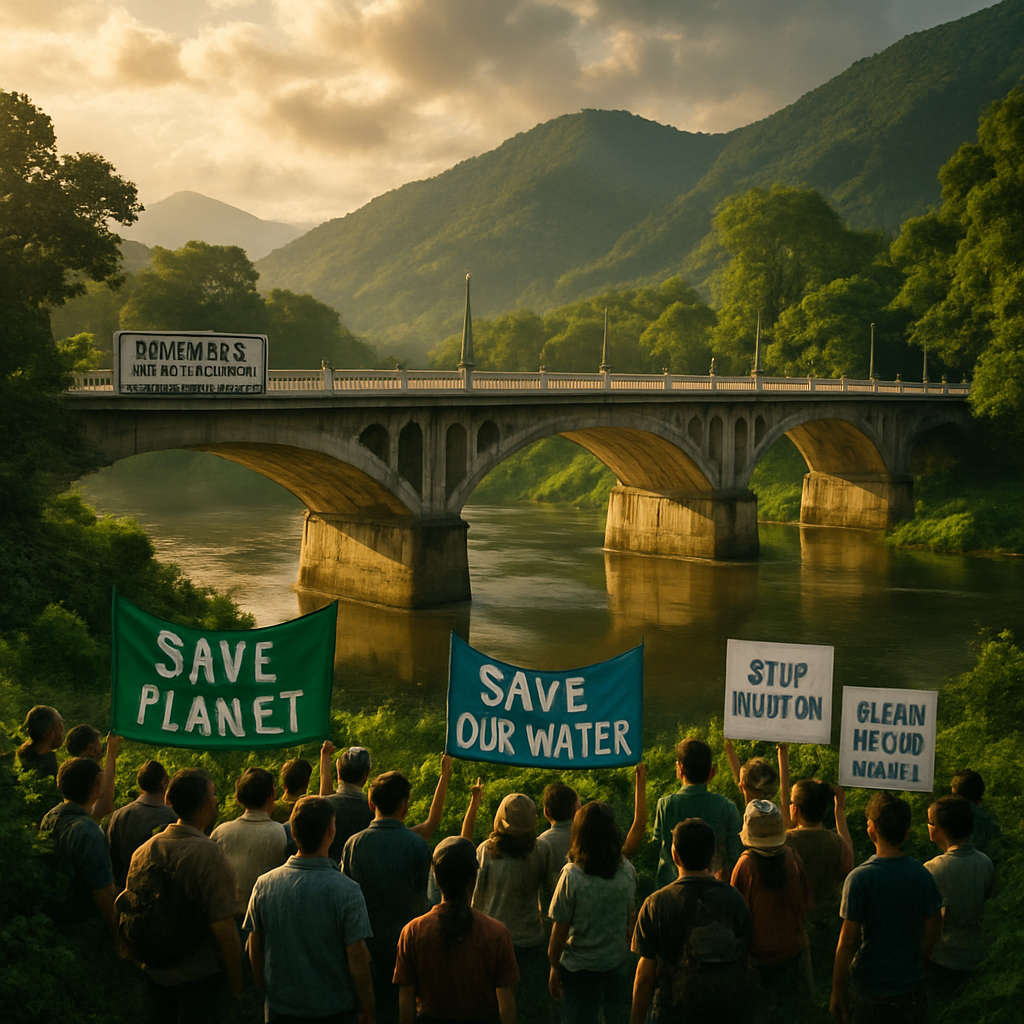
In a unified outcry over an alarming environmental issue, residents in Myanmar severely impacted by unregulated mining have raised their voices, right at the symbolic landmark of the Kok River Bridge in Chiang Rai. This is a flashpoint moment, offering a vivid display of environmental advocacy in action—captured poignantly by Wassayos Ngamkham's snapshot.
The People's Party (PP), a formidable force for change, has amplified these concerns, urging the government to energetically tackle the creeping threat of arsenic contamination. This environmental blight is not merely restricted to local northern rivers, but has menaced its way into the intricate networks of the mighty Mekong in the Northeast. This escalating crisis calls for immediate dialogues to be organized with our neighboring allies—China, Myanmar, and Laos.
PP's dynamic deputy spokesman, and Chiang Mai's vocal MP, Phattarapong Leelaphat took to his digital platform on Saturday. Here, he presented a damning critique, suggesting that the authorities were sidestepping their responsibilities regarding the toxic contamination. Testing along the Mekong, crossing storied provinces such as Loei, Bueng Kan, Nong Khai, and Nakhon Phanom, exposed arsenic levels skyrocketing beyond safe limits. And yet, crucially, this gnawing issue was not transparently disclosed to the communities affected.
Our cross-border neighbors' mining activities are the villains of this piece, yet our governmental figures have seemingly turned a blind eye. Despite being on the radar in northern areas like the Kok, Sai, and Salween for quite some time, this contamination is now insidiously spreading eastwards, raising urgent alarms.
Mr. Phattarapong didn’t mince words when he placed Deputy Prime Minister and Environment Minister, Suchart Chomklin, in the metaphorical hot seat. It's been over a year, and the roots of this ecological dilemma remain unaddressed by key authorities, a delay that speaks volumes.
Test results, bearing alarming revelations, were quietly shuffled onto obscured web pages, rather than being proudly plastered across main government portals where all eyes could scrutinize them. This covert handling was highlighted by the Pollution Control Department's reticence on their central platform, opting instead for more hidden locales like Environment and Pollution Control Office 9's site.
Recognizing the dire need for collaboration, Mr. Phattarapong implored the government to harness the collective power of the Lancang-Mekong Environmental Cooperation Centre (LMEC) for robust multilateral discussions. It's a cascade of missed opportunities; he noted how senior ministers skipped pivotal Asean and Asean-China environmental pow-wows, delegating critical issues to lower-ranking officials, an act dampening potential progress. Simultaneously, the domestic agencies floundered with meager budgets, scarcely testing our precious water resources.
Thailand, he reasoned, must adopt a dual-pronged strategy—negotiating vigorously with upstream contributors while fortifying house with transparency, budget allocations, and a laser focus on root causes. Expanding monitoring networks and providing comprehensive data to the public must not be sidelined in this eco-battle.
In a spirited retort, Mr. Suchart acknowledged the rising clamor. He assured that public fears were being absorbed into action plans spanning three dedicated task forces: securing alternative water sources, managing transboundary pollution, and safeguarding health. It's a narrative unfolding with dedication, stretched over the landscapes that are our shared home.



Comment verification
Step 1 of 3
Verify your email once to publish your comment. Your email is never shown publicly.
Enter the 6-digit code sent to .
Choose the display name shown next to your comments.