Phitsanulok's Secret Sawmill: Major General Wacharin Phusit Uncovers Chinese Operation
In a gripping twist that might just come straight out of a crime thriller, an undercover operation has unfolded in the serene province of Phitsanulok, Thailand. The narrative pivots around an illegal sawmill, suspected…
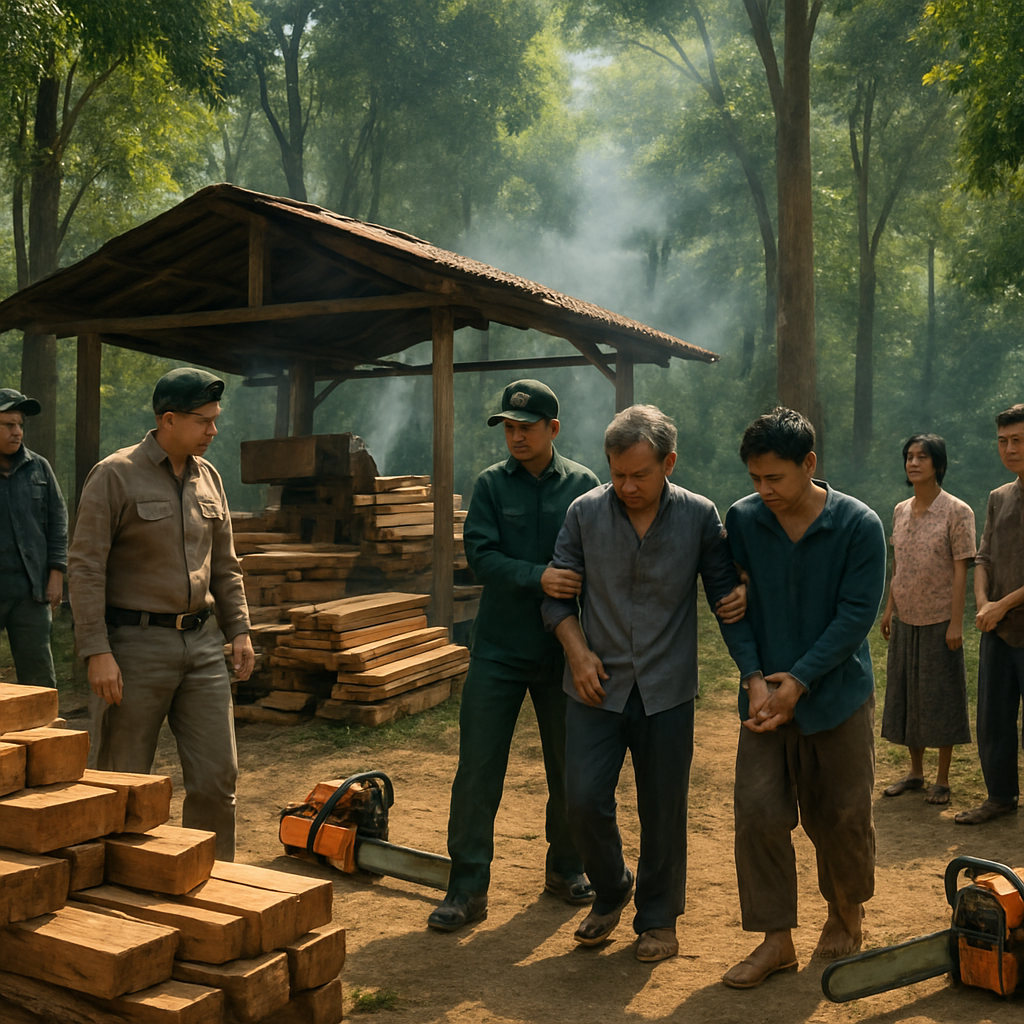
In a gripping twist that might just come straight out of a crime thriller, an undercover operation has unfolded in the serene province of Phitsanulok, Thailand. The narrative pivots around an illegal sawmill, suspected of being discreetly operated by Chinese nationals under a shroud of secrecy and subterfuge. Just yesterday, on May 23, the local skies were filled with more than just the usual tropical haze as police officers and forestry officials swarmed the vicinity of the veneer processing plant nestled in the Chai Nam subdistrict of Wang Thong district. The issue? A cacophony of complaints from the local populace regarding the sinister pollution emitted by the burning wood scraps, which cloaked the area in choking smoke and a dismal fog of dust.
Leading this audacious operation was none other than Police Major General Wacharin Phusit, a stalwart of the Natural Resources and Environmental Crime Division (NRECD). Standing shoulder to shoulder with him were dignified ranks such as Deputy Commander Police Colonel Arun Wachirasrisukanya and Police Colonel Natthakrit Noykhampan. Their mission was clear-cut, and they wasted no time in arresting four suspects during the raid: 30-year-old Thanawut and Wanwisa (both surnames kept under wraps), alongside two individuals carrying Chinese nationality, Jiemai and Chengqi. In a sweep of the scene, the authorities seized five formidable chainsaws and a plethora of records pertaining to logistics of logs and the processed wood trade.
The intricacies of this operation unravel further as investigations reveal an intriguing plot twist. The sawmill's official registration pointed to Thanawut as the owner. However, the plot thickens as it emerges that the Chinese suspects allegedly leased the plant, running operations with clandestine precision. Such maneuvers potentially breach Thailand’s stringent foreign ownership regulations, raising allegations that the plant served as a mere façade for covert Chinese control. The residents, enduring the brunt of environmental toll, lamented the foul odors and intrusive dust which had pervaded their lives, significantly impacting their health and well-being. "The pollution was unbearable and affected everyone’s daily living," confessed a local, his words laced with both frustration and a plea for relief.
With the allegations firmly in place, the suspects now face charges. These range from unlawful possession of chainsaws to operating a business that endangers public health sans the requisite authorizations, as reported by KhaoSod. Taking a staunch stand, Maj. Gen. Wacharin affirmed, "We will continue to crack down on environmental crimes and illegal foreign operations that threaten local communities." His words offer a glimmer of hope for a community yearning for respite from pollution’s vice-like grip.
The suspects are now in the custody of investigators who will delve deeper to unearth the full extent of the sawmill’s operations. Meanwhile, this saga of illegal industrial endeavors echoes through the halls of Thailand’s governance. In a related development, the People’s Party has issued a clarion call to the Ministry of Higher Education, Science, Research and Innovation. Their demand? A probe into accusations that international study programs are being exploited by Chinese nationals as a strategy to secure student visas for illicit work in Thailand.
As the sun sets on yet another page-turning day in Phitsanulok, the local community holds its breath, awaiting justice and cleaner air. The implications of this high-stakes drama stretch beyond mere legalities; they speak to the resilience of a community, the tenacity of authorities, and a future where operations in shadows give way to transparency and accountability. As the smoke clears, both metaphorically and physically, one can only hope for a clearer, more breathable horizon for the residents of Phitsanulok.



Comment verification
Step 1 of 3
Verify your email once to publish your comment. Your email is never shown publicly.
Enter the 6-digit code sent to .
Choose the display name shown next to your comments.