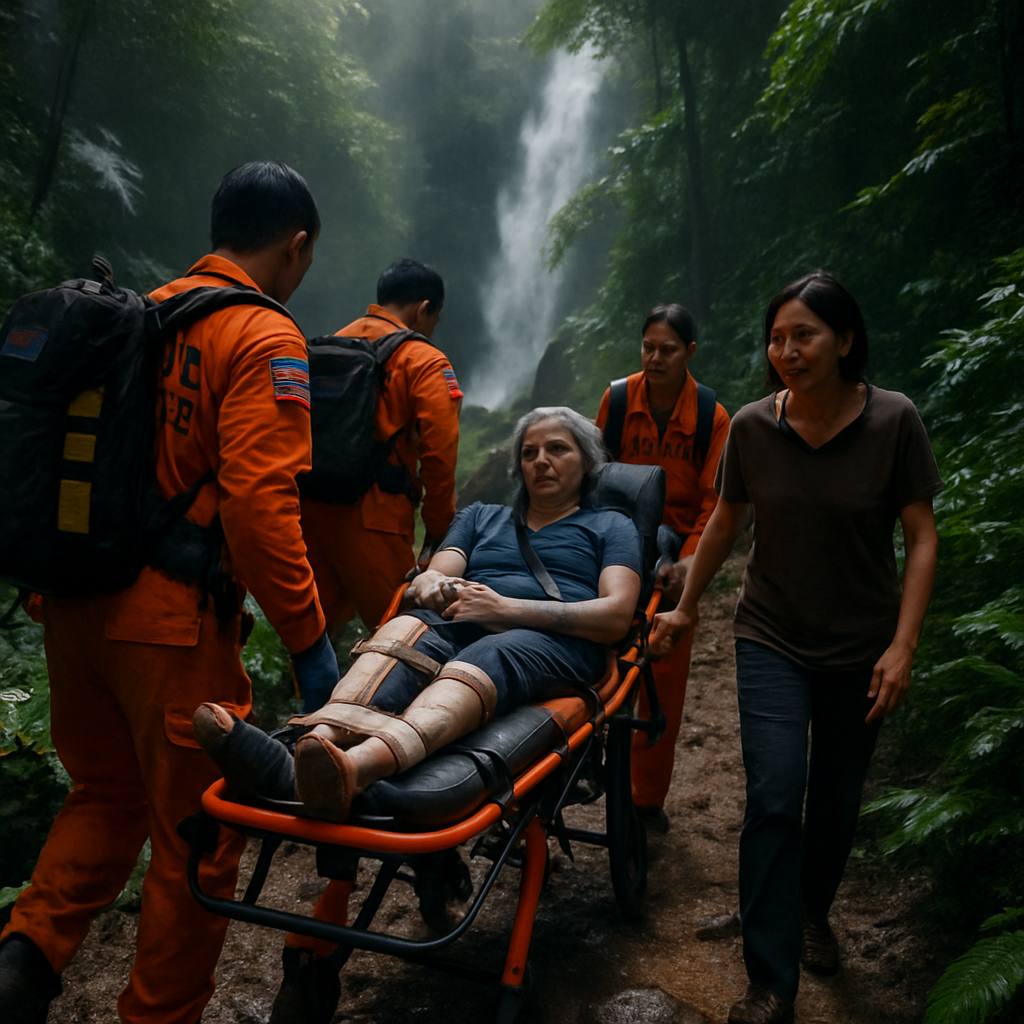
What began as a scenic outing along the Ton Sai–Bang Pae route in Phuket turned into a tense forest rescue that reminded everyone how quickly an idyllic hike can go sideways. A Danish couple enjoying one of Khao Phra Thaeo National Park’s most popular trails found themselves in need of help after the woman, 67, slipped while descending near Bang Pae Waterfall and suffered fractures to her arm and leg, along with significant bruising to her lower body.
The call for help and a long hike in reply
On Friday, January 16, Guardians of Life Medical & Rescue received a distress call from the couple. The location—close to the picturesque Bang Pae Waterfall in Thalang district—sounds straightforward on a map, but in practice it meant more than 15 rescuers had to mobilise and brave dense, uneven jungle. The rescue team spent over five hours trekking through forested terrain, negotiating steep slopes and thick undergrowth, to reach the injured woman.
When the rescuers finally arrived, the couple were reportedly visibly relieved. The Danish man was uninjured and stayed with his partner as the team worked. Rescuers provided first aid on the spot, carefully immobilised the woman’s fractures, and used a stretcher to carry her out of the forest. She was then taken to Thalang Hospital for further treatment.
Rescue work isn’t glamorous—but it’s heroic
There’s a certain mythology about rescues: helicopters, dramatic winches, and cinematic urgency. The reality, as shown by this mission, is often a long slog on foot under hot, humid conditions, with rescuers carrying not only injured people but also heavy medical gear and stretchers. The Guardians of Life Medical & Rescue team’s effort—more than 15 personnel and a five-hour trek—underscores how much silent, physical work goes into saving lives away from roads and hospitals.
It’s also a reminder of the gratitude victims and their companions feel when help arrives. The couple’s visible relief was the human payoff for hours of arduous work by local rescuers who know the terrain intimately and respect the jungle’s unpredictability.
Not an isolated pattern: other foreign hikers and cyclists have found themselves stranded
This Phuket incident is part of a broader pattern of foreign visitors getting into trouble in Thailand’s forests and hilly districts. Just last week, Chiang Mai rescuers helped a 63-year-old British cyclist who became lost in the forested Phrao district. He had chosen a route through thick woodland on his ride into the city centre, grew exhausted by the steep terrain, and ultimately spent a night exposed in the forest before managing to call for help the next day.
Another example came last October in Kanchanaburi, where a 19-year-old British national was found safe after several days missing in the forest. He told authorities he became lost while trying to reach the Myanmar border, survived in part by eating insects, and finally stumbled upon a temple at the edge of the woods where he could ask for help. Stories like these highlight the unpredictability of nature and the resourcefulness—and vulnerability—of those who find themselves alone in the wild.
Simple precautions that can make a big difference
These incidents aren’t meant to scare you away from Thailand’s magnificent trails—far from it. They’re a cue to prepare. A few practical precautions can reduce the odds of becoming a headline:
- Tell someone your route and expected return time; leaving a clear plan helps rescuers locate you faster.
- Bring a basic first-aid kit and know how to use it—splints, bandages, and antiseptic matter.
- Carry a charged phone and a power bank; consider an offline map or a GPS locator if you’re going deeper into the forest.
- Wear proper footwear and go at a pace that matches the trail’s difficulty and your fitness level.
- Know your limits—descending can be more dangerous than climbing, especially on wet or loose terrain.
A final thought
The countryside around Ton Sai and Bang Pae Waterfall offers breathtaking views, refreshing cascades, and a chance to unplug—until someone needs help. Thankfully, Thailand’s volunteer and professional rescue services are experienced, dedicated, and ready to move at a moment’s notice. Respect the jungle, prepare for the unexpected, and when you do venture out, carry a healthy mix of curiosity and caution. The mountains and forests will be there tomorrow; it’s better to enjoy them well-prepared.


















Huge respect to the rescuers who hiked five hours in that heat to carry someone out on a stretcher.
Absolutely heroic, but we should ask why tourists are taking routes beyond their skill level without guides or proper gear.
Fair point — personal responsibility matters, but volunteers still deserve funding and recognition when they risk themselves.
Both points matter: behavioral change through education plus institutional support for rescue teams reduces recurrence and moral hazard.
Tourists must be fined when they ignore signs or go off-trail; it’s selfish and burdens locals with expensive rescues.
Fines? That’s harsh. Maybe better signs and cheap rental GPS units would help more than punishment.
Education and signage help, but if someone repeatedly ignores safety rules then penalties are fair — I wouldn’t want my taxes to pay for avoidable risks.
Penalize ignorance or compensate rescuers? Both sound reasonable, but implementation could scare off visitors and hurt local tourism.
Glad she survived; waterfalls can be sneaky and slippery even on easy trails.
This incident is a case study in risk communication failures: visual cues, route difficulty ratings, and mandatory briefing could lower incidents.
Agree, but who enforces briefings on open trails? You’d need park staff or private operators which cost money.
Public-private partnerships could fund that; a small permit fee paid by visitors could finance staff and emergency gear.
I’m tired of hearing about rescues for people who ignore warnings; these teams are not glorified babysitters for tourists.
We volunteer because we value human life, not because we want praise — but blame doesn’t help when someone needs care now.
I respect volunteers, but there has to be a system to discourage reckless behavior so this doesn’t become routine.
As someone who helps on these calls, I can say it’s brutal work and we could use more gear and rest days.
Are rescue teams paid or all volunteers? The article mixed both and it’s important for sustainability planning.
Mostly volunteers with some professional support; funding is patchy and often depends on donations or local charity.
Why isn’t there an official map with difficulty ratings and emergency exits at every trailhead? That’s basic safety.
Maps exist but tourists skip them. Language barriers and overconfidence are big problems too.
Then maybe multi-language pictograms and mandatory short videos at entry would help more than words.
I’m seeing a pattern where foreigners underestimate tropical terrain; different muscles, humidity, and slippery roots are deceiving.
Cultural competence for visitors is crucial; however, host communities also bear the externality of rescue demand and should be supported.
Exactly — both sides need solutions: visitor prep and host investment in rescue services.
Simple precautions listed in the article are golden: tell someone, bring a phone and power bank, wear decent shoes.
Most people think they won’t need a power bank. Then one false step and no battery means no call for help.
Wow that’s scary. I walk in the woods at home and I always take my phone and a small kit now.
Good habit — even kids’ scouts teach basic first aid and buddy systems for a reason.
Yup, teach survival basics early. People think nature is just a backdrop for selfies until something happens.
Tourism authorities should charge a tiny environmental-and-safety fee included in flights to fund local rescues and trail maintenance.
A fee might be efficient, but tracking funds to the right places and preventing corruption is the real challenge.
From a policy perspective, integrating visitor insurance, mandatory briefings for certain trails, and data collection on incidents will improve outcomes.
Data is key — without incident logs authorities can’t prioritize which trails need infrastructure or signage.
Hope the Danish woman recovers quickly; these kinds of falls at her age can have long recovery times if bones are brittle.
Why do rescue teams hike for five hours instead of using helicopters? Are air rescues not available or too costly?
Helicopters are expensive and weather-dependent; often the terrain or visibility rules them out, and ground teams are more reliable.
Maybe tour operators should be required to carry basic stretchers and have trained guides for remote trails.
If operators carried stretchers and knew basic techniques, it would make initial response quicker and reduce strain on volunteers.
Someone eating insects to survive? People romanticize survival but it’s just terrifying and avoidable with planning.