Phuket villa scam: Agent Chaiwat accused in 100M‑baht fake land fraud
What reads like the script of a high-stakes real estate thriller has landed a group of Phuket buyers in a very real, very costly nightmare. Dozens of Thai and foreign purchasers say they were sold the dream of luxury…
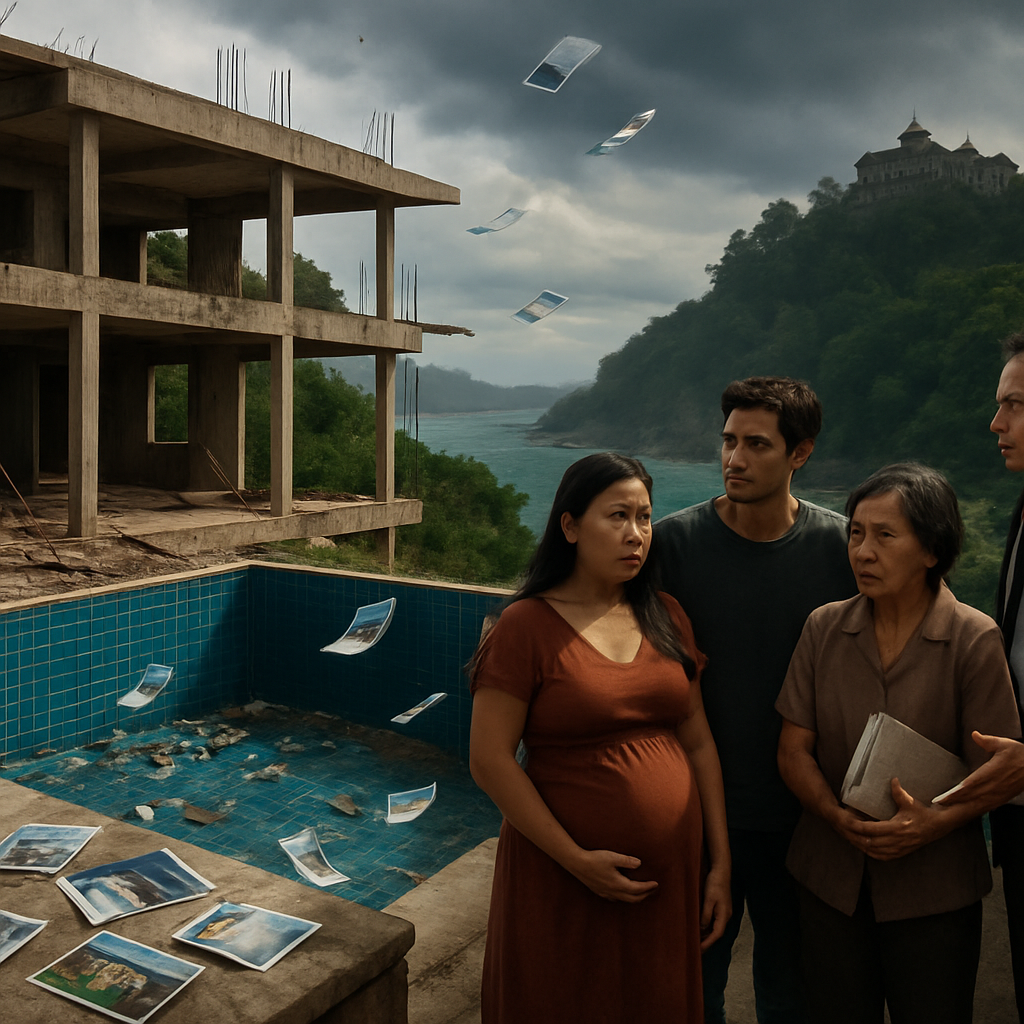
What reads like the script of a high-stakes real estate thriller has landed a group of Phuket buyers in a very real, very costly nightmare. Dozens of Thai and foreign purchasers say they were sold the dream of luxury pool villas — only to find unfinished shells, disappearing developers and a tangled web of politics and power that’s stalled any hope of swift justice. Collectively, the victims estimate losses in excess of 100 million baht.
The story centers on an agent named Chaiwat, who presented himself as the man behind property firms called Alicha Grand and Alisha Property. He convinced buyers that he owned the land for a high-end villa project in Phuket. Lured by glossy brochures, staged promo photos (reportedly featuring foreign models) and promises of resort-style living, many signed contracts for villas priced between 15 and 20 million baht.
But the villas never reached completion. Buyers paid deposits — in some cases the full purchase price — and then discovered a chilling truth: the land didn’t belong to Chaiwat at all. Instead, it’s reportedly tied to a senior local politician, a heavyweight in a major party. That revelation has left victims worried the case will be swept under the carpet or slowed to a crawl, thanks to the politician’s influence.
Among those affected is Sariya, a Thai woman expecting her first child with her Canadian husband. The couple trusted Chaiwat’s claim that the development sat on a 25,600-square-metre plot he owned. They handed over a 3.3-million-baht deposit on a 15-million-baht villa, convinced it would be the family home they’d raise their child in. Today the villa is incomplete, the nursery plans on hold and the couple’s future uncertain.
Then there’s 84-year-old Phuangphen, who returned to Thailand from the United States having paid more than 20 million baht in full for a dream home she intended to share with her daughter. She discovered the construction hadn’t even reached the halfway point and now faces the bitter prospect of losing her life savings to an unfinished promise.
Thongchai Thongcharan and more than ten other buyers have added their voices to the chorus of complaints. Thongchai himself paid 15 million baht for a house that never materialized. When he demanded answers, the agent refused to meet and eventually cut off all communication — an eerie echo of classic fraud tales where contact disappears right after the money changes hands.
Frustration mounted as victims filed complaints at Thalang Police Station, only to see little movement on their cases. That’s when a delegation from Phuket decided to take their plea straight to Nonthaburi, arriving on Monday, December 1, to seek assistance from the Foundation for Justice Restoration. The foundation is led by lawyer Ronnarong Kaewphet, who told the group the situation appears to amount to public fraud.
Lawyer Ronnarong is preparing to escalate the matter to ensure it receives the scrutiny it deserves. He plans to support the victims in filing complaints at Government House and the Central Investigation Bureau (CIB) — a move aimed at cutting through any local gridlock and bringing national-level investigators into the fold. The victims hope a higher-profile probe will prevent the case from fading away and compel authorities to act decisively.
The allegations raise several familiar red flags for property buyers in Thailand and beyond: persuasive marketing that leverages attractive visuals (including apparently staged photos with foreign models), a seller who claims land ownership without transparent documentation, and political connections that may chill investigative momentum. For prospective buyers, the episode is a sobering reminder to demand clear land title deeds, independent legal advice and verified developer credentials before parting with significant sums.
For now, the buyers are left in limbo — houses that were supposed to be homes, deposits that might never be recovered, and plans put on hold or ruined. The human toll is stark: a pregnant couple waiting for a safe place to raise their child, an elderly woman robbed of the home she envisioned in her retirement, and families across Phuket whose investments are tied up in a property that never materialized.
Authorities have yet to announce major breakthroughs, and Chaiwat has publicly denied responsibility, then severed contact with the buyers. Whether the involvement of a prominent politician will shield the land and the alleged scheme from scrutiny remains the painful question driving the victims to pursue higher-level legal action. If the CIB or Government House takes up the case, it could be the turning point they’re desperately seeking.
Until then, the story of the Phuket villa scam joins a long roster of property disputes that underscore the risks of buying into developments without rigorous checks. The victims’ journey to Nonthaburi and their appeal to the Foundation for Justice Restoration signals they’re not giving up — and they’re demanding their day in court. If nothing else, their voices may help shine a brighter spotlight on practices that can devastate families and savings when the glossy brochure turns out to be smoke and mirrors.
Buyers and investors should watch this story closely. It’s a case study in why due diligence, verified ownership records and legal safeguards are essential before signing on the dotted line — particularly in markets where politics and property intersect in complicated, and sometimes dangerous, ways.



Comment verification
Step 1 of 3
Verify your email once to publish your comment. Your email is never shown publicly.
Enter the 6-digit code sent to .
Choose the display name shown next to your comments.