Prathum Ruangrit Urges Action: Securing Safety for Teachers in Southern Thailand's Unrest
In the heart of Thailand’s serene landscapes, a storm of a different kind brews in the southern provinces, prompting voices like that of Prathum Ruangrit, President of the Southern Teachers’ Federation, to resonantly…
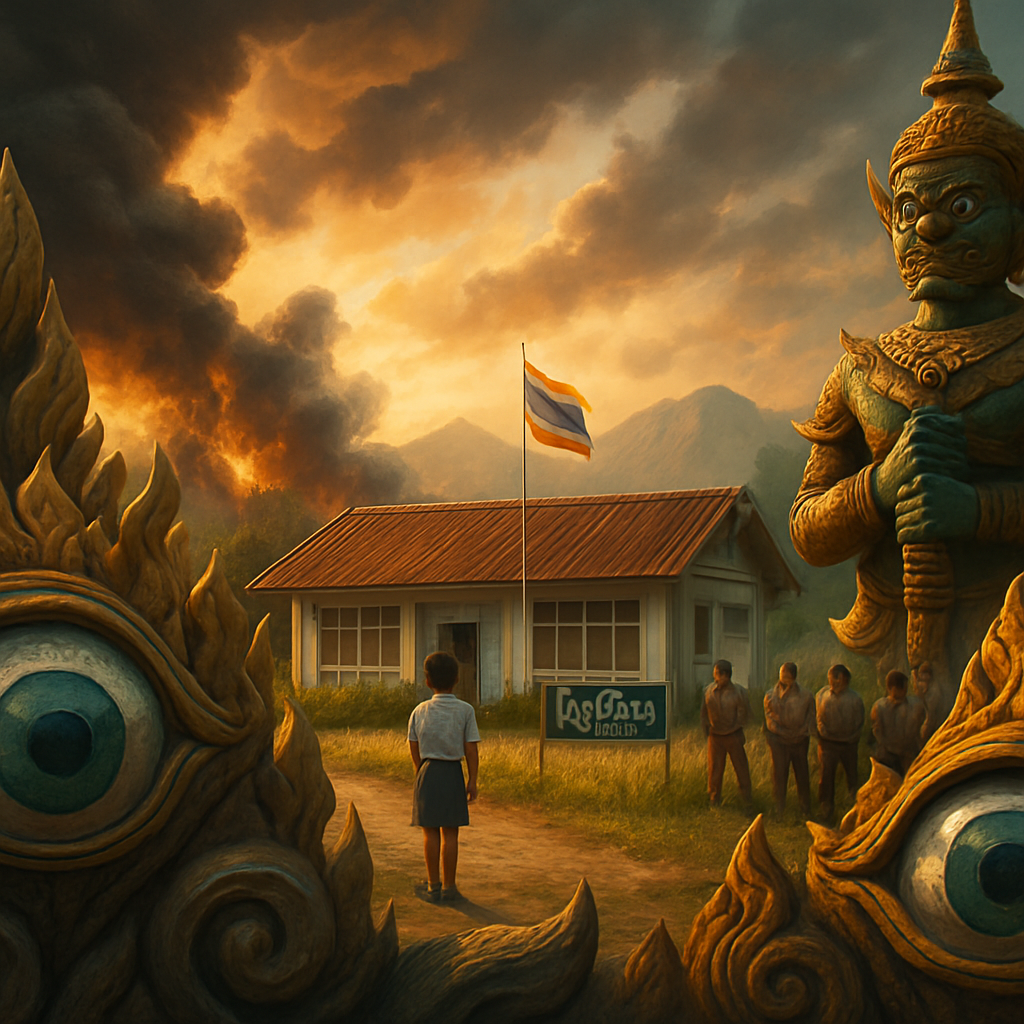
In the heart of Thailand’s serene landscapes, a storm of a different kind brews in the southern provinces, prompting voices like that of Prathum Ruangrit, President of the Southern Teachers’ Federation, to resonantly echo a plea for better safety measures. The Federation of Teachers Association of Thailand (FTT) has amplified this cry, urging the government to bolster security efforts as the volatile climate escalates in these regions. Indeed, the daunting task now is to protect educators and students embroiled in the turbulence gripping areas like Pattani, Yala, Narathiwat, and the shadowy corners of Songkhla.
Imagine going to school only to face the harsh reality that, alongside math and history, survival instincts must be strengthened as part of the curriculum. Prathum Ruangrit compellingly shines a spotlight on the precarious situation, revealing that the unrest casts a long shadow over the lives of teachers and students alike. It’s not merely their physical safety at stake but also their sense of security and mental stability as threats loom ominously over their daily lives. Schools, often seen as sanctuaries of knowledge and growth, are instead perceived as potential stages for unspeakable acts of violence.
As the drumbeat of reopening schools grows louder, the call from FTT becomes a crescendo urging immediate government action. A wish list for change includes deploying security forces to schools and key commuting corridors, sprucing up surveillance measures, and crafting proactive protection policies. These are not mere proposals; they are lifelines for educators and students immersed in risk.
The stakes are astronomically high. Recent events starkly illustrate the urgent need for change. Just a month ago, Narathiwat province was the backdrop for harrowing incidents. On April 20, a motorcycle bomb erupted near the Koke Kian Police Station, leaving police quarters wounded. Far from surreal, this horror was compounded about half an hour later when armed assailants unleashed chaos upon Thai Buddhists during a dinner in Waeng district, wounding seven who were hastily whisked away to Sungai Kolok Hospital.
FTT, in response, urges the implementation of emergency alert systems across all schools, paralleled with budget allocations designed to ensure teacher welfare through hazard pay, relocation prospects, and family compensation. These proactive strategies are not mere optimism; rather, they reflect a necessity born from adversity. “Safety isn’t a luxury,” echoes Prathum, “but an obligation we owe to our educators.”
However, it’s not only the government that bears the burden of responsibility. Community involvement is critical. Prathum proposes a tapestry of village volunteer networks poised to detect threats and reinforce the school-community relationship, further fortified by on-site mental health support. This considers not just the immediate threat but the lingering trauma those in educational ecosystems endure.
The palpable urgency extends across Thailand’s news landscape—whether it's a tragic collision in Uthai Thani or a manhunt in Bangkok. Yet, nestled in these headlines, the call for safety amid southern violence stands as a stark reminder of the real jeopardy facing educators and students. As the chorus of safety demands crescendos, it becomes clear: for those living in fear, action must be swift and resolute.
In the quest for peace and stability, the Federation of Teachers Association of Thailand is not merely petitioning for change; it’s beckoning a transformation that ensures schools in the south become centers of learning once more—places where knowledge reigns supreme over fear.



Comment verification
Step 1 of 3
Verify your email once to publish your comment. Your email is never shown publicly.
Enter the 6-digit code sent to .
Choose the display name shown next to your comments.