Rama II Expressway Collapse: Tragedy Strikes Bangkok Infrastructure
The tranquil air above the Rama II expressway was shattered in the early hours of March 15th, 2025, when a section of the under-construction bridge came tumbling down. This disastrous event was part of the expansive…
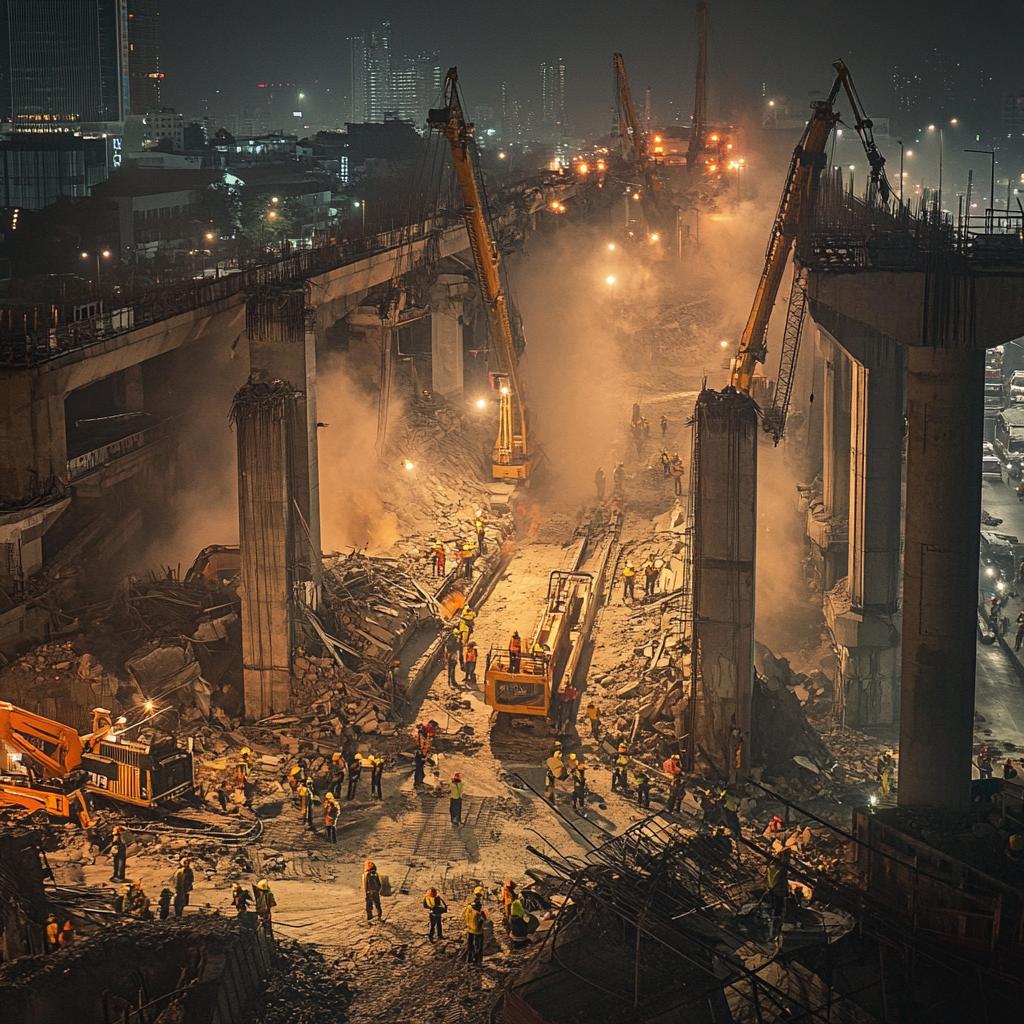
The tranquil air above the Rama II expressway was shattered in the early hours of March 15th, 2025, when a section of the under-construction bridge came tumbling down. This disastrous event was part of the expansive Rama 3 – Dao Khanong – Outer Ring Road project, and it led to a grim toll: five lives lost, and a multitude wounded. As the dust settled, the intense search for survivors began, leading to the discovery of three missing individuals who were initially feared lost amid the chaos.
The collapse site was quite the scene of turmoil. At around 2 am, the night was pierced by a thunderous crash as the bridge infrastructure gave way. Emergency response teams swooped in with impressive speed, tagging along the likes of forensic specialists and volunteers from the Poh Teck Tung Foundation. The tragedy has indeed cast a dark shadow over the safety of Bangkok's infrastructure development.
Portraits of the deceased soon emerged: Narathorn Yueakyen, the seasoned 39-year-old engineer from Pathum Thani; Rujthorn Harasa, the 47-year-old project overseer from Nakhon Ratchasima; and Sitthichai Kesornbua, a diligent worker from Nonthaburi. Added to this list of somber memories were the names of two Myanmar workers, Zin Ku Aung and Naing Lin Aung. These names now stand as silent witnesses to the perils that their workplace unexpectedly harbored.
During the rescue efforts, amidst a cloud of dust and debris, two lost souls were found. They were not a part of the lifeless count but trapped in circumstances unimaginable. One Cambodian worker's bag, littered with a gold necklace and identity papers, was rescued, and he himself is now recuperating at Suksawat Hospital. As fate would have it, the other bag belonged to the late Sitthichai Kesornbua, marking the end of one life’s journey but the continuation of another's story.
The scene was even more haunting with tales of workers stranded aloft towering bridge pillars, caught in a lifeline struggle for time. Rescue operators worked painstakingly to extract four individuals—two men and two women—from the grasping hands of the wreckage. A cement truck driver recounted the horror vividly, describing the ear-splitting bang that heralded disaster, leaving nothing but steel entangled with concrete in its wake.
Amidst this chaos, traffic woes mounted as the severed expressway laid siege to Bang Mod and surrounding districts. The Expressway Authority of Thailand swiftly moved to curtail further disruptions, advising alternate routes for those navigating through the city. Suksawat Road became a beacon for redirecting displaced vehicles while the investigation into the construction disaster plunged into full force. The question on everyone's mind remains: How could such a devastating failure occur?
As K-9 units comb the remnants for any last survivor, whispers of workers who saw beams plummet circulate the site, piecing together the tragic jigsaw of events. Yet, the haunting specter remains—the safety measures that perhaps failed to prevent such a calamity. While emergency services piece through the debris, the entire city ponders the safeguards of its soaring structures.
The days following the incident see the community in collective mourning, grappling to comprehend how five lives could just disappear in the blink of an eye. Even as workers return to emerge from the ordeal, one cannot help but wonder how deep the impact of this catastrophe will reach. It's a lesson rooted in heartbreak, a reminder etched in concrete, calling forth for accountability and humanity as Bangkok looks to rise from the ashes.



Comment verification
Step 1 of 3
Verify your email once to publish your comment. Your email is never shown publicly.
Enter the 6-digit code sent to .
Choose the display name shown next to your comments.