Rayong School Haircut Controversy: Students Challenge Outdated Policies in Thailand
The start of the school year in Rayong has been anything but ordinary for a group of young girls who found themselves victims of an impromptu salon session courtesy of their teachers. These educators, seemingly armed…
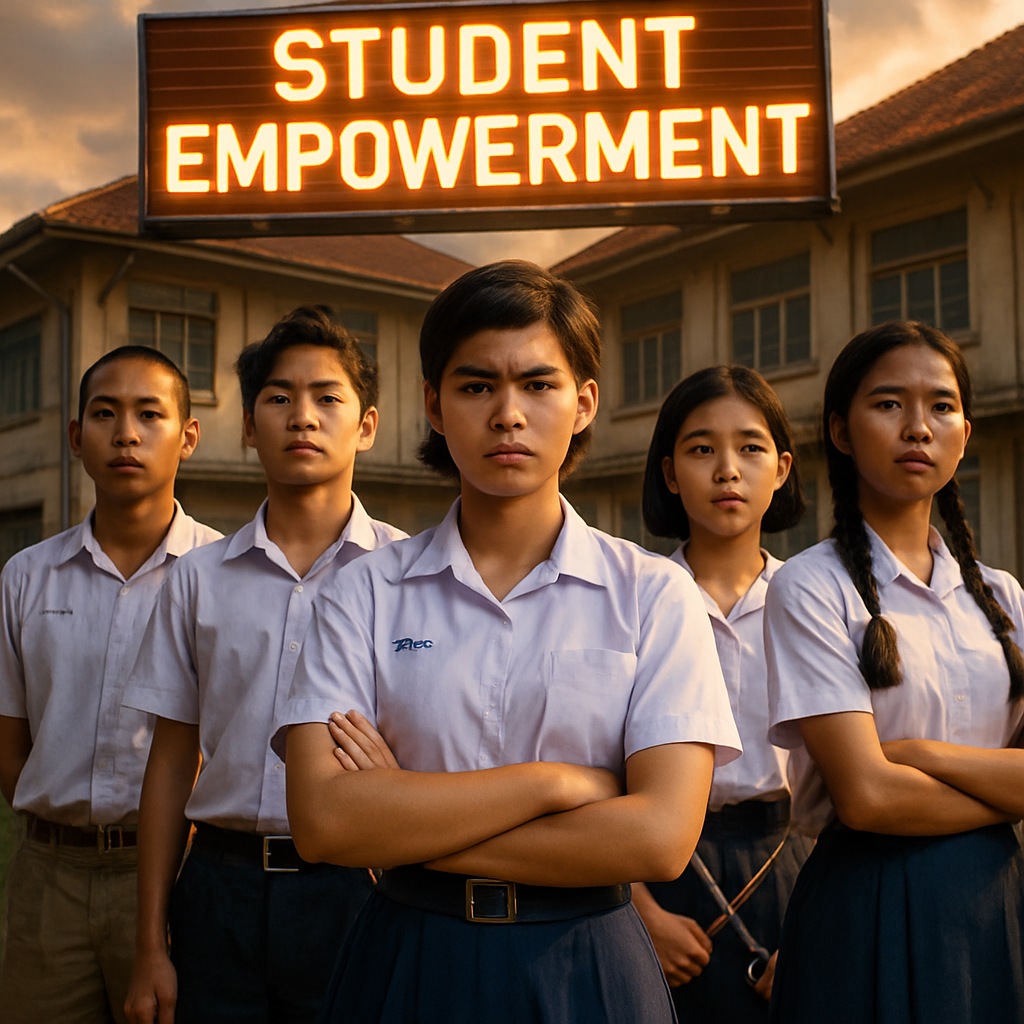
The start of the school year in Rayong has been anything but ordinary for a group of young girls who found themselves victims of an impromptu salon session courtesy of their teachers. These educators, seemingly armed with shears and strict opinions, decided the students' hairdos were far from school-appropriate, despite a landmark ruling that suggested otherwise. It's left many questioning whether a new era of freedom is truly dawning in Thai schools.
In a surprising twist of administrative history, the Supreme Administrative Court recently overturned a regulation from 1975 that dictated student hairstyles — a relic reminiscent of an era that valued uniformity over individual flair. The court dismissed the rule on March 5, declaring it contrary to constitutional rights and outmoded by today's rapidly evolving societal norms.
Yet, while the ruling grants schools the autonomy to dictate hairstyle policies, it explicitly forbids any teacher from inflicting mortifying punishments — particularly those involving publicly chopping off locks. Despite this, the girls' ordeal unfolded on May 9 at a Klaeng district school, just as orientation was underway. Teachers, possibly guided by the ghost of regulations past, took matters into their own hands — quite literally — deeming the students' hairstyles an affront to some schools' waning rules from before the annulment.
The aftermath was chaotic. Boys faced a seemingly different but still disruptive challenge, having been advised to find solutions to their apparently improper coiffures independently. Fixing a botched haircut isn't exactly a breeze, as one disgruntled student reportedly mentioned to the activist group, Bad Student.
Frustrations were not limited to just bad hairstyles. Attempts by students to voice their dissatisfaction on the school's official Facebook page met with abrupt silencing as comments critical of the incident mysteriously disappeared. "Can we truly express ourselves freely?" one wonders, as the specter of discipline looms large over student rights. This episode, they argue, might stand at odds with the Child Protection Act, suggesting that the cultural residue of conservatism stubbornly clings to the present-day educational narrative.
Bad Student, the activist group at the forefront of this issue, paints a vivid picture of a journey far from its conclusion. Their message reverberates across digital platforms, inviting support from netizens who, in a chorus of sympathy, align themselves with the students' plight. "The battle for student autonomy isn't over just yet," they assert, rallying for change from a practical standpoint even as the policy pen marks its revisionist journey in the annals of educational reform.
As the dust settles, only one question remains: Will the outdated coils of control unwound by the judiciary remain tangled in the hallways of education, or can the sounds of scissors snapping be replaced with the rustle of newfound freedoms?



Comment verification
Step 1 of 3
Verify your email once to publish your comment. Your email is never shown publicly.
Enter the 6-digit code sent to .
Choose the display name shown next to your comments.