Rayong Snake Bite Incident: Medical Oversight and Community Outcry
Late-night emergencies have an uncanny knack for unraveling into medical mysteries, especially when they involve nature's stealthiest predators. In the picturesque eastern province of Rayong, Thailand, one such case…
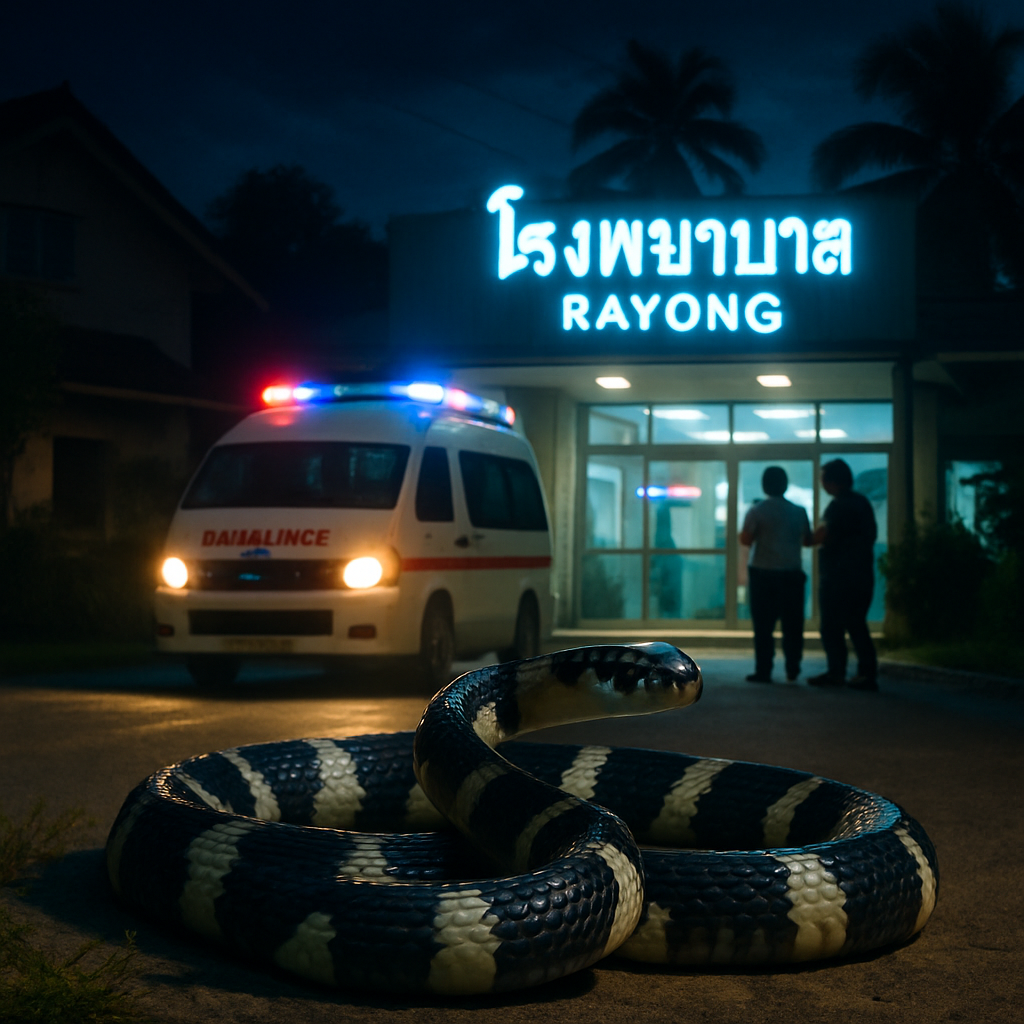
Late-night emergencies have an uncanny knack for unraveling into medical mysteries, especially when they involve nature's stealthiest predators. In the picturesque eastern province of Rayong, Thailand, one such case unfolded, leaving many questioning the provided medical care. The incident began like any other harrowing tale at 1 a.m. on a quiet Wednesday morning when an unsuspecting 18-year-old, identified as an employee of Paweena Tubtimhom, was bitten by a snake. His mother, displaying the instinctive urgency only a parent can summon, rushed him to Wang Chan Hospital. Upon arrival, hospital staff conducted blood tests, attempting to uncover venom lurking within his veins. According to reports, a doctor concluded that the case was, rather dismissively, "not important," citing no initial venom detection. In a stroke of optimism—or perhaps oversight—the teen was given a painkiller and disinfectant, instructed to go home, and advised to sleep off the encounter with one of nature’s more discreet assassins. However, the morning sun revealed a far graver narrative. By 9 a.m., the young man’s health spiraled—his ability to speak and keep his eyes open had vanished. Panic-stricken, his mother rushed him back to the hospital, where a more thorough examination uncovered the ghastly truth: venom had indeed infiltrated his bloodstream. Online, the story ricocheted through social media, with Paweena Tubtimhom vocally criticizing the hospital's initial inaction. Her frustration mirrored that of many who followed the tale, fueled by an interview she gave on Channel 7, where further light was shed on the snake involved—a Malayan krait, or Thap Samingkla in the local parlance. This serpent's venom is infamous for its ability to wreak havoc on the nervous system, inciting muscle weakness, drooping eyelids, and, in severe cases, respiratory failure. Despite the revelation, the damage was done; the young man’s condition was severe enough to warrant an immediate transfer to a larger medical facility. There, he received the desperately needed antivenom serum—albeit, perhaps, later than necessary. In defense of the initial actions taken by Wang Chan Hospital, Surawit Sakdanuphap from the Rayong Provincial Public Health Office held a press conference to clarify their position. Surawit asserted that the medical team adhered to standard protocols while monitoring the patient’s condition for two hours post-bite before allowing him to leave. Moreover, he committed to demystifying the situation for the patient’s mother and employer, hoping to salve the raw edges left by the incident. Now residing in the ICU, tethered to life by cutting-edge respirators, the young man's journey is being closely watched. His vital signs might be stable, but the path to recovery is tentatively paved with uncertainty, requiring vigilant medical oversight. This incident isn’t merely a lesson for hospitals dealing with venomous bites but also serves as a cautionary tale of the dichotomy between human error and nature's unyielding capability to surprise. The backdrop of this story is a stark reminder of the delicate dance between life and death, as experienced by the young man, his family, and his community. In Rayong, one narrates with care—the gasp of nature’s bite, the race against time, and, hopefully, a young man’s return to normalcy.



Comment verification
Step 1 of 3
Verify your email once to publish your comment. Your email is never shown publicly.
Enter the 6-digit code sent to .
Choose the display name shown next to your comments.