Rubber Tree Title Deed Initiative Launches: Minister Narumon Pinyosinwat Empowers Thai Farmers
In a groundbreaking initiative set to reshape the agricultural landscape, the Ministry of Agriculture and Cooperatives is gearing up to introduce the rubber tree title deed program next week. This strategic move aims to…
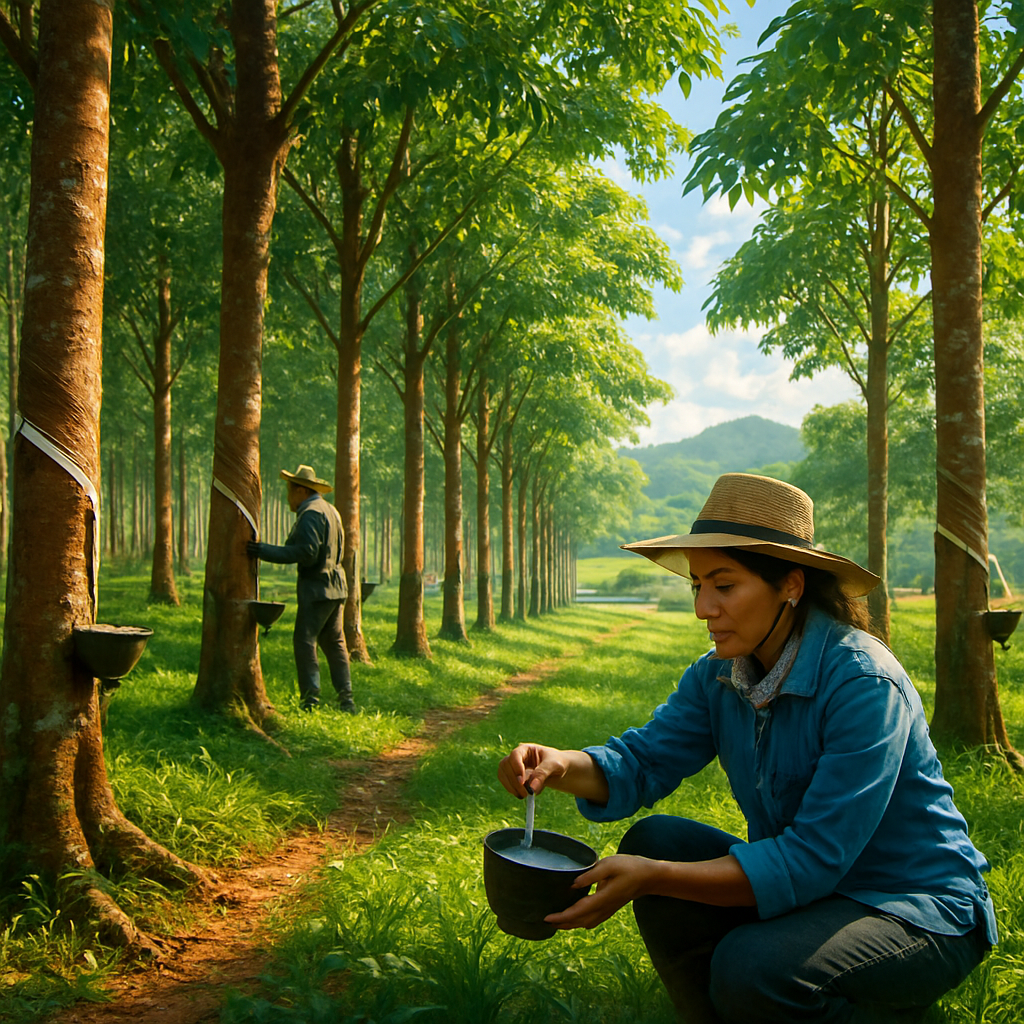
In a groundbreaking initiative set to reshape the agricultural landscape, the Ministry of Agriculture and Cooperatives is gearing up to introduce the rubber tree title deed program next week. This strategic move aims to lend a helping hand to farmers who have officially nurtured rubber trees on their land, enabling them to utilize these verdant assets as collateral for loans from the Bank for Agriculture and Agricultural Cooperatives (BAAC).
Leading the charge is Minister of Agriculture and Cooperatives, Narumon Pinyosinwat, who highlighted the ministry's unwavering dedication to cementing land tenure security for farmers and broadening their economic horizons. "This unique deed is a pivotal stride towards sustainable land management and the financial empowerment of our agricultural society," she declared. "It stands as more than mere acknowledgment of the trees' physical presence. It's an unlocked door to their potential as invaluable financial assets."
The innovative policy recognizes rubber trees as hidden treasures, turning them into leverageable assets that can bolster farmers' financial muscle through bank financing. "Such a forward-thinking approach not only advocates for sustainable resource utilization but also fortifies the economic resilience of our farmers," Minister Narumon elaborated with enthusiasm.
Designed to take root nationwide, the program beckons farmers far and wide, enticing them to plant more rubber trees. This aligns harmoniously with Thailand's perennial goal of transforming 40% of its terrain into lush green space, a vision decades in the making. "Our efforts will be exhaustive, collaborating intimately with local communities to ensure the farmers reap the utmost benefits," the minister asserted with conviction.
May 12 marks the project's grand debut in the historic province of Ayutthaya. Farmers eager to participate must first navigate the registration process with the Rubber Authority of Thailand, ensuring their cultivation efforts are verified. Following this, the BAAC will embark on the task of assessing the rubber trees' value, a critical factor in determining eligibility for financial assistance.
Beyond mere loans, this initiative flings open the gates to new streams of revenue, paving the way for farmers to tap into the burgeoning carbon credit trading market. Notably, these title deeds bear the golden stamp of compliance with the EU Deforestation-Free Regulation, a newly minted law demanding proof that imported goods do not add to deforestation woes. Armed with this certification, Thai rubber products can navigate the lucrative yet discerning EU market without encountering the usual trade barriers.
As this green initiative unfolds, it's more than clear that Thailand is not just planting seeds of the rubber tree but is also sowing seeds of sustainable economic growth and prosperity. By marrying environmental stewardship with economic gain, this program promises to be a leafy chapter in the kingdom's quest for a verdant future.



Comment verification
Step 1 of 3
Verify your email once to publish your comment. Your email is never shown publicly.
Enter the 6-digit code sent to .
Choose the display name shown next to your comments.