Samut Sakhon's Hidden Scandal: Uncovering Chen's Illicit Salted Pig Intestine Trade
In the heart of Samut Sakhon, where the frenetic pace of life often obscures the underbelly of clandestine operations, an illicit stash of salted pig intestines brought an unforgettable reek to this otherwise quiet…
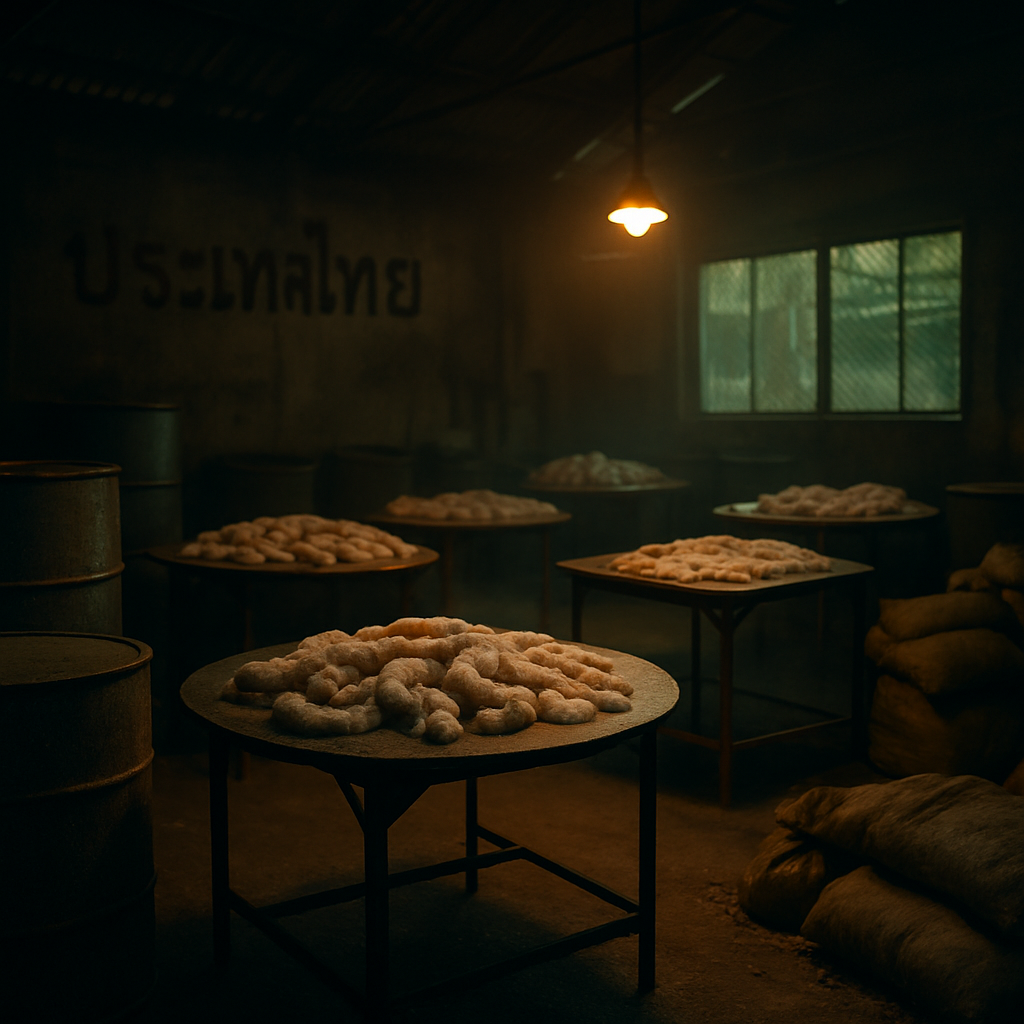
In the heart of Samut Sakhon, where the frenetic pace of life often obscures the underbelly of clandestine operations, an illicit stash of salted pig intestines brought an unforgettable reek to this otherwise quiet district. The discovery unearthed a chilling tale of unauthorized imports from China, painting a rather unsavory picture of a warehouse steeped in filth and questionable practices.
On what seemed like an ordinary day, the Industrial Crime Suppression Division, led by Police Major General Thatphum Jaruprach, transformed into sleuths pursuing justice. Acting on insider intel, the team, comprising Police Colonel Narupon Karuna and Police Lieutenant Colonel Noppakun Tasanmalai, teamed up with the Department of Livestock Development. Armed with a search warrant from the Samut Sakhon Provincial Court, they zeroed in on warehouse number 340 tucked away in Mueang subdistrict's Krathum Baen district, determined to unravel the mystery.
The warehouse, overshadowed by days gone by, was not a welcoming sight. It was merely a hollow space, with nothing more than dirt and leaves to grace its floor—a scene right out of a post-apocalyptic movie. Dust-coated drums and fertilizer bags were haphazardly strewn about like relics in a forgotten land. Tables lined with decomposing intestines did little to improve the olfactory experience. The noxious smell was a powerful testament to the clandestine operation's scale, resonating with echoes of potential health catastrophes.
Delving deeper, the officers unearthed quite the collection—514 sacks within the drums, each brimming with an estimated 80 kilograms of these illegal intestines. The contraband, valued astonishingly at over 10 million baht (approximately USD $300,390), stood as a grim reminder of what straying from the law could lead to. It was an exhibit free of human presence, just the silent testimony of a chilling trade.
But let's not forget our elusive character, Chen, the rumored architect behind this smelly symphony. This mysterious Chinese national, upon being reached by the authorities, feigned innocence, claiming the warehouse was intended for storing fresh food items meant for onward distribution to bustling restaurants. Salted and processed intestines, he said, were part of the menu. Intestines that skipped over health checks like a child dodging vegetables at dinner. Not the best recipe for delectable dining.
This unexpected revelation prompted the police to seize the cache, rendering it evidence in what promises to be a captivating legal drama. Samples have been taken and are now under scrutiny to unravel the layers of deception, potentially revealing pathogens lurking behind Chen's claims. Meanwhile, a web of legal proceedings is poised to unravel, too, wrapping those guilty in its process.
As the muck-laden warehouse stands deserted, the stage is set for what promises to be a defining case—one that paints a picture of intrigue, deceit, and the constant tussle between law and lawlessness. It reminds us that even in the land of smiles, stories of shadowy dealings persist, hidden beneath the beauty of its landscapes.
In the meantime, Thailand's vibrant news cycle churns on, painting a broader picture of the country's dynamic happenings—from police busting Myanmar-run complexes to cowboy-like stunts on Phuket streets. Yet, somewhere amid these headlines, the tale of the salted intestines persists—waiting, like so many stories, to reach its conclusion.



Comment verification
Step 1 of 3
Verify your email once to publish your comment. Your email is never shown publicly.
Enter the 6-digit code sent to .
Choose the display name shown next to your comments.