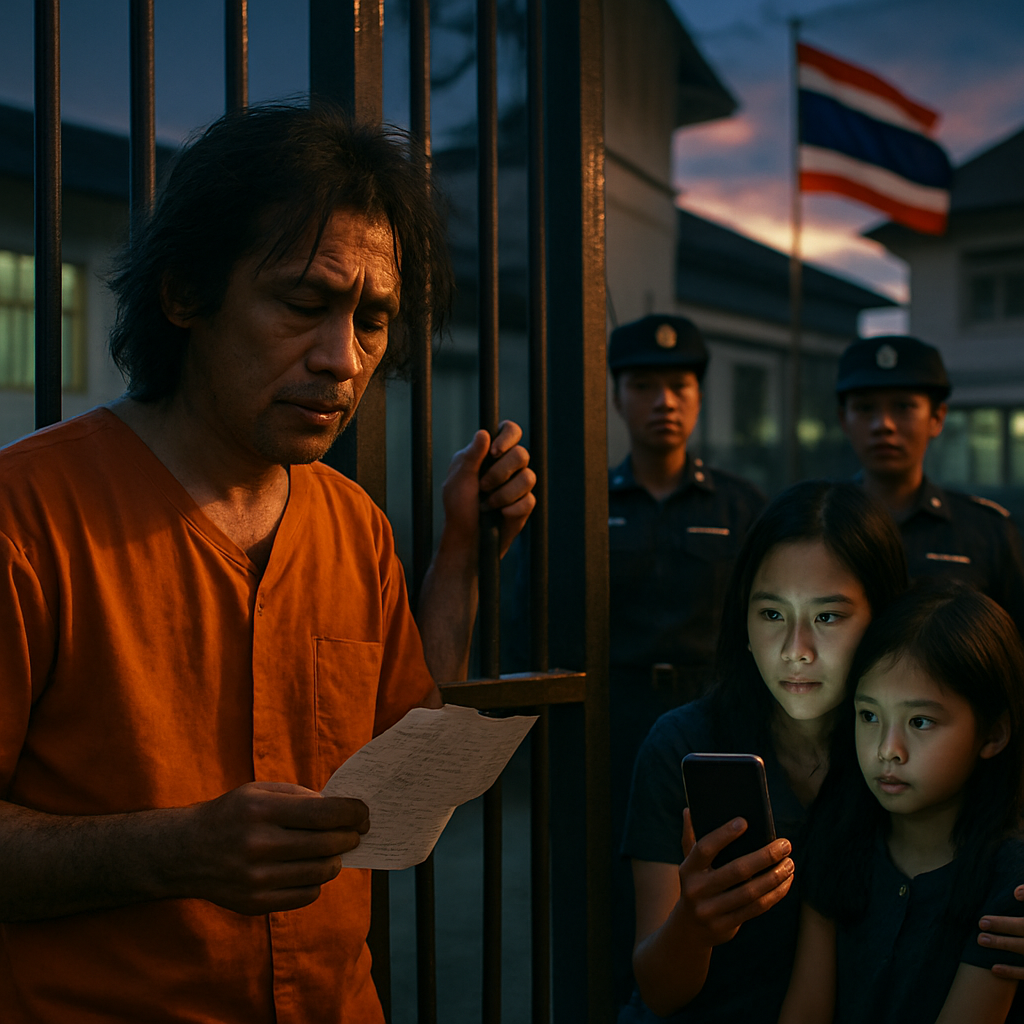
Thailand’s rock scene got an unexpected encore — this time outside the music and squarely in the corridors of correctional protocol. Sek Loso, born Seksan Sukpimai and long a headline-maker both onstage and off, has announced he is withdrawing from all outside work assignments after a tense family visit at the Central Women’s Correctional Institution on December 3.
A birthday visit that hit a sour note
What began as a family birthday visit turned into a highly public spat. Sek’s wife, Wiphakorn “Karn” Sukpimai, took their daughter to the facility so the girl could celebrate and watch her father perform as part of a scheduled prison event. Karn says she had coordinated the visit with prison officials and that the family was supposed to be on the guest list. But when the duo arrived, correctional officers refused entry, citing security protocols and guest restrictions.
Karn captured the unfolding drama in real time, live-streaming her reaction on the official SEK LOSO Facebook page. The live broadcast — part frustration, part incredulity — accused prison staff of disrespecting the family and nearly escalated into a confrontation with officials at the facility. The live stream quickly circulated across social platforms, amplifying public attention and sparking debate about rules, respect and the rights of family members of inmates.
Prison clarifies: high-security event, approved guests only
The Central Women’s Correctional Institution publicly responded the next day. In an official statement signed by Director Walailak Chumchuen on December 4, the prison explained that the day’s program was a high-security function attended only by invited guests — including senior officials from the Ministry of Justice and partner organisations. The statement stressed that guests must be approved in advance by the warden and confirmed that Karn and her daughter were not on the authorised list.
The institution reiterated that its actions followed the Corrections Act B.E. 2560 and Department of Corrections protocols, maintaining the denial of entry was standard procedure to ensure safety and order. In short: the prison said it followed the rules; the family said they had been denied despite prior coordination.
Sek Loso’s handwritten withdrawal from outside duties
Shortly after the dispute, Sek Loso himself took a decisive step. A handwritten note addressed to the warden of Minburi Remand Prison and the Director-General of the Department of Corrections was posted online by his wife and quickly spread across social media. In the letter, Seksan formally requested to stop participating in any work outside the prison — a move he said was prompted by the disrespect shown to him and his family during the December 3 incident.
“I, Seksan Sukpimai, would like to end all external work duties from this day forward due to the disrespect shown to me and my family during the incident on December 3. This decision is mine alone, and I am also dealing with serious health problems, both physical and mental.”
The personal tone of the note — hurried, handwritten and candid — added emotional weight to a story already streaked with friction. Prison officials have not publicly replied to Sek’s withdrawal request, though they have maintained that their actions remained within established rules.
Why this matters: programs, performances and public perception
Sek Loso is not just any inmate; he is a public figure who has performed publicly under correctional supervision while serving time at Minburi Remand Prison. Prison performance programs are often touted as rehabilitation tools: they provide inmates with purpose, skills and a bridge to the outside world. When a high-profile participant pulls out, it raises questions about how correctional institutions balance security with rehabilitation, and how those institutions handle the families of inmates who are entitled to visit or participate in approved events.
At the same time, the incident exposed how quickly a localized clash can escalate into a national conversation when amplified by social media. The live-streamed confrontation, the prison’s official statement, and Sek’s handwritten withdrawal created a narrative that resonated beyond the gate — touching on respect, bureaucracy and the mental-health strain that incarceration can impose on individuals and their loved ones.
What’s next?
For now, Sek Loso’s choice to step back from external work assignments stands as his own request; the Department of Corrections has yet to issue a detailed response to the withdrawal. Whether prison authorities will accept the decision, or whether it will affect the broader program of permitted performances and public duties, remains to be seen.
One thing is clear: a family birthday outing meant to bring joy turned into a flashpoint that exposed competing priorities inside a correctional setting — security protocols on one side, family expectations and a public figure’s dignity on the other. As the story continues to ripple through Thai social media and news outlets, it will test how correctional institutions manage high-profile inmates and whether reconciliation is possible for a rock star who now prefers to bow out of his outside spotlight.
Sek Loso’s fans, critics and casual observers will be watching to see if this is the final curtain on his public performances or just an intermission while tempers cool and paperwork catches up with people’s emotions.

















This is messed up — a birthday visit ends in a public spat and now he quits outside work. It feels petty for the prison to deny a guest if coordination was already done, but security rules do matter too. I wonder if social media made this escalate faster than it needed to.
Security rules are a blanket excuse sometimes, especially when VIPs are involved. If Karn coordinated the visit, someone dropped the ball at the prison or lied.
Exactly, Larry. If there was an approved list, the prison should show it. Otherwise the family has a legit grievance and a public figure got embarrassed.
As someone who watches these things online, the live stream made the family look emotional but honest. The prison’s optics are terrible now.
I agree — the livestream turned it into a PR disaster. Even if rules were followed, the lack of clear communication is the real failure here.
If Sek withdraws, the rehabilitation program loses a high-profile advocate. But is this about respect or about power and celebrity? Public figures get special treatment and then claim mistreatment when excluded.
Not every celebrity wants special treatment; some just want basic dignity. The story shows how brittle prisoner-family relations can be.
Dignity matters, yes, but rules exist to protect everyone. Maybe there’s a middle ground — transparency about guest lists and exceptions.
I think Sek is emotional and maybe using his status to tell a story. But health problems mentioned in his note deserve empathy rather than skepticism.
As a social worker I find this worrying: punitive optics undermining rehabilitative programs. Denying a family visit at a birthday can worsen mental health and reduce program efficacy.
From a corrections policy perspective, high-security events do require careful vetting of attendees, but protocols must be applied consistently. If the family coordinated, the chain of authorization should be examined.
Right, Suri. Consistency is key. Families already face stigma; the system should protect them, not alienate them with opaque decisions.
Prison admin often uses security as a shield. Accountability mechanisms must be stronger so staff can’t hide mistakes behind protocol.
This whole thing sounds like a soap opera to me, but real people are hurt. Sek’s handwritten note felt raw and human, not staged.
Fans saw the handwriting and felt the authenticity. Social media empathy is powerful, and fandom can influence outcomes in Thailand.
Fans are a double-edged sword though. Their pressure helped highlight the case, but it can also skew how officials respond publicly.
I think prison staff were doing their job, but communication failed massively. If Karn believed she was approved, show the confirmation or apologize and fix the process.
An apology would be simple and meaningful. Bureaucracies hate admitting error, but it could calm things down quickly.
Yes, and training staff on public-facing interactions would prevent livestream blowups in future.
Leaving outside work because of perceived disrespect is a personal choice, but it might deny him rehabilitation benefits. Is sacrificing that worth the protest?
It could be a negotiated stance: withdraw temporarily until an independent review is done. That keeps pressure on authorities without permanently closing doors.
A temporary pause makes sense. It signals grievance but leaves room to return once issues are addressed.
This is a microcosm of larger institutional tension: security vs. humanization. The Department of Corrections must publish their visitor policies transparently.
Transparency would reduce speculation. Right now both sides assert facts and the public picks the narrative that fits their bias.
Exactly. Data and documented guest lists should be released when disputes occur, subject to privacy, to maintain trust.
As a media analyst I’ll point out how live-streaming transformed a private pain into a public drama. That amplification benefits no one if it stops constructive dialogue.
But without the live stream, the family might have been ignored. Social media is the only place where marginalized voices sometimes get traction.
True, it is a tool for voice. The challenge is using it to build accountability rather than pile on shame.
Sek has been through public ups and downs his whole life. Fans feel protective and see this as an injustice. It’s emotional, not just procedural.
Fans’ emotions drive online outcry, but we should avoid mob mentality. Demand facts and fair process instead of just piling pressure.
I agree facts matter, but emotions sparked the inquiry. Both are needed: compassion plus accountability.