Siripan Noksuan Sawasdi and Chatri Atjananont: High-Profile Constitutional Court Nominees Rejected by Thai Senate
The whispers of dissent echoed throughout the Senate chambers as two high-profile nominees for the Constitutional Court faced an unexpected rejection. The curtain dropped on Siripan Noksuan Sawasdi, a political…
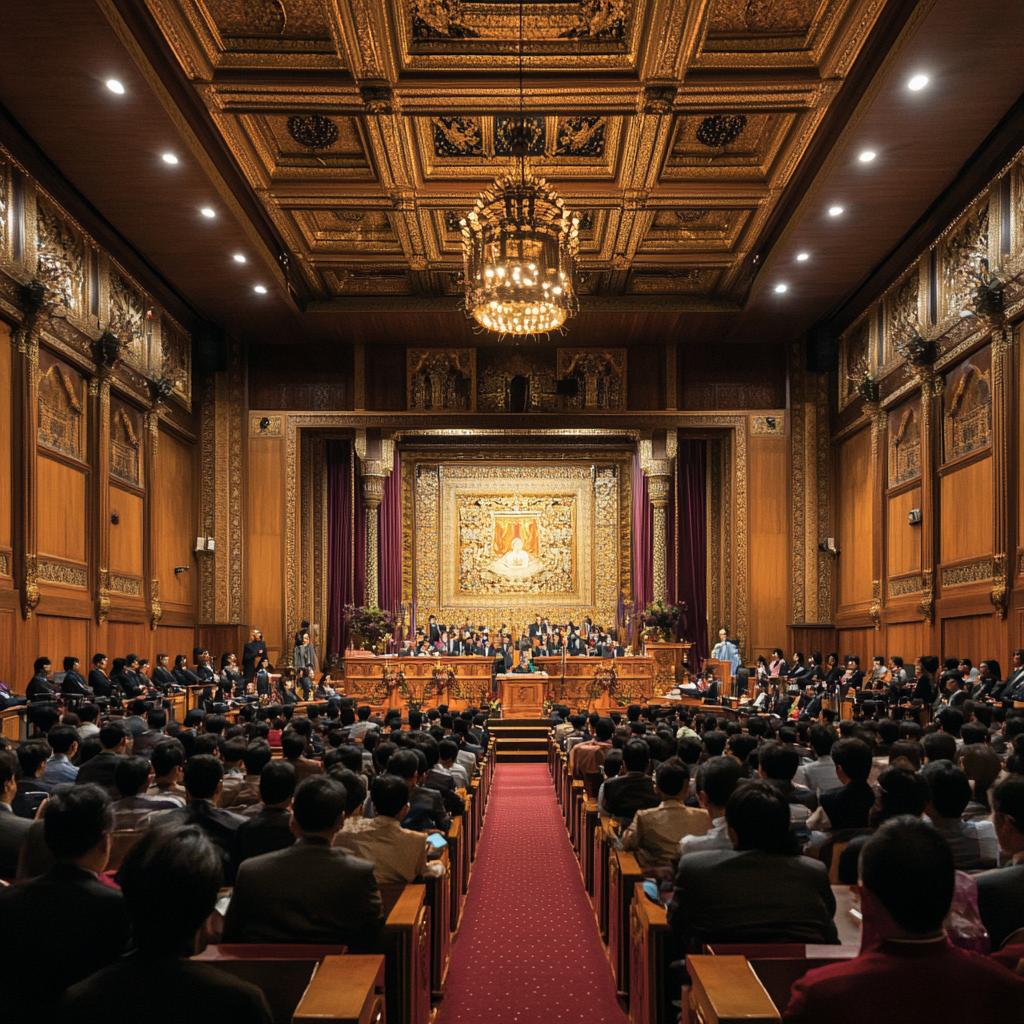
The whispers of dissent echoed throughout the Senate chambers as two high-profile nominees for the Constitutional Court faced an unexpected rejection. The curtain dropped on Siripan Noksuan Sawasdi, a political scientist with fiery convictions, and Chatri Atjananont, the former head honcho at the Department of Consular Affairs. Their hopes were dashed as they failed to secure the critical mass of 100 Senate votes, a threshold they never quite reached.
Ms. Siripan, bringing her scholarly wisdom from Chulalongkorn University, faced an uphill battle. The numbers were stark: only 43 senators gave their nod of approval, overshadowed by 136 who opposed, seven who abstained, and a lone wolf who voted 'no.' As for Mr. Chatri, 47 supporters stood by him, but were overpowered by 115 nay-sayers, with 22 choosing to abstain while three opted for silence.
The duo was poised to fill the shoes of departing Constitutional Court stalwarts, Nakharin Mektrairat and Panya Udchanon. The decision to nominate them came from a selection panel led by Chanakarn Theeravechpolkul, the esteemed Supreme Court president. This committee also boasted influential figures like House Speaker Wan Muhamad Noor Matha and dynamic opposition leader Natthaphong Ruengpanyawut.
The debates, as heated as any summer night, kicked off smoothly around 11 PM that Tuesday. In the spotlight, Sen Nanthana Nanthawaropas urged caution. She contended that the Senate session should pause for a deeper dive into election rigging allegations, suspecting that any choices made under such clouds might be overturned if the investigations unraveled truth. Others, however, rallied for the vote to proceed, fearing the stigma of negligence might taint the Senate’s name.
Voices across the chamber expressed a measure of satisfaction with the candidates, especially among minority senators like Angkana Neelapaijit, Ratchaneekorn Thongthip, and the ever-passionate Dr. Premsak Piayura. Yet, the undercurrents ran deep, as discussion moved behind closed doors for a spell, with tensions peaking as it often does in tales of intrigue and power plays.
Upon reopening the floor, at precisely 1.30 PM, Senate Speaker Mongkol Surasajja ushered in the vote that became the final act in this political theater. In a twist worthy of any playwright's pen, those wearing the 'blue'—the symbolic color of the Bhumjaithai Party—stood aside, declining either candidate in silent restraint.
Ms. Siripan found herself ensnared by critics over her academic signature on a petition addressing Section 112 of the Criminal Code, commonly known as the lese majeste law. She asserted her right to her academic opinion, a statement in pursuit of enlightening discourse rather than discord.
Likewise, Mr. Chatri walked a rocky road. He was never the favored son of the 'blue senators' who leaned towards alternative contenders like Sarawut Songsivilai or Surachai Khan-arsa—both of whom danced out of the selection spotlight.
This Senate vote, set against a backdrop of political tension and unyielding standards, was more than an appointment; it was a storyline that wove together ambition, integrity, and the inevitable question of what constitutes true leadership. And as the last echo of debate faded, it left a lingering thought: in the halls of power, when the votes are counted, not every battle is won by numbers alone.



Comment verification
Step 1 of 3
Verify your email once to publish your comment. Your email is never shown publicly.
Enter the 6-digit code sent to .
Choose the display name shown next to your comments.