Speaker Sophon faces 157 case over share petition
Opposition MPs will file a Section 157 complaint against Speaker Sophon Saram over a 170-day stall of the Saksayam shares petition.
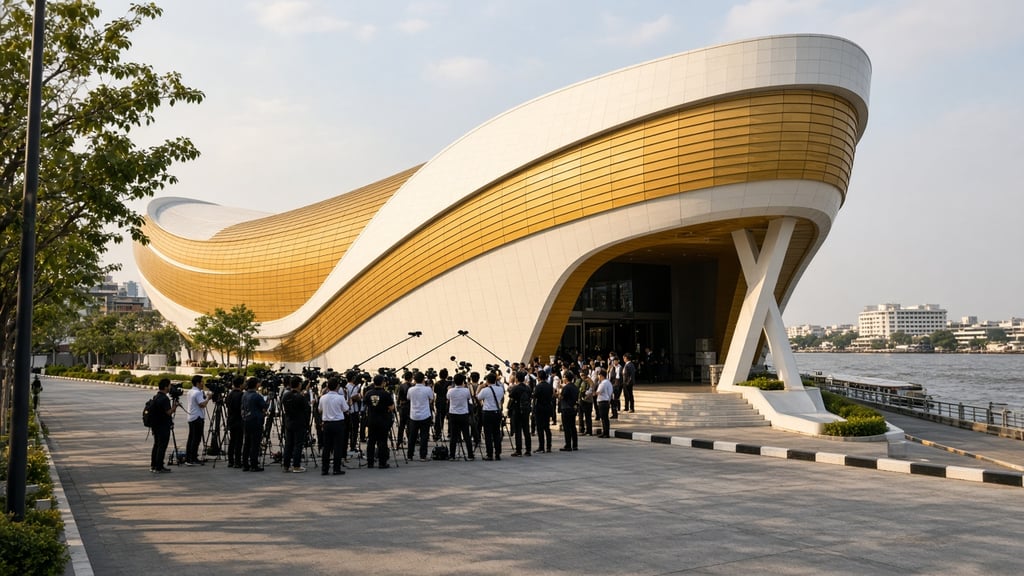
Thailand's parliamentary opposition is moving a Criminal Code Section 157 case toward House Speaker Sophon Saram (โสภณ ซารัมย์), the Bhumjaithai legislator who also sits as President of the National Assembly. The charge is malfeasance in office: an official who wrongfully performs or omits a duty. The fight is not a fresh trial of former Transport Minister Saksayam Chidchob. It is a fight over a parliamentary gate. On the opposition's telling, the Speaker has sat on a petition that would force an independent look at how the National Anti-Corruption Commission closed Saksayam's concealed-shares file.
That file still shadows public contracts, nominee shareholding, and asset-declaration law, which is why the delay now tests whether anti-graft rules bind the coalition as tightly as everyone else.
The mechanics are specific. More than 140 MPs and senators asked him, on 5 June 2026, to send a petition to the President of the Supreme Court under Constitution Section 236, which lets parliamentarians request an independent inquiry panel when they suspect NACC commissioners of failing in their duties. The ask is not that Sophon declare the commissioners guilty. It is that he decide whether reasonable suspicion exists and, if it does, forward the papers.
Then opposition leader Natthaphong Ruengpanyawut carried a 5 June 2026 petition into the Speaker's office with People's Party MPs, Democrat MPs, and independent senators including Nanthana Nanthawaropas. People's Party whip Parit Wacharasindhu has spent the months since demanding a timetable. Student campaigners returned to Parliament on 26 November and put the wait at 174 days.
The underlying dispute is older. Saksayam, a former Bhumjaithai secretary-general and younger brother of Newin Chidchob, was Transport Minister until the Constitutional Court suspended him on 3 March 2023 over a hidden stake in Burijaroen Construction Limited Partnership (ห้างหุ้นส่วนจำกัด บุรีเจริญคอนสตรัคชั่น). In 2024 the court found he had kept that interest through a nominee and treated his tenure as ended from the suspension date. The NACC later dropped related complaints, a result opposition MPs say skipped a deep asset audit and a criminal inquiry.
The House Secretariat finished checking signatures, including two disputed Senate names, by 25 June. The petition still did not move. On 15 July Sophon appointed an outside screening committee of senior legal figures to advise him before he used his discretion. Opposition whips note that a Senate President, acting as Assembly President during a House dissolution, previously pushed a similar NACC-inquiry request through in about 40 days. This one has now sat for more than 170.
People's Party lawyers say they will file at a criminal corruption court and skip the NACC, on the view that the delay has already ripened into an offence and that sending the Speaker to the same commission he is accused of shielding would be circular. They have not yet named a hearing date. The papers, they say, go in once the complaint is complete.
A second clock is running. Seri Ruam Thai leader Sereepisuth Temeeyaves has drawn a line at 5 December 2026, the 180-day mark from the June filing, after which he says he will take Sophon to the Central Criminal Court for Corruption and Misconduct. Democrat deputy Sathit Wongnongtoey is pressing a parallel NACC track on conflict-of-interest questions around Transport Ministry contracts, and says his party will wait a little longer before escalating.
What Section 157 actually requires
Section 157 of the Thai Criminal Code, as amended in 2017, punishes an official who wrongfully performs or omits a duty so as to injure any person, or who dishonestly performs or omits a duty. The sentence is imprisonment from one to ten years, a fine from 20,000 to 200,000 baht, or both. It is the workhorse malfeasance count against officials, not a strict-liability ticket for slow paperwork.
That mental-state hurdle is the Speaker's legal opening. A good-faith reading of his discretion, even a slow one, is not automatically a crime. The opposition's bet is that 170 days with no public timetable looks less like caution and more like a refusal to let the Supreme Court take the file.
The Speaker's defence and the family overlay
Sophon, a seven-term Bhumjaithai MP for Buriram's 5th constituency, took the Speaker's chair on 16 March 2026 after a House vote that buried a People's Party challenge. He is a former deputy prime minister and a long-time Buriram ally of the Chidchob political household. He has told the press the screening committee is still sitting, that its members are senior people who cannot commute in daily, and that he has already asked them to hurry because he does not want to be cast as the official who parked the file.
He has treated the Section 157 and ethics threats as ordinary opposition pressure and said anyone who thinks an official has gone wrong should use lawful channels. Bhumjaithai's defence is that Section 236 gives the Assembly President discretion, and that appointing outside lawyers was a precedent, not a stall. The optics cut the other way: a Buriram Bhumjaithai Speaker is holding the gate on a Chidchob brother's concealed-shares file. Student protesters have started calling the chamber a blue parliament. The legal question is still narrower: does reasonable suspicion exist, and if it does, why has the petition not moved?
What This Means for Expats and Travelers in Thailand
This dispute does not change visas, 90-day reports, work permits, TM30 lodging notices, or airport entry. It sits on the same anti-graft machinery that later handles nominee shareholding, hidden assets, and conflict-of-interest files, including cases that touch foreign-owned companies and public contracts.
Watch 5 December 2026 for the Seri Ruam Thai deadline, and watch whether People's Party lawyers actually lodge papers at a corruption court. If the Speaker forwards the petition, an independent panel can still find that the NACC acted lawfully. If a court accepts a Section 157 case, the immediate defendant is the Speaker, not Saksayam. Neither path rewrites immigration rules. Both show how Bangkok treats asset concealment when the name on the file is one of its own.



Comment verification
Step 1 of 3
Verify your email once to publish your comment. Your email is never shown publicly.
Enter the 6-digit code sent to .
Choose the display name shown next to your comments.