Sungai Kolok Bombings: Border Office Reopens Amid Safety Concerns and Travel Warnings
It's quite a scene at the district office in Sungai Kolok, Narathiwat province, where yesterday the district chief, Supeeyan Taemohseng, stood amidst the rubble in his signature blue attire, evaluating the remnants of a…
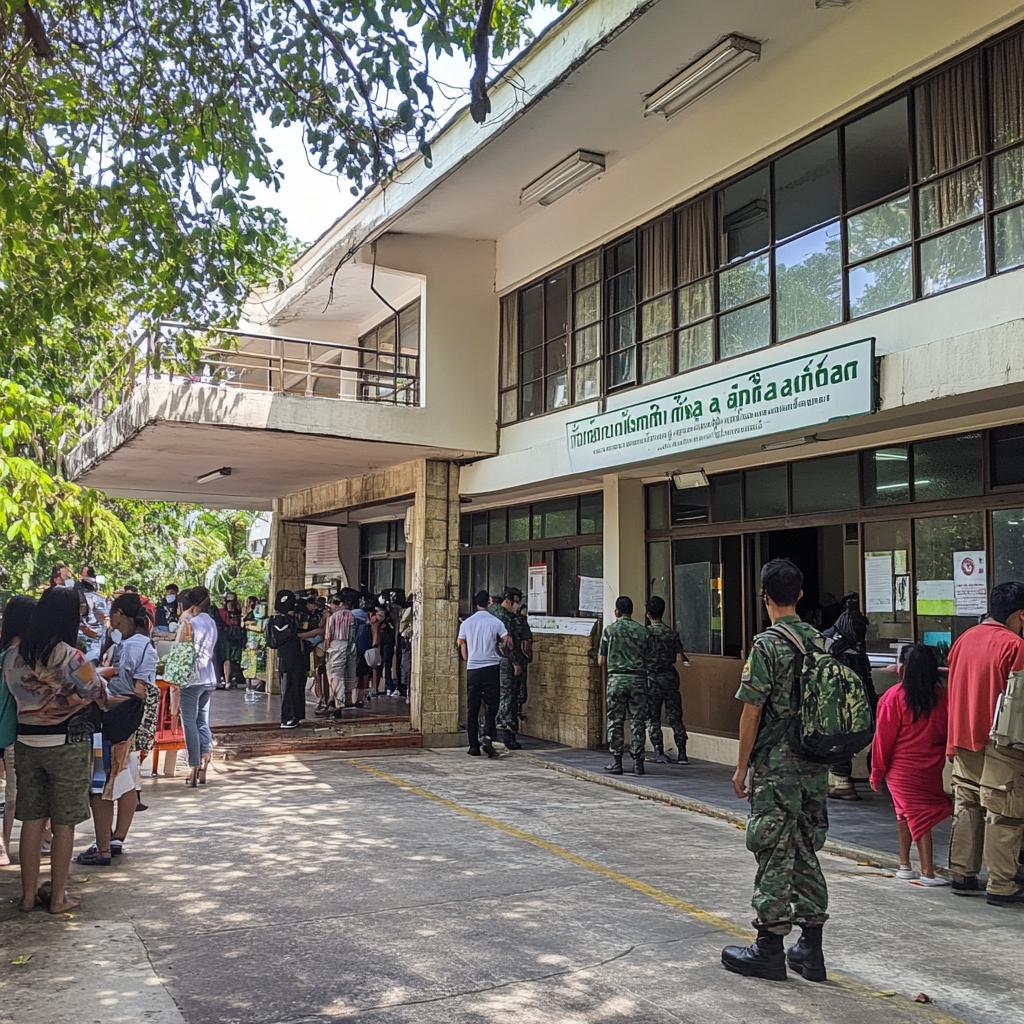
It's quite a scene at the district office in Sungai Kolok, Narathiwat province, where yesterday the district chief, Supeeyan Taemohseng, stood amidst the rubble in his signature blue attire, evaluating the remnants of a once bustling hub for border pass issuance. This inspection heralded the news that, come Friday, the gears of bureaucracy would begin turning once more, allowing hopeful travelers to resume their cross-border ventures into Malaysia after an interruption due to the shocking downtown bombings that shook the district to its core.
It was a harrowing day, March 8, when suspected insurgents unleashed chaos, detonating bombs that not only marred the concrete and glass but also left an indelible mark on the community's psyche. The ambitious plan of carnage aimed at the district office compound didn’t spare the esteemed auditorium, a veritable hub where border passes are processed daily. Among the grievous repercussions, two defense volunteers lost their lives defending this civic stronghold, and fourteen others, both officials and passersby, were caught in the crossfire of violence and shrapnel, one moment shattering the usual government-workday hustle.
Despite the chaos, the importance of this office is undeniable—approximately 300 eager applicants line up daily, seeking the coveted temporary travel document that unlocks the doors to Kelantan, Malaysia. However, as the sweet smell of success lures them back, the bombings have sparked a nuanced response from across the border. Pivotal figures like Mohd Nassurudin Daud, the state chief minister, have now urged locals amidst the Ramadan fasting month to prioritize local gastronomic offerings over cross-border excursions, which typically serve as a culinary adventure into Thai hospitality.
"There's safety in savoring the flavors of home,” Daud suggested wisely, as echoed by Bernama’s coverage. The sentiment to "stay local, stay safe" is a poignant reflection of the current unease as it clouds the rich tradition of cultural exchange that thrives at this boundary line.
Indeed, the echoes of violence on March 8 weren't contained to just the district office. Across Sungai Kolok, three additional sites bore the brunt of the calculated explosions. Thankfully, there were no further injuries, yet the psychological dents run deep, impacting everything from travel decisions to tourism economics. The once bustling tourism artery between these border towns is certainly pulsating weaker, a reality noted by the Songhkla Tourism Promotion Association. Their foresight anticipates a potential 10% drop in bookings—a stark reminder of the long shadow cast by insecurity.
The plea from tourism operators is clear: a dedicated call for a long-lasting solution from the government to remedy not just the immediate damage but to replenish the confidence of would-be visitors. As Sungai Kolok works to sweep away the remnants of violence, it aims to patch up not just buildings, but dreams and livelihoods that depend on the rhythmic flow of people across borders—a testament to resilient, evolving communities striving for peace.



Comment verification
Step 1 of 3
Verify your email once to publish your comment. Your email is never shown publicly.
Enter the 6-digit code sent to .
Choose the display name shown next to your comments.