Tension Escalates Over Thailand's 224-Billion-Baht High-Speed Rail Project: Minister Phiphat Ratchakitprakarn in the Spotlight
In the whirlwind world of high-speed rail developments, a simmering tension has taken center stage between the Transport Ministry and concessionaire Asia Era One. This saga unfolds in the bustling hub of Thailand, where…
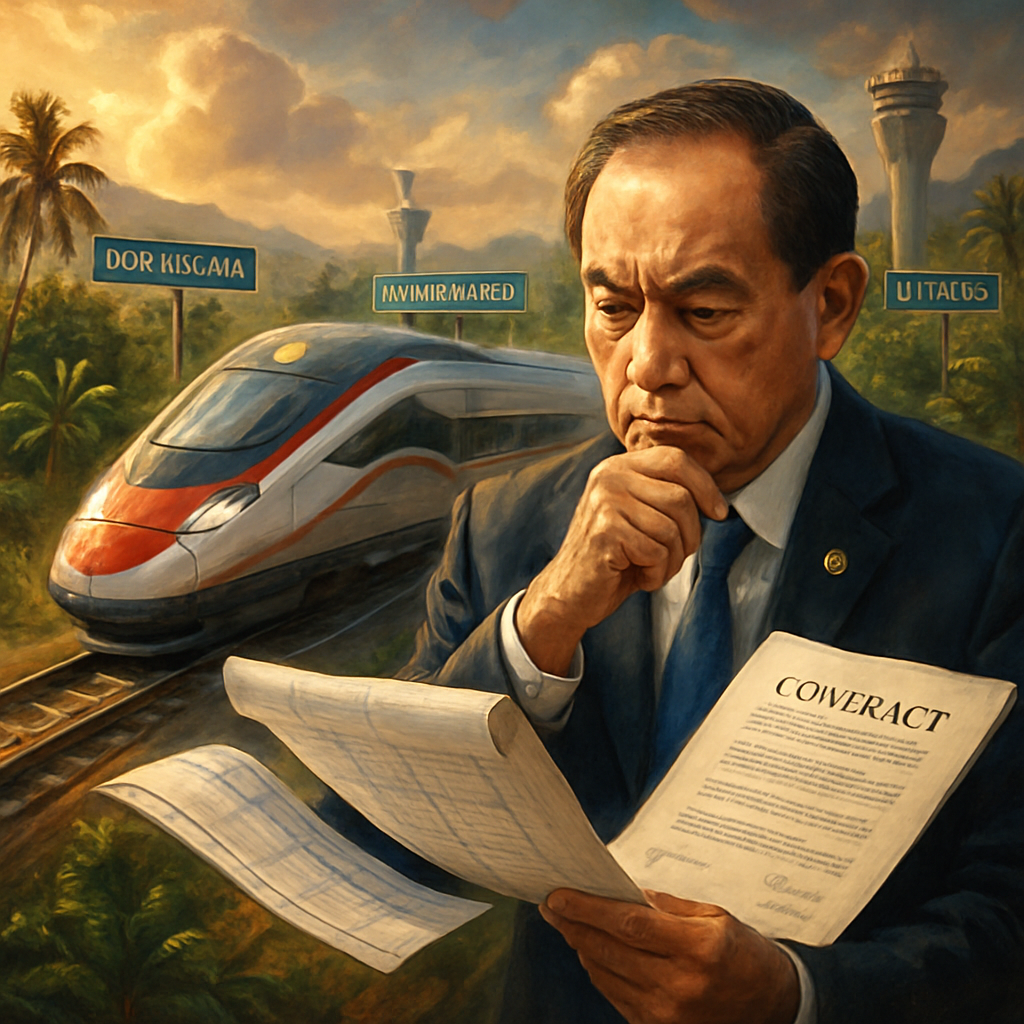
In the whirlwind world of high-speed rail developments, a simmering tension has taken center stage between the Transport Ministry and concessionaire Asia Era One. This saga unfolds in the bustling hub of Thailand, where a hefty 224-billion-baht, high-speed rail project is poised to connect three major airports: Don Mueang, Suvarnabhumi, and U-Tapao.
Transport Minister Phiphat Ratchakitprakarn, donning his hat as chair of the mighty Eastern Economic Corridor (EEC) Policy Committee, has been navigating this tricky terrain with the skill of a tightrope walker. A recent meeting brought together the formidable forces of the EEC Office, the Office of the Attorney-General (OAG), Asia Era One Co Ltd, and the State Railway of Thailand, to untangle the knotty issue of proposed contract amendments.
At the heart of the matter lies Asia Era One's insistence on reshaping the existing contract framework. They suggest swapping to a "pay-as-you-build" model for state financial support—a move they argue will add momentum to this much-anticipated project. Minister Phiphat, however, while not entirely opposed in principle, just can’t seem to warm up to this payment shift.
The legal eagle minds from the OAG have yet to give a definitive thumbs up or down, simply fanning the flames of intrigue by citing the existing contract’s Clause 5. This clause only allows for alterations under severe circumstances like natural disasters, pandemics, or wars—none of which the proposed financial restructuring qualifies as.
Minister Phiphat, envisioning the legal quagmire such a shift might lead to, intends to fast-track this conundrum to the cabinet. The EEC Office, meanwhile, has been tasked with formulating a comprehensive response to the OAG's observations. They’re racing against the clock to draft recommendations for the EEC Policy Board, aiming for a cabinet submission before the parliamentary curtain comes down in late January.
There's a sense of urgency hanging in the air, and Phiphat is keen to return to the cabinet with a clarified stance. He has stressed the importance of integrating perspectives from the Finance Ministry and the Budget Bureau. Yet, his stance remains firm—he simply isn’t on board with altering the contract.
The tangled web of legalities doesn’t end there. Stoking the fires of potential conflict are the losing bidders, who might perceive these contract modifications as an after-the-fact rule change, sparking possible lawsuits. It’s a game of high stakes and even higher speeds, where every move is scrutinized under the magnifying glass of public and legal opinion.
As the clock ticks, with the finish line in sight yet still fraught with hurdles, all eyes remain on Phiphat and his team. Can they navigate this legal labyrinth and bring Thailand’s ambitious rail dreams to life? The coming days promise to reveal the next thrilling chapter in this unfolding story.



Comment verification
Step 1 of 3
Verify your email once to publish your comment. Your email is never shown publicly.
Enter the 6-digit code sent to .
Choose the display name shown next to your comments.