Thai Political Turmoil 2025: Coalition Strain and Key Legislation Battles
It was an afternoon hustle and bustle at the Ministry of Interior, where the atmosphere was warm with a sprinkle of anticipation. Deputy Prime Minister, Anutin Charnvirakul, leader of the Bhumjaithai Party, stood with a…
It was an afternoon hustle and bustle at the Ministry of Interior, where the atmosphere was warm with a sprinkle of anticipation. Deputy Prime Minister, Anutin Charnvirakul, leader of the Bhumjaithai Party, stood with a smile and extended his hand in greeting to Kinzang Dorji, the Ambassador of Bhutan to Thailand. The pleasantries exchanged were more than diplomatic gestures as plans were laid out for an impending royal visit by Their Majesties the King and Queen of Thailand to Bhutan, scheduled for April 25 to 28.
Meanwhile, the spacious chambers of Thai politics are treading through turbulence as the ruling Pheu Thai Party navigates choppy waters with its coalition partner, the Bhumjaithai Party. Observers of the political scene, like Natthaphong Ruengpanyawut, who helms the opposition People's Party, predict a continued union, albeit strained, between the coalition’s two heavyweight parties. Numbers in Parliament dictate their dance of dependence as they aim to maintain a stable government for the remaining two years of their term.
However, this tenure may face an abrupt curtain call should Prime Minister Paetongtarn Shinawatra choose to dissolve the House ahead of schedule. Since the coalition’s inception, the relationship between Pheu Thai and Bhumjaithai has been rocky—a political show more of wary companionship than seamless collaboration.
Lines in the sand have deepened, marked by the latest hot-button issue of the government-sponsored entertainment complex bill. Bhumjaithai's secretary-general, Chaichanok Chidchob, took a bold stand against it, creating friction under the festooned banquet of politics. Pheu Thai’s stalwarts, known for their keen political radar, are beginning to question the fidelity of their coalition mate.
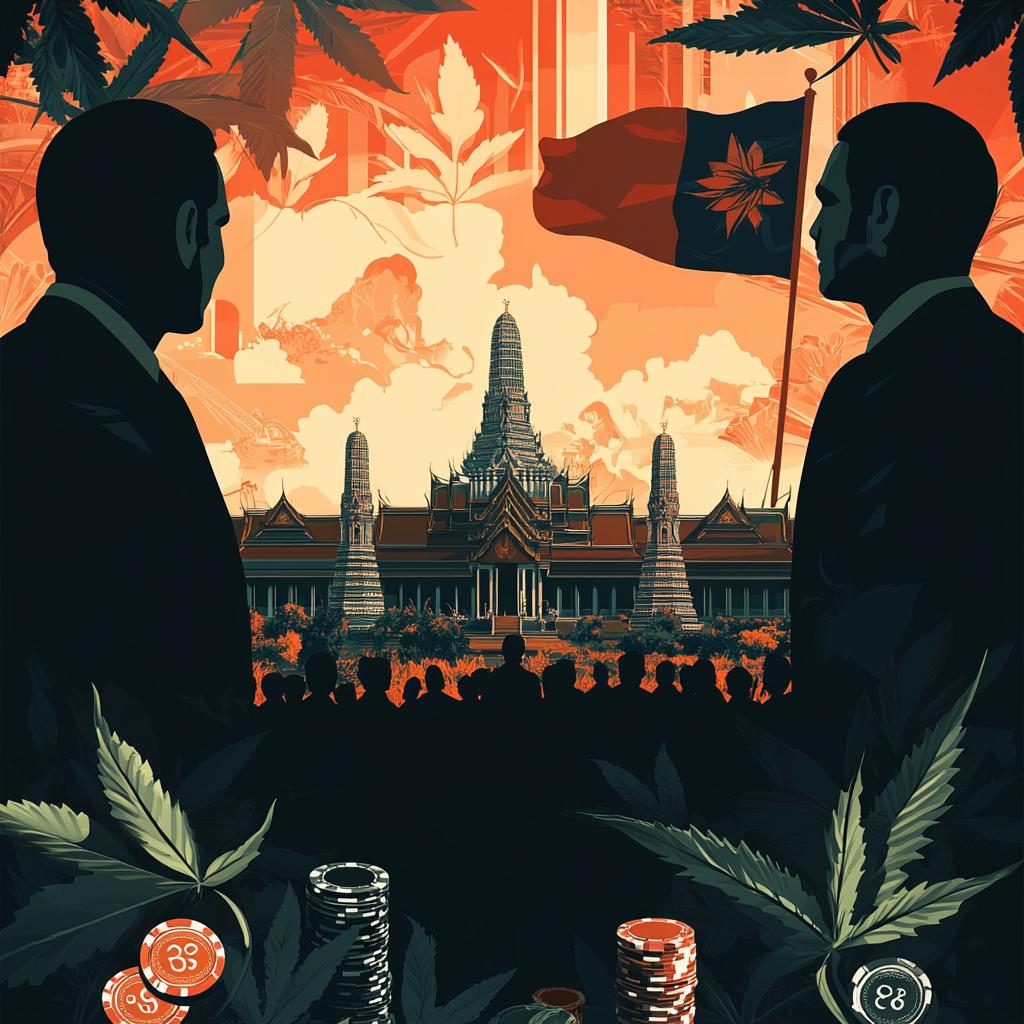
From the outset, differences have been stark, like Pheu Thai's fervent push to reclassify cannabis as a narcotic colliding with Bhumjaithai's proud policy spotlight persuading its decriminalization. Beyond cannabis, land disputes feature in this melodrama, entrenching mistrust and discord among key players of both parties.
With regards to the casino-entertainment complex, Mr. Natthaphong steps forward with a pertinent call-to-action for clarity from the government. Issues such as potential money laundering and corruption at new casinos loom large, like giants in the shadows. The public’s voice—a referendum, he recommends—could synchronously integrate with the upcoming elections, creating a cost-effective confluence of thoughts and choices.
Impressive scrutiny is underway as a special Senate committee rolls up its sleeves to dive into the intricacies of the casino project. Their expertise aims to enrich the factual mosaic, poised to succeed where a prior study fell short on detail. Commencing its crucial first meeting on April 23, the Senate committee will spend the next 180 days plumbing the depths of this legislative endeavor.
In the grand theatre of Thai politics, while the cast continues to clash and collaborate, the audience's eyes are firmly fixed on the stage, looking for a narrative of stability and promising resolutions.



Comment verification
Step 1 of 3
Verify your email once to publish your comment. Your email is never shown publicly.
Enter the 6-digit code sent to .
Choose the display name shown next to your comments.