Thailand–Cambodia border cluster munitions allegations
On December 24, what began as a flurry of sharp accusations between neighbors turned into a public back-and-forth that read like a diplomatic courtroom drama. Cambodia’s government released photos and statements…
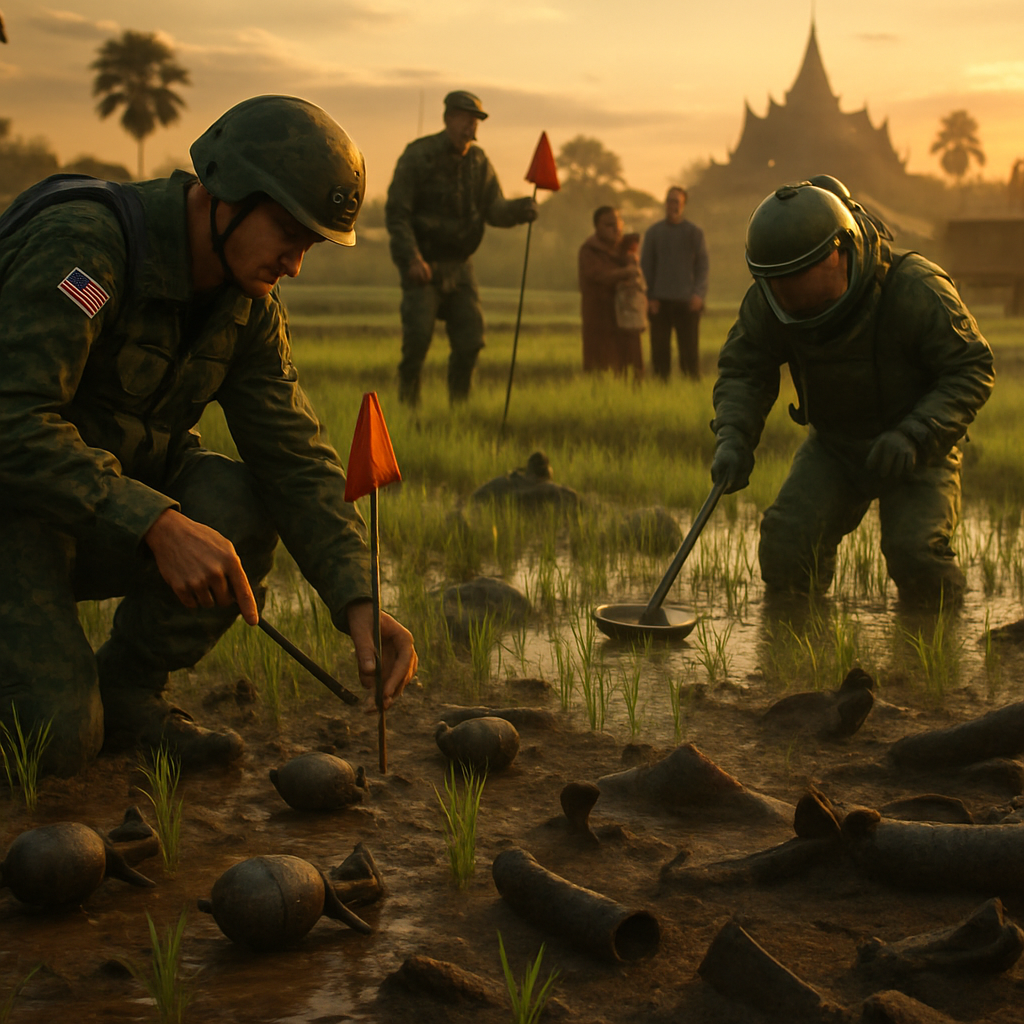
On December 24, what began as a flurry of sharp accusations between neighbors turned into a public back-and-forth that read like a diplomatic courtroom drama. Cambodia’s government released photos and statements alleging that Thai forces had used M-46 cluster munitions in recent clashes — weapons, Cambodian officials warned, that can scatter lethal fragments across fields, forests and villages and remain a long-term risk to civilians, especially children.
The Royal Thai Army fired back the same day through spokesperson Winthai Suvaree, insisting the images and claims were misleading. Winthai said the munitions in question were dual-purpose artillery shells intended strictly for military targets. According to him, the submunitions inside the shells detonate successively on impact, rather than lying dormant like anti-personnel landmines that can later maim or kill noncombatants.
Two versions of the same scene
On one side, Cambodia’s Ministry of Information and Ly Thuch — vice-president of the Cambodian Mine Action and Victim Assistance Authority — painted a grim picture: unexploded bomblets strewn over countryside and villages, “traps” that could continue to threaten civilians long after the shooting stops. Those images and warnings resonated with humanitarian concerns about cluster munitions around the world.
On the other, Thailand’s official line was firm and legalistic. Winthai rejected the notion that the shells are tantamount to banned cluster weapons or that they behave like traditional landmines. He emphasized that the munitions “do not remain hidden in the ground” and are not designed to be anti-personnel devices. He accused Cambodian authorities of distorting facts and urged international observers to consider the full context of the incidents.
Where international law fits in
Legal questions bubbled to the surface. Winthai pointed out that the Convention on Cluster Munitions (CCM), which outright bans the use, production and stockpiling of cluster munitions, has no legal force over either country — Thailand and Cambodia are not signatories. That detail does not settle the ethical debate, but it does frame why both sides emphasize differing interpretations of legality and military necessity.
Thailand also framed its actions within the language of international humanitarian law, invoking principles such as proportionality and operational necessity. “Thai forces,” Winthai said, “operate in strict accordance with international humanitarian law,” adding that the country stands ready to clarify facts openly to protect its sovereignty and security.
Accusations go both ways
Diplomacy aside, the exchange quickly broadened into reciprocal allegations. The Royal Thai Army accused Cambodia of firing BM-21 rocket systems, using PMN-2 landmines, and deploying firearms and improvised devices that have struck into Thai territory — claims that shifted the story from a single weapon type to a larger pattern of cross‑border hostilities.
Both sides, therefore, are asking the international community to look closely — Thailand to vindicate its conduct, and Cambodia to highlight the humanitarian risks it says cluster-like weapons pose. For observers and residents along the border, the immediate concern remains practical and human: ensuring civilians are safe from unexploded ordnance and that the facts on the ground are investigated transparently.
Beyond the headlines
Amid the serious diplomatic sparring, life continued in quieter, solemn ways. In Kalasin province, a royal cremation was held for Army Nurse Sergeant Apisit “Tee” Bunnak, 33, at Wat Pa Phutthaphawan — a reminder that behind every strategic briefing and political statement are individual human stories of service, loss and ritual.
The December 24 exchange shows how quickly military incidents can escalate into international controversy, where images, terminology and legal nuances carry heavy weight. For now, both Bangkok and Phnom Penh are pitching their narratives to the global audience: Cambodia warns of lingering danger to civilians, while Thailand insists its munitions are targeted, not indiscriminate, and that it follows the law.
What happens next is likely to depend on independent investigations, humanitarian assessments, and whether neutral parties can gain access to border areas to verify the condition and nature of any unexploded ordnance. Until then, the diplomatic volley will continue — part statement, part appeal, and part search for a shared reality in a tense region where every allegation demands scrutiny and every casualty a sober pause.
Note: This account summarizes statements released by the Royal Thai Army and Cambodian authorities on December 24. Both sides have called for international review; impartial clearance and on-the-ground surveys will be essential for resolving disputed claims about weapon types and civilian risk.



Comment verification
Step 1 of 3
Verify your email once to publish your comment. Your email is never shown publicly.
Enter the 6-digit code sent to .
Choose the display name shown next to your comments.