Thailand Embraces Marriage Equality: Major Reforms and Celebrations Unfold
The effervescent Pride Caravan, a jubilant celebration marking the Senate's recent approval of the marriage equality law, took an exuberant journey from parliament to Government House. This parade of progress was…
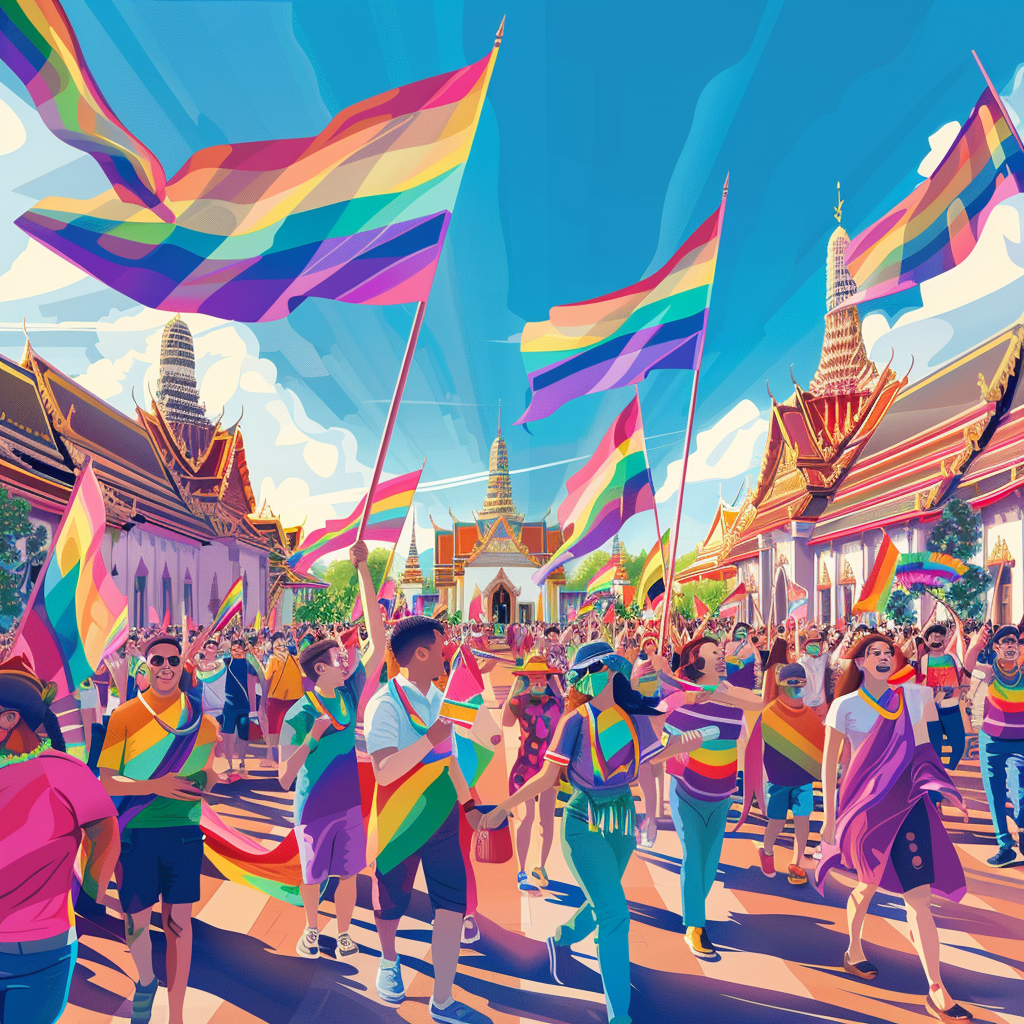
The effervescent Pride Caravan, a jubilant celebration marking the Senate's recent approval of the marriage equality law, took an exuberant journey from parliament to Government House. This parade of progress was beautifully captured by Nutthawat Wichieanbut, drawing enthusiastic crowds and celebratory spirits.
As Thailand gears up to grace the pages of history as the first Southeast Asian country—and only the third in Asia following Taiwan and Nepal—to recognize same-sex marriages, significant changes are on the horizon. Following the Senate's nod, the bill is set to be codified into law within 120 days once it appears in the Royal Gazette.
Behind the scenes, state agencies are meticulously preparing to revamp regulations and policies surrounding gender identity and marital status. The iLaw Club's X account has already hinted at forthcoming changes in honorifics and gender identities as part of these sweeping reforms.
It's not just about passing the bill; the real legislative ballet begins now. These amendments will soon be laid before the new Senate, which will see its final round of voting this Sunday. The names of the 200 new senators are slated for public revelation on July 2, followed by a ceremonial swearing-in.
Bangkok’s charismatic governor, Chadchart Sittipunt, is already on the move, mandating all district offices within the Bangkok Metropolitan Administration (BMA) to swiftly adapt to new marriage registration forms sanctioned by the Ministry of the Interior. His orders don’t stop there—he’s also expediting amendments to measures covering medical expenses and financial perks for some 80,000 BMA employees, ensuring these updates come to fruition within a week.
Dr. Sura Wisetsak, the ever-diligent director-general of the Department of Health Service Support (DHSS), echoed the commitment towards change. He disclosed that several agencies are fine-tuning amendments to the Protection of a Child Born by Medically Assisted Reproductive Technology Act. This child protection bill is harmonized with the marriage equality legislation, showcasing meticulous collaborative drafting efforts by the department’s legal team.
In a bid to foster inclusivity, the revised bill promises to lay special emphasis on surrogacy and subordinate laws. Gender-specific terms like “husband” and “wife” are poised to become history, making way for more inclusive language such as “spouse”. According to Dr. Sura, LGBTQ+ couples will have the same rights and requirements for surrogacy as their heterosexual counterparts.
However, there remain conditions—only Thai nationals can avail surrogacy. In cases where a spouse is not Thai, the couple must present evidence of a three-year-long marriage. Despite the law's immediate ratification, Dr. Sura advises patience, noting that the surrogacy rights will take a bit longer to operationalize—likely by the end of this year.
As Thailand stands on the cusp of a landmark progression, the air is thick with anticipation and the promise of equality. But as we celebrate these strides, a commentary lingers—dignity for LGBTQ+ individuals still feels somewhat elusive, a reminder that the road to true equality is a journey, not a destination.



Comment verification
Step 1 of 3
Verify your email once to publish your comment. Your email is never shown publicly.
Enter the 6-digit code sent to .
Choose the display name shown next to your comments.