Thailand Faces International Backlash Over Uyghur Repatriation: Chatchai Bangchuad Responds
In a bid to dispel the swirling clouds of controversy, the Thai government found itself on the defensive yet again after the recent repatriation of 40 Uyghurs back to China's Xinjiang region. Reaffirming its stance,…
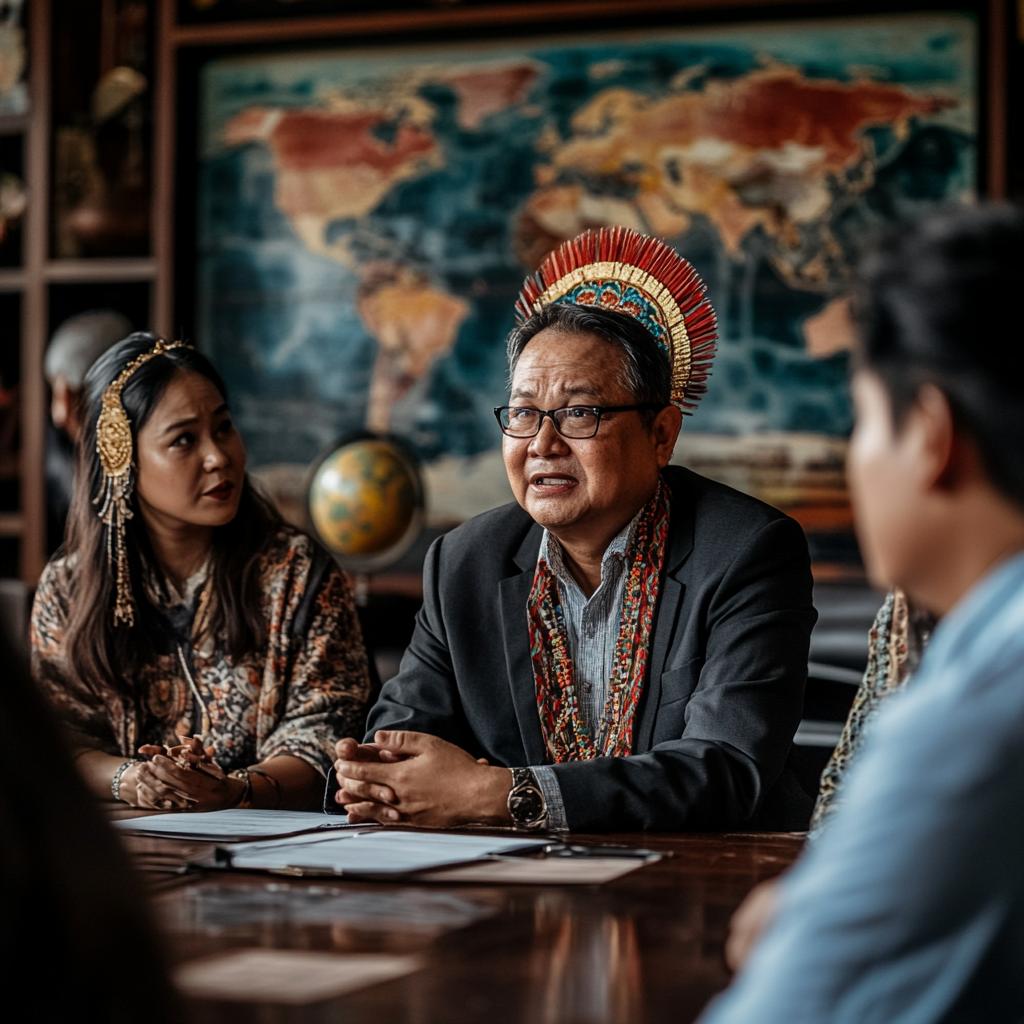

In a bid to dispel the swirling clouds of controversy, the Thai government found itself on the defensive yet again after the recent repatriation of 40 Uyghurs back to China's Xinjiang region. Reaffirming its stance, Thailand insisted that the return of the Uyghur individuals was orchestrated with strict adherence to humanitarian principles. Secretary-General Chatchai Bangchuad of the National Security Council was front and center in this endeavor, meeting with the families of the repatriated individuals on March 1, hoping to convey empathy in the face of mounting international criticism.
The diplomatic waters grew more turbulent when the United States slapped visa sanctions on Friday against Thai officials linked to the controversial deportation, a move that startled many in Thailand's political circles. Promptly, the Thai leadership issued a formal statement on Saturday stressing that assurances regarding the safety and humane treatment of the Uyghurs had indeed been secured from Chinese authorities.
Underlining a commitment to ongoing vigilance, the government pledged to monitor the well-being of the repatriated Uyghurs, recognizing the international spotlight fixed firmly on their welfare. This episode, officials iterated, would not deter Thailand's longstanding tradition of offering refuge to those in dire need of asylum.
Despite the diplomatic chill, Thailand expressed a desire to maintain its time-honored relationship with China, valuing the synergy they share both bilaterally and regionally. Simultaneously, a stern tone emanated from the U.S. as Secretary of State Marco Rubio announced that visa restrictions would persist for Thai officials complicit in the recent Uyghur deportation, casting a shadow on relations between Thailand and the U.S.
The past has indeed seen the U.S. impose sanctions on Thailand, notably withholding military aid post-coups and leveling accusations against Thai individuals and firms for sanction violations elsewhere. However, seasoned analyst Murray Hiebert from the Center for Strategic and International Studies reflected on how direct sanctions on Thai government officials are a rare sight in diplomatic history.
In the midst of this international hullabaloo, opposition leader Natthaphong Ruengpanyawut stood firm, advocating for Thailand's alignment with global human rights standards. He emphasized that adherence to these principles could spare Thailand from the auguries of international discord.
Questions on potential U.S. visa repercussions loomed over Prime Minister Paetongtarn Shinawatra and Deputy Prime Minister Phumtham Wechayachai, though they have thus far remained tight-lipped on this delicate matter.
Bringing a European perspective into play, the European Parliament chimed in with a resolution condemning not just the Uyghur deportation but also touching upon Thailand’s contentious lese-majeste law.
Adding yet another layer of complexity, former prime minister Thaksin Shinawatra suggested a diplomatic parley with the EU ambassador to Thailand to iron out misunderstandings around the Uyghur affair. Showing willingness to extend an olive branch to skeptics, the Thai administration contemplated dispatching an envoy to China to get a firsthand account of the Uyghurs' status.
Eager to quell fears abroad, prominent international relations scholar Panitan Wattanayagorn urged the Ministry of Foreign Affairs to engage with China about confirming the whereabouts of the 40 repatriated Uyghurs and to transparently share this with the probing eyes of the European Parliament and U.S. officials.
The tale of the repatriated Uyghurs is one of intricate diplomacy, a carousel of international relations that spins with each new response and statement. With the eyes of the world upon them, Thai officials tread a delicate path, attempting to balance international expectations, sovereignty, and humanitarian duty in an ever-complex global arena.



Comment verification
Step 1 of 3
Verify your email once to publish your comment. Your email is never shown publicly.
Enter the 6-digit code sent to .
Choose the display name shown next to your comments.