Thailand Pushes Myanmar Highway Reconstruction to Stabilize Trade Amid Conflict, Says Maris Sangiampongsa
Military personnel stood watch as hundreds of refugees made their way across the river frontier between Myanmar and Thailand on April 13, 2024. (Photo: Reuters) In a bid to stabilize its border areas and keep essential…
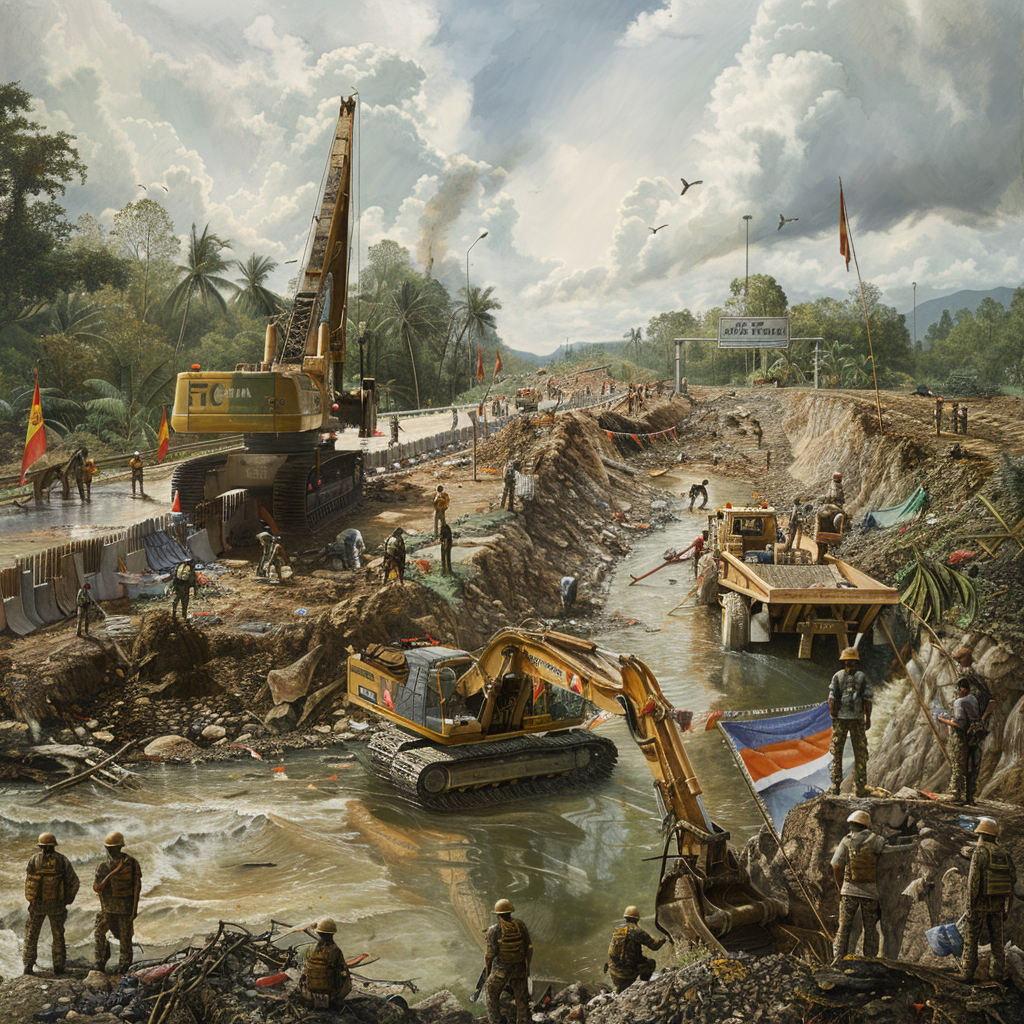
Military personnel stood watch as hundreds of refugees made their way across the river frontier between Myanmar and Thailand on April 13, 2024. (Photo: Reuters)
In a bid to stabilize its border areas and keep essential trade routes open, the government of Thailand is pushing to repair a crucial highway slicing through conflict-ridden Myanmar. Foreign Affairs Minister Maris Sangiampongsa announced the initiative on Thursday, emphasizing the need for collaboration with opposing factions in Myanmar.
The strategic effort to revamp parts of the Asian Highway 1 (AH-1), damaged amid the ongoing strife, has found backing from not only the Association of Southeast Asian Nations (ASEAN) but also India. Addressing reporters, Mr. Maris elaborated on the goal of this ambitious plan. “I don't think Myanmar's problems can be addressed militarily, but through constructive dialogue,” he stated.
The turmoil in Myanmar traces back to February 2021, when a military coup ousted the elected civilian government, igniting a protest movement that rapidly transformed into an armed uprising against the ruling junta. The reverberations of this upheaval have cascaded across the region, affecting neighboring countries like Thailand and straining refugee management capacities.
The AH-1 is a lifeline that connects multiple countries, facilitating commerce and movement across the Asian continent. The highway's current dilapidated state—not just a remnant of neglect but now further crippled by clashes—highlights the urgent need for international cooperation. "The road is more than just a strip of asphalt; it symbolizes connectivity and economic prosperity for the whole region," said an expert on Southeast Asian infrastructure.
The envisaged collaboration involves not just physical reconstruction but sweeping measures to ensure stability and safety along the entire route. Mr. Maris underlined Thailand's commitment to a peaceful resolution with a sense of optimism: “Dialogue, patience, and persistent effort are key. We must bring all stakeholders to the table and discuss not just reconstruction but reconciliation.”
On the ground, the situation remains tense yet hopeful. Local communities are understandably wary but cling to the hope that these efforts will lead to lasting peace. The refugees, crossing into Thailand, symbolize not just the human cost of conflict but also the resilience of those seeking safety and a better future.
This initiative, backed by ASEAN and India, promises to be a cornerstone in rebuilding not just infrastructure but trust and cooperation across borders. It represents a collective stand against the violence that has plagued Myanmar and a determined push towards a peaceful, prosperous future for the region.
For more insights, see our related articles on Maris in talks with Myanmar and Solving the Myanmar migrant surge.



Comment verification
Step 1 of 3
Verify your email once to publish your comment. Your email is never shown publicly.
Enter the 6-digit code sent to .
Choose the display name shown next to your comments.