Thailand-U.S. Trade Standoff 2025: Farmers Fight Tariff Cuts Amid Looming Crisis
In an unfolding saga that has all the elements of a blockbuster drama, the trade discussions between Thailand and the United States are veering towards a potential crisis. Picture this: farmers across the lush…
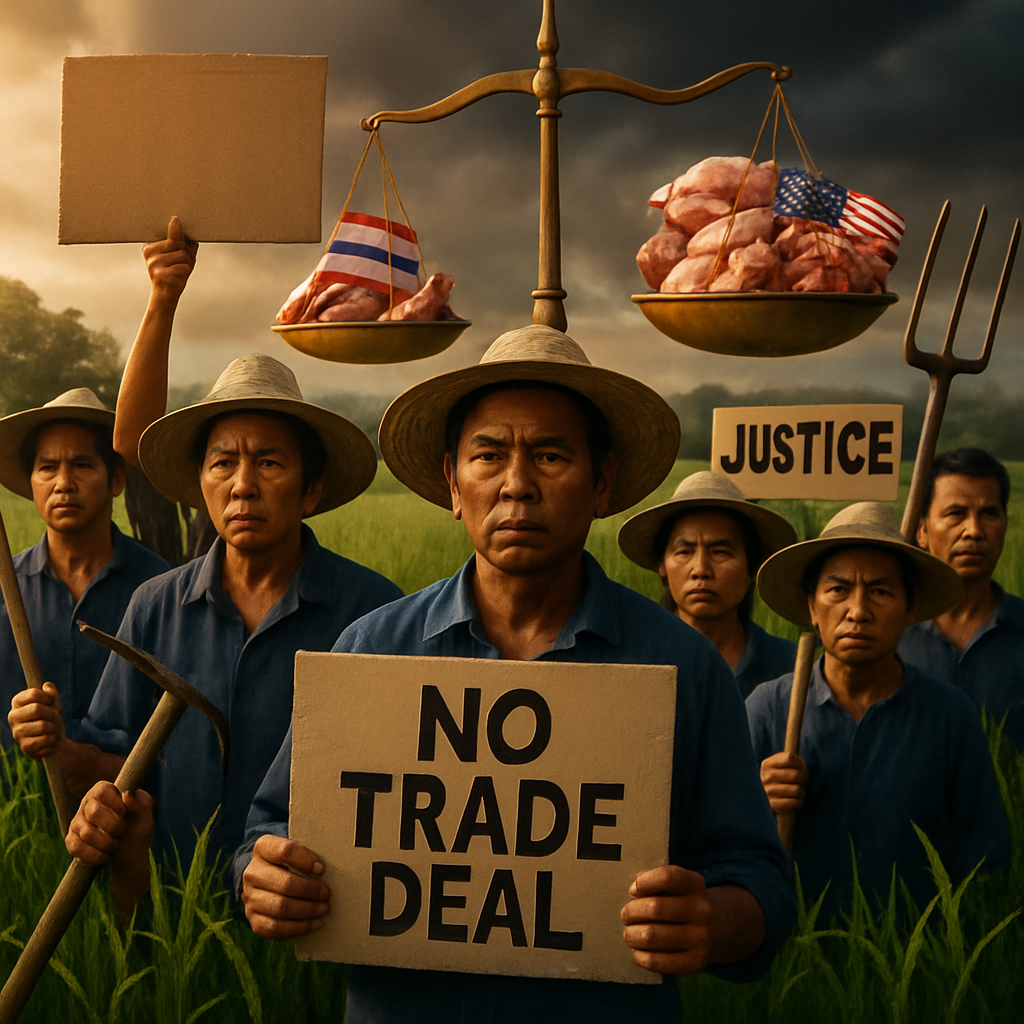
In an unfolding saga that has all the elements of a blockbuster drama, the trade discussions between Thailand and the United States are veering towards a potential crisis. Picture this: farmers across the lush landscapes of Thailand rallying with fervor, echoing the resounding sentiment that Washington's demands could potentially bring local agriculture to its knees, leaving the nation's food security teetering on a precarious edge. The calendar reads July 16th, 2025 — a day when Deputy Prime Minister and Finance Minister Pichai Chunhavajira stoically confirms the deadlock in negotiations as the US hand-draws its line in the sand, insisting Thailand drastically cut tariffs on imports of pork, chicken, and beef, a proposition facing fierce resistance from Thailand’s robust farming sector.
Here’s the catch: the United States is contemplating slapping a hefty 36% tariff on Thai exports starting as soon as August 1st, unless Thailand throws open its market doors a tad wider. In an attempt to navigate through this diplomatic chess game, the Thai government has extended a rather generous olive branch, offering to cut tariffs on a whopping 90% of American products. Yet, the officials stand firm, acknowledging that some of the US demands are verging on the absurdly excessive. As Sittiphan Thanakiatpinyo, holding the torch as President of the Swine Raiser Association of Thailand, dramatically puts it, “The livelihoods of millions of Thai farmers are at stake.” The vivid imagery he paints is as sharp as a cleaver: over 100,000 pig farmers potentially losing their livelihood in a blink if the government yields to US advances.
As tensions rise, Sittiphan condemns the potential influx of affordable US pork into Thailand, depicting it as “trading the future of Thai pig farmers for a few export concessions.” He underscores a rather unsettling perspective that American pork producers enjoy the cushion of substantial subsidies and leverage beta-agonists — growth enhancers with notoriously controversial health implications, banned within Thai borders. Beyond the financial tug-of-war, there looms a more sinister specter: the introduction of diseases such as swine flu, a stranger to Thailand’s shores. He succinctly sums it up, “It’s simply not worth the risk.”
Mirroring the disquiet voiced by pig farmers, the poultry and beef producers chorus similar concerns. Dr. Wiwat Pongwiwatchai of the Beef Cattle Association raises a red flag, emphasizing local farmers' continuing struggle with declining beef prices owing to free trade agreements with Australia and New Zealand. Adding American beef, produced with hormones banned in Thailand, he explains, would spell doom for the local industry. However, in a twist reminiscent of a well-scripted plot, animal feed manufacturers spy an opportunity in the crisis. Somphop Eausongtham, Secretary General of the Thai Feed Mill Association, outlines a potential upside — perhaps, importing cheaper raw materials could help Thailand amplify its feed production and expand its export repertoire.
Nevertheless, the government remains steadfast. Deputy Prime Minister Pichai affirms that Thailand will not ink any agreement jeopardizing public health or agricultural livelihoods as the talks with Washington persist. As The Nation reports, the clock ticks, the August deadline looms, and the tension is palpable. In this dynamic narrative, the stage is set as the future of Thailand's farming tableau teeters on the edge, the players entrenched in their positions, awaiting the unveiling of what’s next in this gripping tale of diplomacy, livelihoods, and unwavering resolve.



Comment verification
Step 1 of 3
Verify your email once to publish your comment. Your email is never shown publicly.
Enter the 6-digit code sent to .
Choose the display name shown next to your comments.