Thailand's Battle Against Rapidly Spreading XEC Variant: Public Health Measures Intensified
In the bustling city of Bangkok, along the banks of the Chao Phraya River, passengers aboard ferries can be spotted donning face masks. This precaution is not only against the looming threat of Covid-19 but also the…
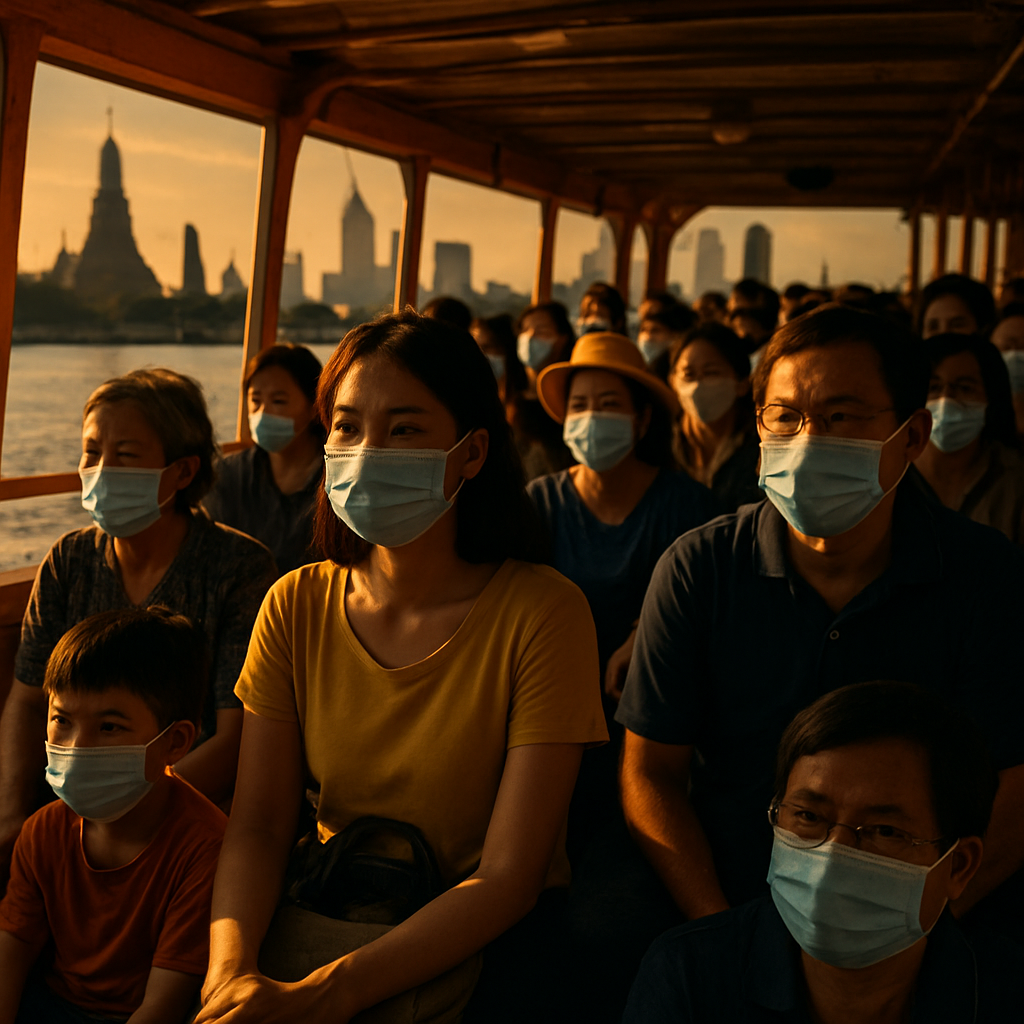
In the bustling city of Bangkok, along the banks of the Chao Phraya River, passengers aboard ferries can be spotted donning face masks. This precaution is not only against the looming threat of Covid-19 but also the ever-present specter of ultra-fine dust pollution. Even in the crisp air of a January morning, the city doesn’t let its guard down.
Fast forward to today, the Public Health Ministry of Thailand is on high alert. Not letting its defenses slide for even a moment, it is vigilantly monitoring a new adversary: the rapidly spreading XEC variant of Covid-19. This latest mutation has raised eyebrows and quickened pulses, as current statistics reveal that it transmits at a dizzying pace—seven times faster than the conventional flu. Minister Somsak Thepsuthin has sounded a call to arms, rallying resources and human efforts to shield those most susceptible to this viral onslaught, particularly within schools.
Minister Somsak notes with a gravitas befitting the situation, that since the start of the year, Thailand has plunged into its 21st week of enforcing protective health measures. The numbers paint a stark picture: 108,891 confirmed XEC cases have emerged from the shadows, along with 27 regretted losses. Particularly hit are the elders, part of the "608 group", who bear the brunt of the pandemic's cruel arithmetic, constituting 80% of the casualties. Yet, it's not just the elderly who are at risk. Children have also been swept into the virus's reckless path. The culprit, the XEC variant—a crafty descendent of Omicron—may not wield exceptional lethality, but its swift propagation is enough to unsettle even the most cautious.
Dr. Teera Woratanarat of Chulalongkorn University's esteemed Faculty of Medicine highlights the alarming velocity of this strain's spread. Comparisons with influenza seem redundant in an age where Covid-19 outpaces its viral peers, as attested by the Bangkok Metropolitan Administration's vigilant oversight of school clusters teetering on the brink of infection.
Covid-19, with its relentless march, has entrenched itself as the leading infectious disease across age spectrums: from buoyant children and rebellious teenagers to the steadfast working age populace and the wise seniors. A staggering 43,213 hospital patients have been registered in the past week alone—a humbling 35.5% climb from previous records. This insurgency of cases brought with it tragic fatalities in the serene locales of Kanchanaburi, the historical realm of Sukhothai, and even within Bangkok Noi district's bustling heart.
In the twilight of uncertainty, as humanity grapples with the caprice of microscopic foes, the call for vigilant compassion and unwavering precautions resounds across the land. As strains evolve and new challenges arise, Bangkok and the rest of Thailand stand resilient, casting a collective eye toward a horizon they hope soon brings brighter days. Collectively, they stand as a beacon, steering through the unsteady waters of pandemic trials.



Comment verification
Step 1 of 3
Verify your email once to publish your comment. Your email is never shown publicly.
Enter the 6-digit code sent to .
Choose the display name shown next to your comments.