Thailand's Cyber Crime Investigation: Unraveling the Cambodian Deportation Mystery 2025
In an unexpected unraveling of transnational intrigue, authorities in Thailand are fervently sifting through the tangled web of circumstances surrounding 119 Thai nationals, hot on the heels of their deportation from…
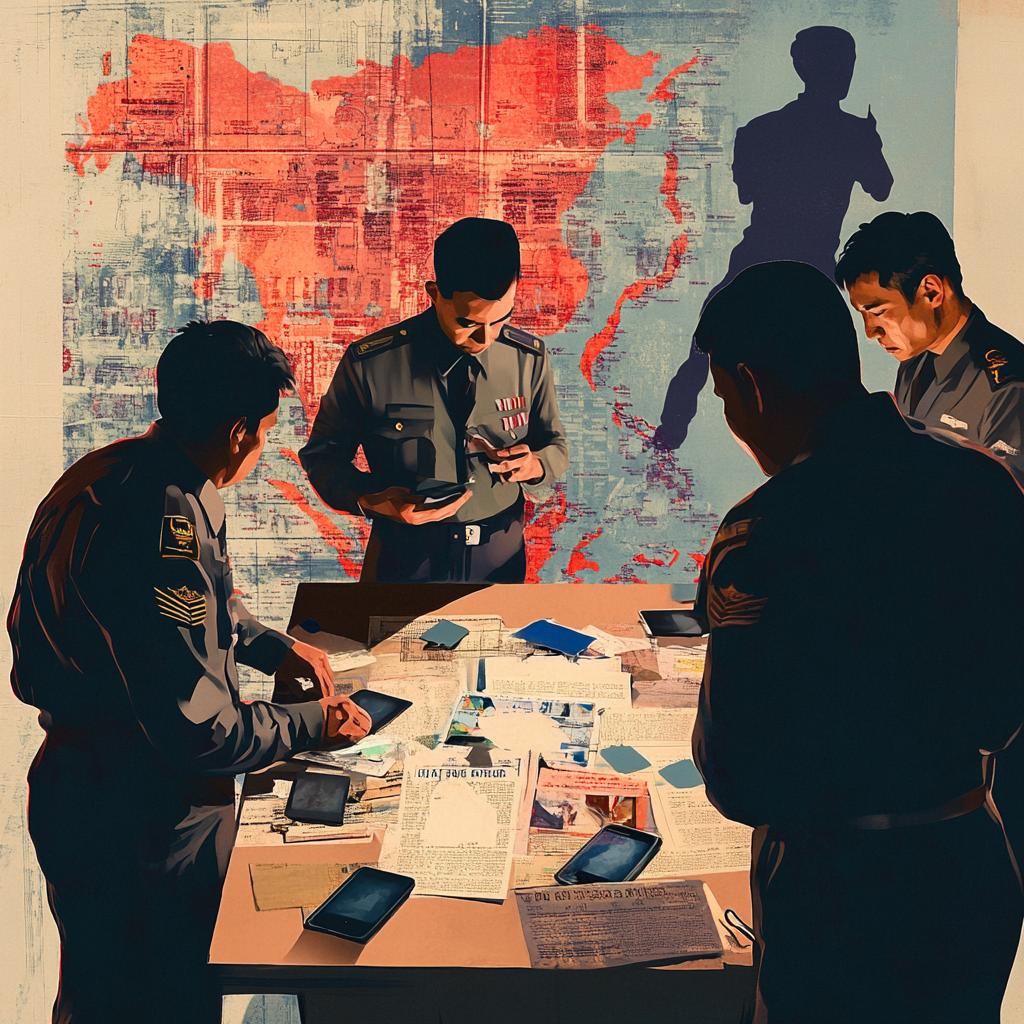
In an unexpected unraveling of transnational intrigue, authorities in Thailand are fervently sifting through the tangled web of circumstances surrounding 119 Thai nationals, hot on the heels of their deportation from Cambodia. These individuals, freed from notorious scam call centers, now find themselves under the intense scrutiny of Thailand's legal system. The aim is to untangle the threads of human trafficking victimage from the tapestry of willing participation in criminal enterprises.
Steering this intricate course of justice is Pol Lt Gen Trairong Phiewphan, the astute commissioner of Thailand's Cyber Crime Investigation Bureau (CCIB). On a brisk Sunday, he underscored that the authorities are mapping out their strategies via the National Referral Mechanism (NRM), a well-charted path for navigating cases of suspected human trafficking and forced labor.
The Cambodian authorities, however, threw a spanner in the works by suggesting a different narrative. They insinuated that all of those deported had wended their way to Cambodia with the full knowledge and intent of engaging in illicit endeavors. Brandishing them as criminal suspects, their allegations cast shadows upon the already cloudy scenario.
In an effort to sift victim from offender, a collaborative effort is underway. The combined forces of Sa Kaeo's provincial police, the Provincial Police Region 2, the Anti-Trafficking in Persons Division (ATPD), the Immigration Bureau, and the CCIB are pooling resources and intelligence. Their preliminary sleuthing, through a web of police databases and the "Thaipolice online" system, has started to reveal the layers beneath. Shockingly, at least seven individuals out of the 119 have popped up with arrest warrants tied to 11 various misdemeanors, including drug-related crimes and fraud.
But the plot thickens. Of these seven, a total of ten have been flag-marked as suspects in a staggering 46 cases pending with the police. According to Pol Lt Gen Trairong, should these individuals be legally cemented as criminals, the law will bear its weight upon them. Charges ranging from fraud to involvement in an international crime syndicate and money laundering will be tabled, with a meticulous examination and auctioning off of their assets apprehended in the process. Eventually, the proceeds will find their path back to the rightful victims.
As for the worldly devices of convenience, an impressive armory of 121 mobile phones was whisked away from the group, now subject to careful inspection. These devices are anticipated to hold crucial clues, potentially pivotal in peeling apart the facade of façade and genuine victimhood.
Adding to the comprehensive puzzle are reports from Cambodian media, raising an amused yet skeptical eyebrow at the saga. It seems rather extraordinary, say the media, that 119 "imprisoned" Thais would opt to evade Cambodian law enforcement rather than beseech it for aid. It's a bewildering paradox; a mysterious troupe, each equipped with a mobile device, an oddity indeed among victims allegedly coerced into complicit activities.
Among the repatriated Thai nationals, the headcount splits into 61 men and 58 women, their tales enmeshed in the larger narrative of an elaborate crime syndicate. A spotlight was cast upon an ensemble of 230 foreigners liberated from the grip of a scam call center in Poipet, the epicenter of a labyrinthine Chinese-led operation uncovered after a grueling three-month exploratory endeavor.
As this kaleidoscope of transnational scandal finds its roots, Thai authorities continue their ceaseless quest to slice through the Gordian knot of fact, fiction, and fraudulent facilitation, delivering justice with the aplomb and decorum it truly demands.



Comment verification
Step 1 of 3
Verify your email once to publish your comment. Your email is never shown publicly.
Enter the 6-digit code sent to .
Choose the display name shown next to your comments.