Thailand

Thailand's Diplomatic Dance: Phumtham Wechayachai at the Center of Uyghur Deportation Controversy

In a gripping geopolitical twist, Deputy Prime Minister Phumtham Wechayachai and Justice Minister Tawee Sodsong found themselves amid historical corridors at the Id Kah Mosque in Kashgar. Their boots on the ground visit…
Thailand's Diplomatic Dance: Phumtham Wechayachai at the Center of Uyghur Deportation Controversy

In a gripping geopolitical twist, Deputy Prime Minister Phumtham Wechayachai and Justice Minister Tawee Sodsong found themselves amid historical corridors at the Id Kah Mosque in Kashgar. Their boots on the ground visit to China's Xinjiang region on March 20 held a singular purpose—to follow up on the status of Uyghur returnees. An intriguing trip that served as a backdrop to an evolving diplomatic quandary marking the crossroads of international commerce and human rights.

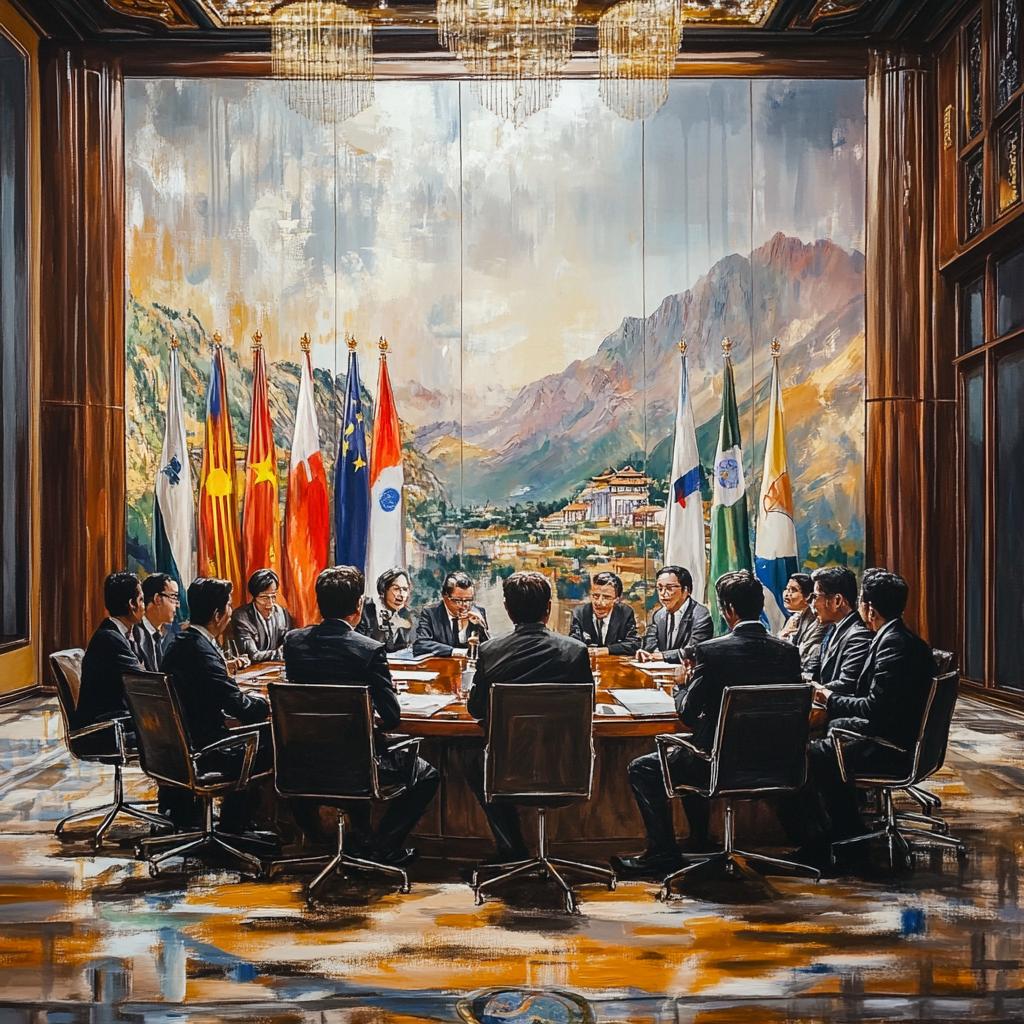
Against this politically charged tapestry, the Committee on Economic Development sprang into action, assembling a strategic huddle like no other. Tasked with untangling the complex skein of ramifications stemming from the Thai government's deportation of Uyghurs—an act that had the European Union shaking its diplomatic finger—top brass from the corridors of foreign and commerce ministries joined forces with stakeholders from private enterprises, the influential Thai Chamber of Commerce (TCC), and the robust Federation of Thai SMEs for an intensive pow-wow.

The spotlight of insight fell on Sittiphol Viboonthanakul, a luminary from the People's Party (PP) unfurling his thoughts with the grace of an elder statesman. The gravity of potential ripples on international trade was not lost on him, as he deliberated over how the EU's vocal condemnation affected the delicate dance of global commerce. The unanswered question loomed—would this deportation debacle delay the much-anticipated signing of a free trade agreement (FTA) with the EU, anticipated eagerly within the year, or cast shadows on Thailand's aspirations for a seat at the Organisation for Economic Cooperation and Development (OECD) table?

One could not miss the undercurrent of tension as he touched upon potential perturbations in US trade policies, waving the specter of skyrocketing tariffs like an ominous banner over Thai exports. Amid the whirlwind of speculation, there glimmered a silver lining—an invitation extended to European ambassadors to convene for discourse on this deportation dilemma. Would such diplomatic overtures serve as soothing balms to mitigate the fallout? Sittiphol’s commitment of government to ameliorate impacts was unambiguous.

Further underlining the complexity of the scenario, he underscored the imperative for crafting a deft strategy to navigate through treacherous waters of potential trade warfare—a scenario looming large should the Thailand-EU FTA languish in the waiting room beyond its expected launch this year.

Cue the enterprising voices of the TCC representatives, striding purposefully into the dialogue like seasoned advocates for Thailand's unwavering adherence to international human rights norms. They reminisced upon Thailand’s dedicated quest over the past decade to calm international waters, exemplified by addressing the notorious illegal, unreported, and unregulated (IUU) fishing hiccup.

The narrative unfolded further with a revelatory dispatch—recent dialogues with international economic minds relegating the Uyghur deportation case to the peripheries, an unexpected asterisk in the grander text of global concerns. Yet, the delegates made their stand clear, underscoring the ubiquitous nature of deportations worldwide, echoing similar practices by notable players like the US and European powers, challenging the assertion of such matters clouding the FTA negotiations.

In the theater of international diplomacy, where commerce and conscience collide, one truth stood out—Thailand's dance with trade and human rights remains a choreographed performance for all to witness, full of intricate steps and delicate balances.


36Comments
Sort by:
AWAlice W··1 pts · 3 replies
AW
Alice W
I'm confused why Thailand is even considering deporting the Uyghurs. Isn't it obvious that it's a violation of human rights?
1
JPJohn P··1 pts
JP
John P
Human rights, yes, but you have to consider the economic implications too. Countries must balance these interests.
1
SSam·1 pts
S
Sam
Still, economic benefits don't justify ignoring human rights. It's just wrong.
1
AWAlice W·1 pts
AW
Alice W
Exactly, Sam. But how much do economies really suffer from adhering to human rights laws?
1
Wworld_watcher··1 pts · 2 replies
W
world_watcher
I bet the EU will delay the FTA with Thailand over this issue. They're big on human rights.
1
Eeconomic_guru79··1 pts
E
economic_guru79
It's not as simple as you make it sound. There are too many economic interdependencies.
1
Wworld_watcher·1 pts
W
world_watcher
Fair, but public pressure on human rights can influence these negotiations too.
1
EDEmily Davis··1 pts · 2 replies
ED
Emily Davis
Thailand is trying to appease China, which is understandable given the region's power dynamics. It's a tricky situation.
1
GTGreg T··1 pts
GT
Greg T
Tricky, but at what cost? Human lives shouldn't be bartered for diplomatic favors.
1
EDEmily Davis·1 pts
ED
Emily Davis
True, Greg. But often in geopolitics, ethics and interests are constantly battling.
1
Ccurious_citizen··1 pts · 2 replies
C
curious_citizen
Are there other countries supporting Thailand on this, or are they standing alone?
1
TLTom L.··1 pts
TL
Tom L.
I think some ASEAN countries might side with Thailand quietly. They have historical and economic ties.
1
LMLisa M.·1 pts
LM
Lisa M.
Yes, but publically, most will probably stay silent to avoid backlash.
1
Bbigdebates42··1 pts
B
bigdebates42
Why does the world keep turning a blind eye to these deportations? There's always an excuse!
1
KOKevin O··1 pts · 2 replies
KO
Kevin O
Because economics overrules ethics. Sad but true.
1
Bbigdebates42··1 pts
B
bigdebates42
Still doesn't make it right. Nations should be held accountable!
1
JJulia62··1 pts
J
Julia62
Accountability comes with complex diplomatic repercussions, which countries prefer to avoid.
1
Ffleetwood_fan··1 pts · 2 replies
F
fleetwood_fan
How do we even know the reports on conditions in Xinjiang are accurate? There's a lot of misinformation out there.
1
NWNancy W.··1 pts
NW
Nancy W.
True, but multiple credible organizations have highlighted human rights abuses there. It's not all smoke and mirrors.
1
Ffleetwood_fan·1 pts
F
fleetwood_fan
I get that, but scepticism is healthy until all the facts are verified.
1
EEliot_Creek··1 pts
E
Eliot_Creek
People often underestimate how China influences its neighboring countries' policies.
1
CcarlaG··1 pts · 2 replies
C
carlaG
Sounds like a lose-lose situation for Thailand. They upset the EU or China or both.
1
MJMark J.··1 pts
MJ
Mark J.
It’s diplomacy. It often comes down to who you can afford to upset the least.
1
CcarlaG·1 pts
C
carlaG
And meanwhile, the Uyghurs pay the price. Sad reality.
1
JKJames K.··1 pts
JK
James K.
Shouldn't the UN intervene in such cases? What's their role if not to stop these violations?
1
Ppolitical_paradox223··1 pts
P
political_paradox223
It's a balancing act between commerce and conscience. The drama unfolds in plain sight.
1
Hhistory_buff··1 pts
H
history_buff
Thailand has faced international scrutiny before with its IUU fishing issues. Seems like they haven't learned much.
1
PRPat R.··1 pts
PR
Pat R.
So many geopolitics experts here. Can't we just focus on what a country stands to gain or lose?
1
MLMaya Lee··1 pts · 1 reply
ML
Maya Lee
Yeah, but it's not just about economic gain. There's a moral compass too, no?
1
PRPat R.··1 pts
PR
Pat R.
Tell me more about this 'moral compass' when countries start losing billions in trade.
1
ZZachary_Yang··1 pts
Z
Zachary_Yang
This isn't just a Thailand issue. It's about how the international community chooses to respond.
1
Bbeanna··1 pts
B
beanna
These types of diplomatic decisions impact everyday citizens more than they realize.
1
SSammy8··1 pts
S
Sammy8
You'd think they'd want the FTA more than appeasing China. What's a free trade deal if you're infringing rights?
1
Ccuriousmind··1 pts
C
curiousmind
Laws and ethics aside, I wonder how the man on the street views this issue. Anyone from Thailand here?
1
MMichael_S··1 pts
M
Michael_S
I'll just say geopolitical interests are more complex than black and white twitter commentary.
1
Ggoddess_diana··1 pts
G
goddess_diana
And here we are again, waiting for yet another nation to compromise on principles for economic benefits.
1
