Thailand's Enhanced Durian Export Standards: Safety Boost for Chinese Market in 2025
In the realm of tantalizing tropical fruits, the durian often emerges as a point of both fascination and controversy. Known for its hefty exterior and distinctive aroma, this "King of Fruits" is seeing a new twist in…
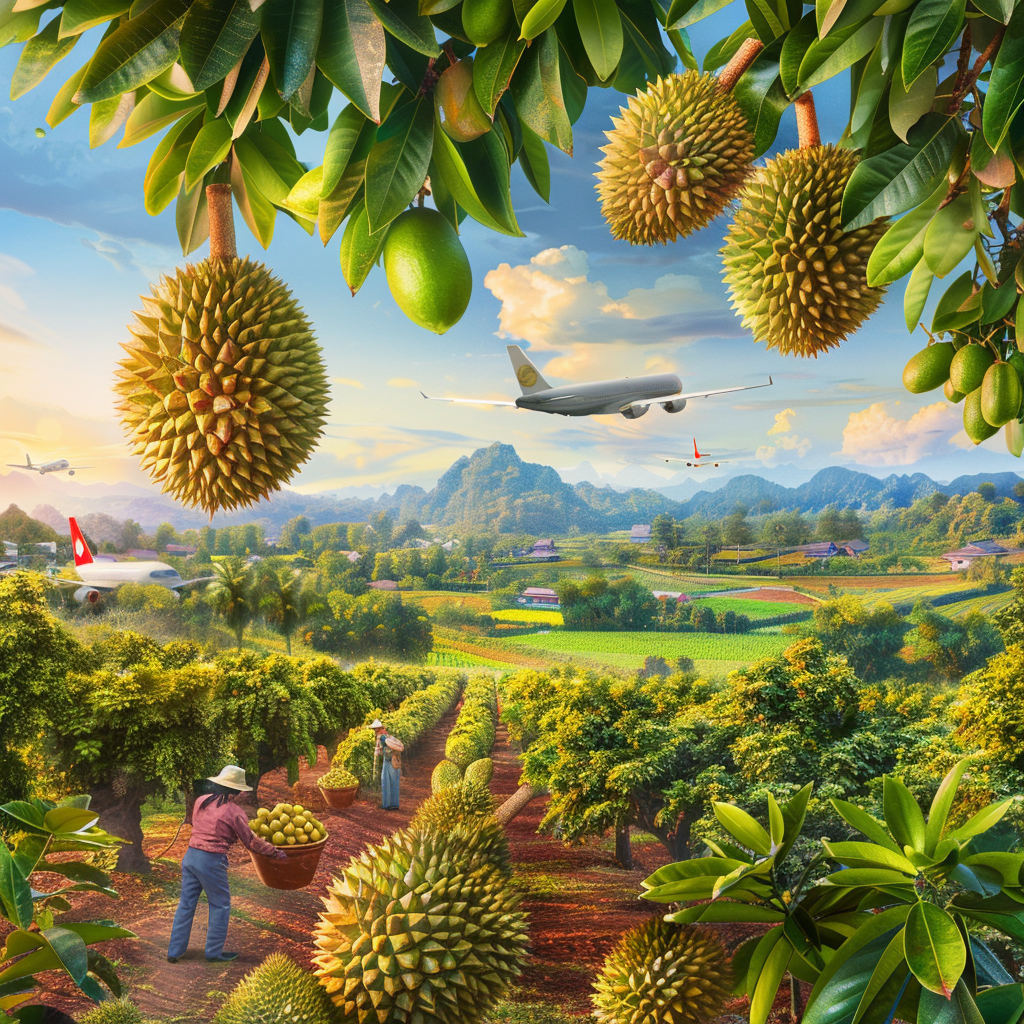
In the realm of tantalizing tropical fruits, the durian often emerges as a point of both fascination and controversy. Known for its hefty exterior and distinctive aroma, this "King of Fruits" is seeing a new twist in its international export saga, specifically from Thailand to its northern neighbor, China. The Ministry of Agriculture and Cooperatives in Thailand has decided to roll out a comprehensive plan to ensure every piece of durian meets rigorous safety standards before making the journey across borders.
Agriculture and Cooperatives Minister Narumon Pinyosinwat took to the podium earlier this week, outlining a vital new directive — a "no-nonsense" contamination screening process that mandates all durian exports to undergo meticulous testing. The main culprits under scrutiny include “Basic Yellow 2,” an unauthorized and possibly cancer-causing dye, cadmium, and the persistent little pests known as durian borers. Only those who pass the test will be greenlit for export.
The minister's announcement followed an urgent meeting attempting to address the chilly reception Thai durians were afforded by the Chinese market. Fast approaching is the deadline to enforce these screening protocols, slated for implementation in ten days. The Department of Agriculture cautions that durian dealers who defy these new regulations may find themselves out of the export game entirely, as non-compliance might cost them their licenses.
Not one to leave stones unturned, Minister Narumon is also planning a significant diplomatic mission to China, joined by Prime Minister Paetongtarn Shinawatra. Scheduled from February 5-7, the visit aims to smoothen feathers and beef up confidence with Chinese customs officials regarding Thailand's elevated safety measures. It's a proactive stride toward ensuring the burgeoning relationship between Thailand and China's fruit market continues to thrive, much like a durian tree soaking up sunlight.
Interestingly, the trade trajectory for Thai fruits to China has been scaling new heights annually. Just last year, from January to November, a whopping 1.817 million tonnes of fruits, valued at 177.13 billion baht, made their way to Chinese shores. Yet, the dark undercurrent in this upbeat story is the tale of forbidden pigments. Just a few months ago, on September 18, the Ministry of Agriculture and Cooperatives unveiled concerning findings — Basic Yellow 2 was hitching a ride into Thailand, surreptitiously smuggled in from China, and used by certain durian packing plants in Chumphon province. These covert operations did not escape the watchful eyes of authorities, and orders were promptly issued to cease its usage.
Despite these directives, subsequent inspections revealed the persistence of these clandestine acts, with repeated offenders receiving formal warnings. The implications of such relentless illicit practices became crystal clear when a batch of durians was unceremoniously turned away at China's Nanning airport recently. The reason was simple — a missing document certifying a clean bill of chemical health, specifically free of any Basic Yellow 2 mishaps.
As the wheels of cross-border commerce continue to spin, the tale of Thai durian is both an entertainment and a saga of diplomatic agility, regulatory dexterity, and culinary fascination. Amidst this rich tapestry of tropical trade, there's a collective hope that everything soon aligns perfectly, allowing durian aficionados on both sides to indulge in every sumptuous bite, free from worry and full of delight.



Comment verification
Step 1 of 3
Verify your email once to publish your comment. Your email is never shown publicly.
Enter the 6-digit code sent to .
Choose the display name shown next to your comments.