Thailand's Real Estate Crackdown: Ministry of Commerce Targets Foreign Nominees with New MoU
In a significant stride to curb a pressing issue in Thailand's real estate market, the Ministry of Commerce and the Ministry of Interior have joined forces with a Memorandum of Understanding (MoU). This pivotal…
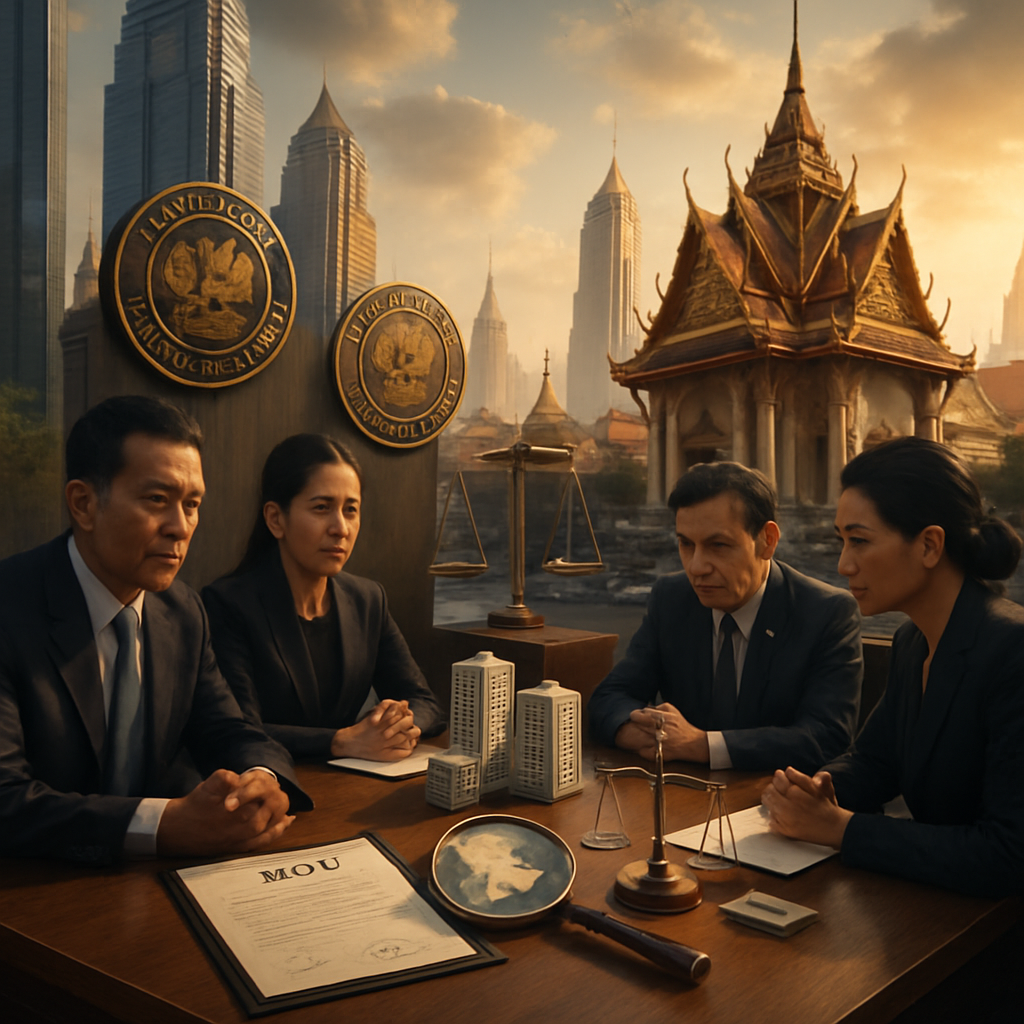
In a significant stride to curb a pressing issue in Thailand's real estate market, the Ministry of Commerce and the Ministry of Interior have joined forces with a Memorandum of Understanding (MoU). This pivotal alliance, forged between the Department of Business Development (DBD) and the Department of Lands, seeks to bring an end to the crafty antics of foreign nationals using Thai nominees to snare land unlawfully.
The MoU, inked with a flourish on Thursday, is not just a piece of paper but a beacon of hope to close the gaping legal loopholes. It mandates a cooperative strategy where both entities will pool their resources to zero in on companies suspected of being foreign interests' fronts, as stated by Deputy Commerce Minister Napintorn Srisanpang.
Responding to an escalating wave of foreign incursions into sectors traditionally earmarked for Thai citizens—think agriculture, real estate, and hospitality—Srisanpang voiced the underlying concerns. "Such clandestine arrangements skew the playing field, stall fair competition, and threaten the fabric of our national economic and social well-being," she emphasized.
So, what does this agreement entail? The plan is elegantly straightforward: the DBD will hand over a catalog of companies arousing suspicion to the Department of Lands. A recent probe spotlighted a staggering 46,918 businesses possibly ensnared in this web of deceit, each boasting foreign shareholdings ranging from a mere 0.001% to a whopping 49.99%. An eyebrow-raising 26,000 of these reside within the real estate sector—a domain as hot and sensitive as Bangkok's blazing sun.
Deputy Interior Minister Songsak Thongsri hailed the collaboration as a game-changer. "This partnership empowers the Department of Lands to sift through applicants with a keener eye and ultimately thwart foreign entities from stealthily securing land via proxies," he explained. In other words, this agreement is like adding a turbocharged engine to a screening process that has, until now, been chugging along in second gear.
Pornpoth Penpas, the sharp-eyed director-general of the Department of Lands, added that these nominee shenanigans often fly below the radar because shareholding face-lifts sneak in post-land acquisition approvals. With this new strategy, authorities are equipped to track these ownership somersaults in real-time, putting them in a stronger position to intervene promptly and decisively.
As the government mulls over revamping legal consequences, there's a promise of new waves in policy planning. All eyes are focused on ensuring that land, one of Thailand's most precious assets, remains where it belongs—in the hands of its rightful stewards. It's an auspicious time for everyone worried about the integrity and future of Thai prosperity.
The message is clear: legal machinations that distort market dynamics are no longer welcome. With this MoU leading the charge, one can almost hear the sound of a collective sigh of relief sweeping across Thai business sectors, eagerly anticipating a reinvigorated landscape of fairness and legality.



Comment verification
Step 1 of 3
Verify your email once to publish your comment. Your email is never shown publicly.
Enter the 6-digit code sent to .
Choose the display name shown next to your comments.