Thaksin Shinawatra Faces Off with Chaithawat Tulathon in Udon Thani's Political Arena
In the bustling streets of Udon Thani, the political drama unfolded with all the flair of a soap opera. On a seemingly quiet Thursday, cameras clicked frantically to capture former premier Thaksin Shinawatra, who had…
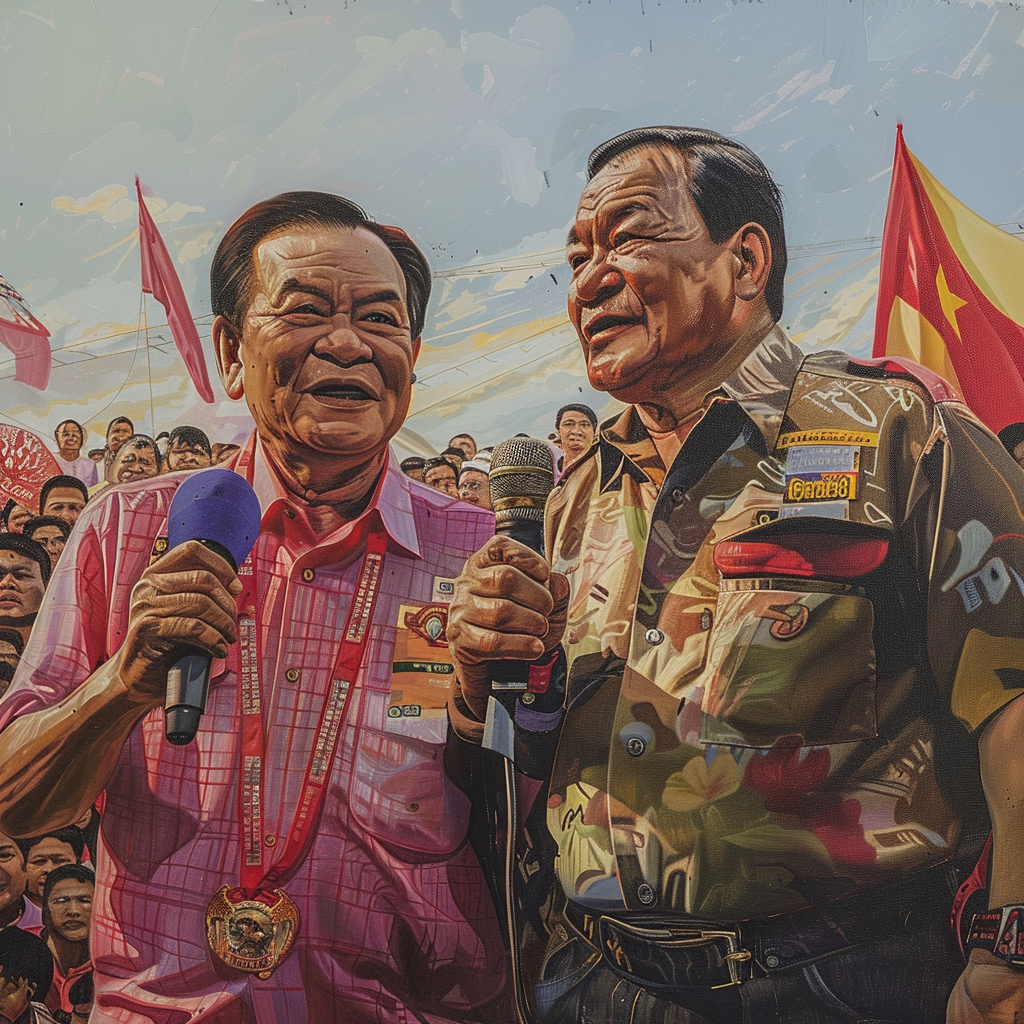
In the bustling streets of Udon Thani, the political drama unfolded with all the flair of a soap opera. On a seemingly quiet Thursday, cameras clicked frantically to capture former premier Thaksin Shinawatra, who had descended upon the region to lend his charismatic support to the Pheu Thai Party's campaign. However, the political stage wasn't set for pleasantries but rather a feisty exchange of ideologies.
Enter Chaithawat Tulathon, a fiery member of the Progressive Movement and a relentless campaign assistant for the People's Party (PP). Armed with his microphone and a keen sense of wit, Chaithawat launched a verbal offensive against Thaksin's recent remark. You see, Thaksin had stirred the pot by suggesting that the PP was on a legislative spree—dead-set on passing too many laws. According to Thaksin, the real art of governance was in repealing outdated laws rather than piling on new ones.
This suggestion did not sit well with Chaithawat, who viewed it as a trivialization of what he believed to be the cornerstone of good governance—constructive legislative duty. Speaking to a captivated audience in Udon Thani’s Ban Phue district, Chaithawat made his intentions clear while campaigning for Kanisorn Khurirang, the PP's candidate for the Provincial Administrative Organisation chairman. The election, marked for November 24, was just around the corner, and the stakes were high.
With a voice dripping with conviction, Chaithawat retorted that the notion of canceling laws was not as simple as it seemed. "To strike down existing laws, you must weave new ones into the fabric of our legal system," he declared, his voice echoing against the walls of tradition. "Racing to pass laws isn't reckless; it's an MP's sacred duty when these laws serve the public good."
Mr. Chaithawat didn't miss the chance to criticize the government MPs, describing them as "lame ducks" in the legislative arena. He urged those in power to act bravely, to do more than just pay lip service to the electorate's woes. The imagined failures of empathetic legislation were not the only arrows in his quiver, though. There was a scroll of pending bills that Chaithawat unfurled for public reflection—bills that had languished in a purgatory of political inaction since the Srettha Thaivisin administration under the Pheu Thai party.
Among those bills was one aiming to abolish the era-old practice of military conscription. Another sought to decentralize power, granting local administrative organizations the autonomy to manage transport budgets independently of the Transport Ministry's bureaucratic chokehold. The promises held by these bills were tantalizing, yet their fate had been sealed by naysayers within the coalition government.
As if delivering a plot twist, Chaithawat called out what he deemed as a contradiction in Thaksin's past claims. Thaksin had championed his government's efforts to break monopolistic chains within the energy sector to relieve the financial burdens on the citizenry. Yet, the elephant in the room remained unaddressed. "Why," Chaithawat probed rhetorically, "does the energy concession linger in the hands of a singular company?"
The air was electric, as Chaithawat's words resonated with those who yearned for a change that was more than skin deep. His speech painted a vivid tableau of not just political ambition, but of a deeper desire to shake the foundations of entrenched power dynamics. It was a call to action, urging the people to demand more from their leaders and ensuring that the wheels of legislation turn not for vanity, but for the betterment of society.
As Udon Thani continued its day-to-day business, the echoes of this vibrant political discourse left a lasting impression, promising an election that would be as contentious as it was consequential.



Comment verification
Step 1 of 3
Verify your email once to publish your comment. Your email is never shown publicly.
Enter the 6-digit code sent to .
Choose the display name shown next to your comments.